


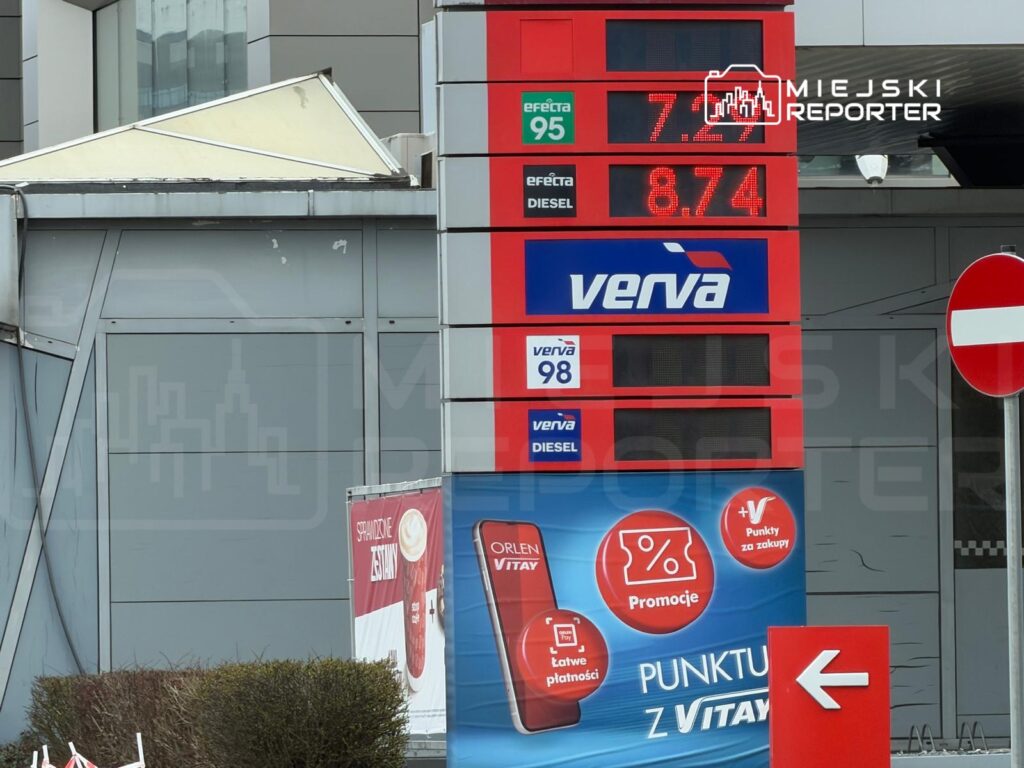
The Polish Sejm swiftly passed a government package aimed at lowering fuel prices, potentially reducing costs by up to 1.20 zł per liter.
Fuel Price Reduction Measures Approved
The Sejm has approved a package of two government bills designed to lower fuel prices at stations. The legislation passed urgently on March 27th with 428 votes in favor and 12 against, with the government anticipating price drops of up to approximately 1.20 zł per liter upon implementation.
The “Lower Fuel Prices” (CPN) package includes several measures: a reduction in VAT on fuels from 23% to 8%, a lowering of excise duty to the minimum levels permitted by EU regulations, and the introduction of a maximum price mechanism at stations.
Tax Adjustments and Budget Impact
The government states that excise duty will be reduced by 29 groszy per liter of gasoline and 28 groszy per liter of diesel. The estimated monthly decrease in budget revenue due to the VAT reduction is approximately 900 million zł, and around 700 million zł from the excise duty reduction.
These measures are temporary, scheduled to remain in effect until June 30, 2026, according to project descriptions and government announcements. The government also plans further work on a tax on excess profits of fuel companies, but this is not part of the approved package.
Current and Projected Fuel Prices
As of March 25th, the average national retail price of Pb95 gasoline was 7.14 zł per liter, and diesel was 8.69 zł per liter, according to e-petrol. The same portal forecasts that with the CPN package in effect, between March 30th and April 5th, Pb95 could fall to 5.99–6.19 zł per liter, and diesel to 7.39–7.60 zł per liter.
Response to Market Fluctuations
The government justified the rapid pace of work by recent sharp increases in the fuel market. In recent weeks, crude oil prices have risen by about 45%, diesel by over 40%, and gasoline by about 25%. The package is a response to rising oil and fuel prices caused by tensions in the Middle East.
Legislative Process Continues
The Sejm vote does not conclude the entire procedure. The package has been referred to further parliamentary work, and the entry into force of the regulations depends on the completion of the legislative process and the President’s signature. This will determine when drivers will see lower prices at the pumps.