


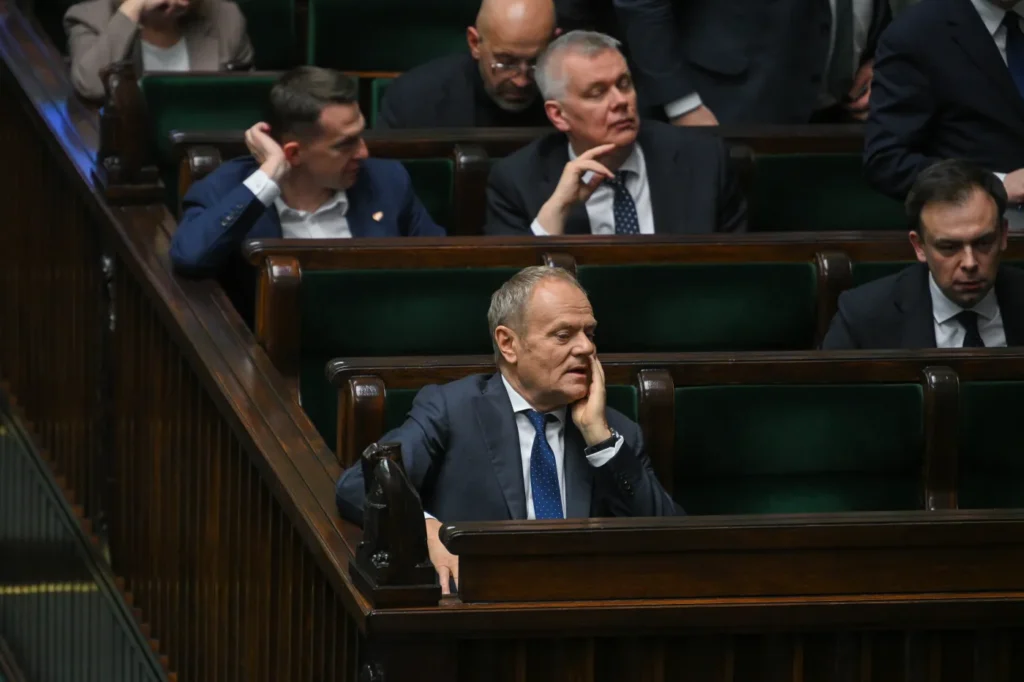
The Polish Sejm on Friday failed to secure the three-fifths majority needed to override President Karol Nawrocki’s veto of amendments to the Criminal Procedure Code.
Presidential Veto Upheld
The Sejm did not reject President Karol Nawrocki’s veto on the amended Criminal Procedure Code on Friday. The required three-fifths majority to re-enact the law was not achieved.
The vote saw 440 MPs participate, with 244 voting to override the veto, 180 against, and 16 abstaining. A three-fifths majority requires 264 votes.
Requirements for Veto Override
Overriding the presidential veto – and thus re-enacting the law – requires a three-fifths majority in the presence of at least half of the statutory number of MPs.
Scope of the Amended Code
The extensive amendment to the Criminal Procedure Code, dated February 27th, addressed numerous issues within criminal procedure. It included new approaches to the application of temporary arrest due to the severity of potential penalties.
The changes also concerned the use of so-called “illegal evidence” in criminal proceedings. The amendment also redefined the status of a “suspect,” allowing individuals to gain suspect status from the moment of detention related to suspected crime.
Further Changes Included
Other changes within the amendment addressed matters related to the European Arrest Warrant system, the use of evidence, the confidentiality of suspect-lawyer communications, and deadlines for filing appeals.
President’s Justification for Veto
President Karol Nawrocki decided to veto the amendment on March 13th. Presidential Spokesman Rafał Leśkiewicz stated the decision was made “out of concern for the safety of citizens and the effectiveness of the state in combating the most dangerous crime.” The veto justification cited a lack of clarity and systemic consistency in some of the new solutions.
Minister of Justice’s Response
Minister of Justice and Prosecutor General Waldemar Żurek stated on Friday that the amendment vetoed by the President was not intended to “protect” anyone, but to limit the abuse of temporary arrest, streamline regulations, and “strengthen the citizen’s guarantees in confrontation with the state.” He believes this is why there was “so much political outcry” surrounding the reform.
(PAP)
Editorial Information
ef/ kos/ par/
Copyrighted Material – All Rights Reserved.
Further distribution of the article requires permission from INFOR PL S.A. Purchase a license.
Enter the email address of the selected person, and we will send them free access to this article.
Related
Copyright © INFOR PL S.A.