Poland’s President doesn’t rule out police involvement as newly appointed Constitutional Tribunal judges plan to take their oath in Parliament, defying presidential protocol.
Dispute Over Oath Procedure
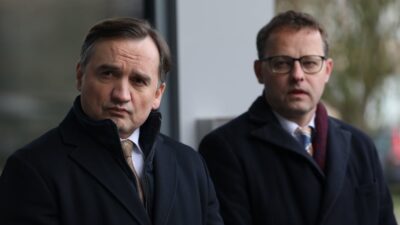
The Presidential Spokesperson has not excluded the possibility of police intervention regarding the situation unfolding at the Constitutional Tribunal. The attempt to replace the statutory oath-taking procedure for Constitutional Tribunal judges with another form is considered a refusal to submit to the law, triggering a statutory consequence of resignation from the position of a Tribunal judge, according to KPRP head Zbigniew Bogucki.
Maciej Taborowski, one of the judges selected in March, stated that no one intends to refuse the oath as a Constitutional Tribunal judge, asserting they are fulfilling a statutory obligation.
Oath Ceremony Planned in Sejm
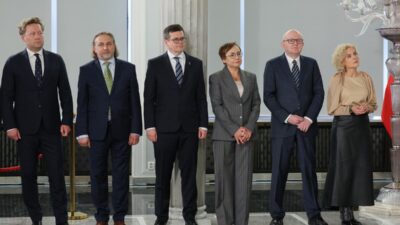
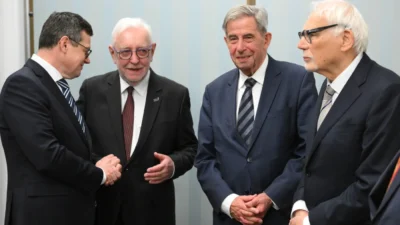
Four judges selected in March are scheduled to take their oath in the Sejm on Thursday, with the participation of Sejm Marshal Włodzimierz Czarzasty and former presidents of the TK. President Karol Nawrocki previously administered the oath to two other selected judges, Magdalena Bentkowska and Dariusz Szostek, last week.
Legal Basis for Oath-Taking
According to the Act on the Constitutional Tribunal, a person elected to the position of a Constitutional Tribunal judge must take the oath before the President of the Republic of Poland within 30 days of the election.
KPRP’s Position on Alternative Oath
Judges Krystian Markiewicz, Maciej Taborowski, Marcin Dziurda, and Anna Korwin-Piotrowska invited President Karol Nawrocki to the Sejm on Thursday at 12:30 PM to administer the oath. Zbigniew Bogucki emphasized that the only body before which the oath of a person elected to the office of a Constitutional Tribunal judge can be effectively taken is the President of the Republic of Poland.
Bogucki clarified that the word “before” in the Act means “in the presence of the President,” and does not allow for replacement with another form or procedure outside the established relationship with the head of state. He assessed that such actions lack a legal basis.
Actions Deemed a Refusal to Take Oath
Bogucki stated that attempts to replace the statutory procedure with another form must be considered a refusal to submit to the law, triggering the consequence of resignation from the position of a Constitutional Tribunal judge, as stipulated in the Act on the Status of Constitutional Tribunal Judges. He emphasized that the law provides no alternative way to effectively take the oath.
Actions other than taking the oath before the President by persons elected as TK judges will be assessed as a conscious and overt violation of the law, potentially undermining the integrity required for the office of a Constitutional Tribunal judge.
Potential Consequences and Ongoing Analysis
Bogucki added that such a violation could be considered when further assessing the possibility of administering the oath to these individuals by the President. He reminded that the President had already administered the oath to two of the six elected judges, and the matter of the remaining four requires further analysis due to doubts about the legality of the Sejm’s election procedure.
Bogucki later stated that this analysis could be halted if the oath is taken in the Sejm, noting that the judges would “close the door” on themselves. He believes that if they take the oath in a form other than before the President, they would lose the requisite integrity, potentially preventing the President from administering the oath.
Concerns Regarding Judge Obligations
Bogucki pointed out that the two judges who took the oath before the President have not yet fulfilled their obligation to report to the Tribunal to begin their duties, a fact he believes should be noted in the context of calls for urgent replenishment of the Tribunal’s composition.
Presidential Spokesperson’s Response
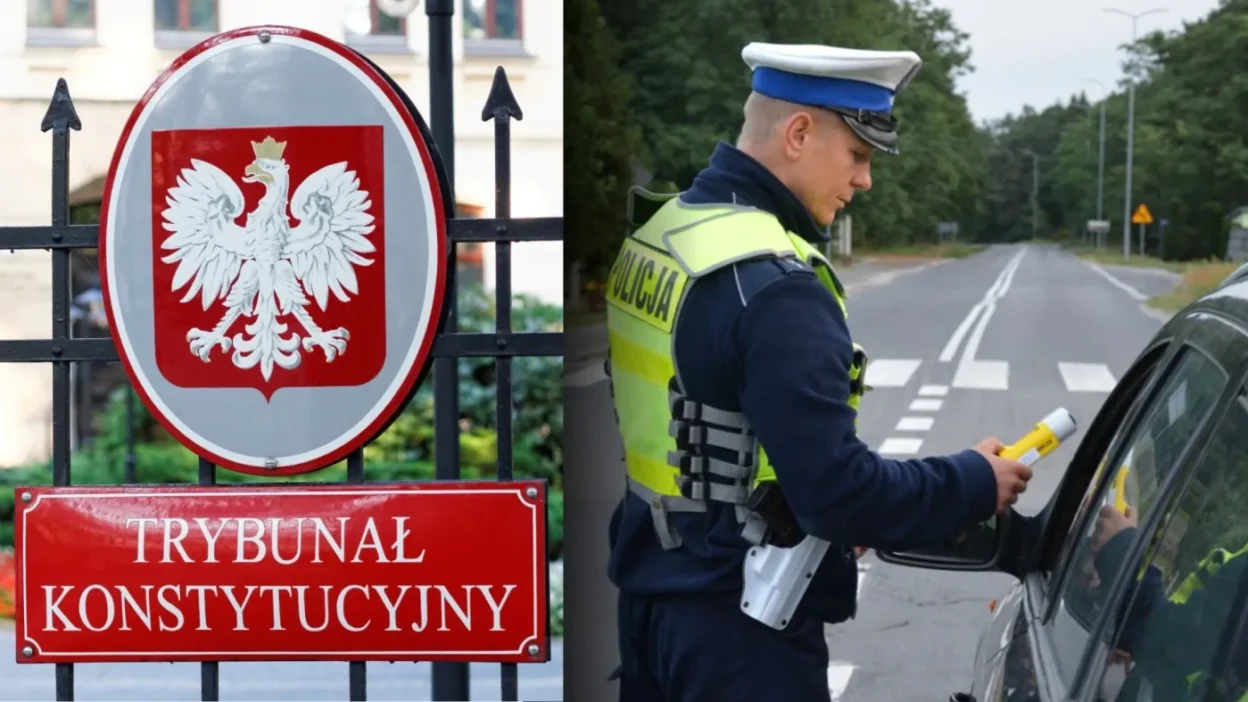
Presidential Spokesperson Rafał Leśkiewicz stated that taking the oath in the Sejm is unlawful and illegal, potentially constituting a crime under Article 231 of the Penal Code. He did not rule out the possibility of police intervention.
Judges Defend Their Actions
Judge Taborowski countered Bogucki’s position, stating they are fulfilling a statutory obligation by taking the oath in a different form due to a lack of response to their letters requesting a personal oath-taking ceremony with the President at the Presidential Palace. He argued that “before” does not necessarily mean “in person.”
MS Vice-Chief Weighs In
Dariusz Mazur, Vice-Chief of the Ministry of Justice, stated that if the legislator intended to specify that TK judges should take the oath BEFORE the President, the law would have been worded accordingly. He criticized the President’s office for prioritizing the creation of a “presidential system” over the application of the law.
Disagreement Over Resignation Implications
Mazur questioned how taking the oath could be interpreted as resignation from office, arguing it contradicts the wording of the law. He also noted that the President did not issue an invitation to take the oath and is attempting to boycott specific judges in violation of the Constitution, leaving them with nothing to refuse.
Background on Tribunal Appointments
The Sejm elected six Constitutional Tribunal judges on March 13th. Following the oath-taking of two judges last week, the remaining four, who did not receive an invitation from the President, sent a letter requesting a date for their oath-taking ceremony.
At the time of the Sejm’s election in March, there were six vacancies on the Constitutional Tribunal, leaving it with nine judges out of a possible fifteen. With the recent appointments, the Tribunal will have eleven judges, although the ruling coalition does not recognize Justyn Piskorski and Jarosław Wyrembak as legitimate judges.