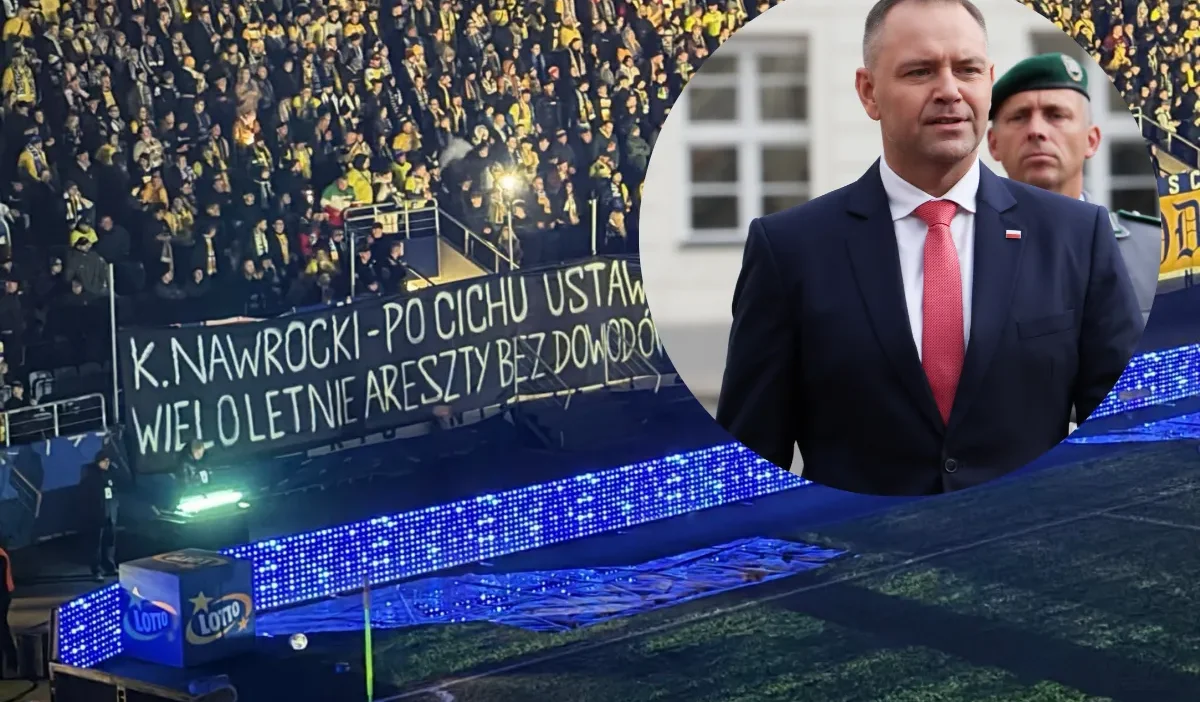
Polish President Karol Nawrocki is facing escalating protests from fans at sporting events over his veto of criminal code amendments.
Fans Protest Presidential Veto
Fans across Poland are intensifying protests against President Karol Nawrocki’s decisions, particularly his veto of amendments to the Code of Criminal Procedure. Demonstrations are occurring at stadiums nationwide, featuring banners and slogans critical of the President.
Recent incidents during sporting events have seen fans openly criticizing President Nawrocki. Banners appeared in cities like Gliwice and Lublin, as well as during a match between Cracovia and GKS Katowice, consistently accusing the President of allowing abuses of power, tolerating lengthy pre-trial detentions, and opposing changes to criminal procedure.
Specific Grievances Voiced
In Gliwice, fans displayed a banner stating, “You are not one of us.” Lublin saw more detailed messages, alleging acceptance of lengthy detentions without sufficient evidence and criticizing legislative actions. References were made to specific proposed laws, such as the “Act 1600” and reforms to the Code of Criminal Procedure.
The match between Cracovia and GKS Katowice saw fans accuse the President of betraying the electorate that brought him to power, drawing a comparison to Judas.
The Vetoed Amendments
The escalation of discontent stems from President Nawrocki’s March 13, 2026, veto of the amendments to the Code of Criminal Procedure. The proposed changes aimed to significantly alter the functioning of the justice system.
Key Provisions of the Proposed Law
The proposed law included provisions to prohibit the use of illegally obtained evidence, limit the application of temporary arrest, increase the role of courts at the expense of the prosecutor’s office, and strengthen the right to defense at every stage of proceedings. Improved access to legal aid was also a key element.
Presidential Justification for the Veto
Presidential spokesperson Rafał Leśkiewicz stated the veto was issued to ensure citizen safety and the state’s effectiveness in combating serious crime. The President’s office argued the proposed changes could weaken tools for fighting organized crime.
Debate Over Pre-Trial Detention and Illegally Obtained Evidence
The use of pre-trial detention in Poland remains a contentious issue, with legal organizations and international bodies, including the European Court of Human Rights, pointing to its overuse. Lengthy detentions, sometimes lasting years before a verdict, are common.
Critics argue the lack of restrictions leads to prolonged isolation for those not yet convicted, with significant social and professional consequences. Law enforcement agencies maintain that temporary arrest remains a crucial tool for securing proceedings.
The admissibility of illegally obtained evidence also sparks controversy. The proposed amendment to exclude such evidence was seen by some legal professionals as strengthening the rule of law, while opponents argued it could hinder the effective prosecution of serious crimes.