


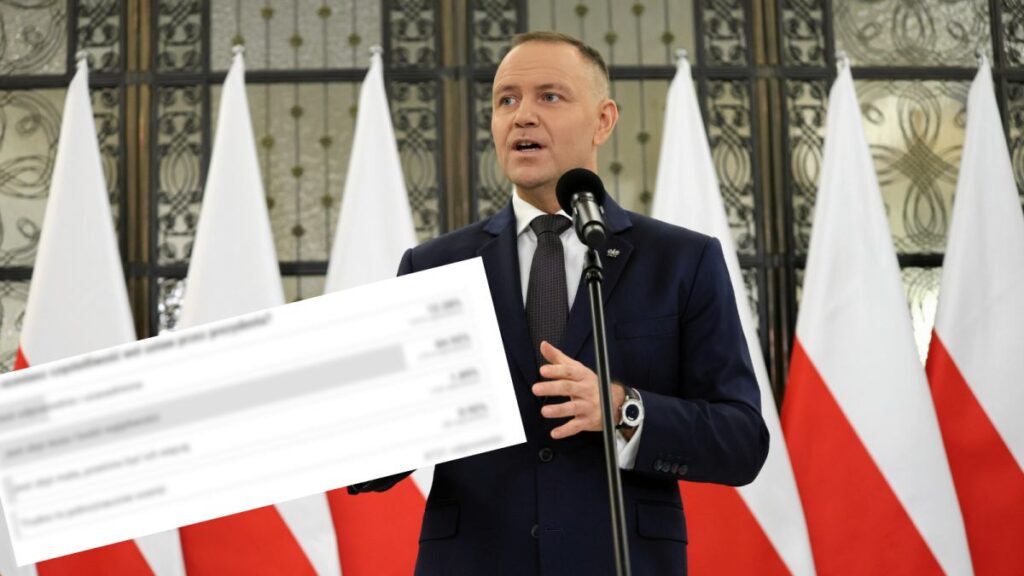
A recent poll reveals that over 84% of Polish respondents believe President Karol Nawrocki is using his veto power too often, amid ongoing tensions with the government.
Public Opinion on Presidential Vetoes
A recent survey indicates strong public disapproval of the number of vetoes issued by President Karol Nawrocki. The poll results show that 84.91% (7414 votes, as of March 30, 2026) of respondents believe the number of vetoes is “too high and raises doubts.”
Only 12.28% (1072 votes) found the number of vetoes “appropriate and justified,” while a small minority, 1.89% (165 votes), thought there were “too few” vetoes. Just 0.93% (81 votes) of the 8732 total respondents found it “difficult to assess definitively.”
The Presidential Veto Process
A presidential veto halts the signing of a law and returns it to the Sejm (Parliament) for reconsideration. The Sejm can override the veto with a qualified three-fifths majority vote, with at least half of the statutory number of deputies present.
If the veto is overturned, the President is obligated to sign the law. Otherwise, the legislation does not come into effect.
Nawrocki’s Narrow Victory and Political Context
President Karol Nawrocki won the election by a narrow margin, defeating Rafał Trzaskowski. His candidacy was supported by the Law and Justice party, leading to ongoing friction with the current governing coalition.
Recent Vetoes and Political Disputes
President Nawrocki has recently vetoed several bills passed by the ruling majority, including legislation recognizing Silesian as a regional language. His decisions, particularly regarding the SAFE program, have become central to a broader political conflict with the governing coalition.
Coalition representatives accuse the President of politically motivated actions, while his supporters maintain he is exercising his constitutional authority to oversee the legislative process.