


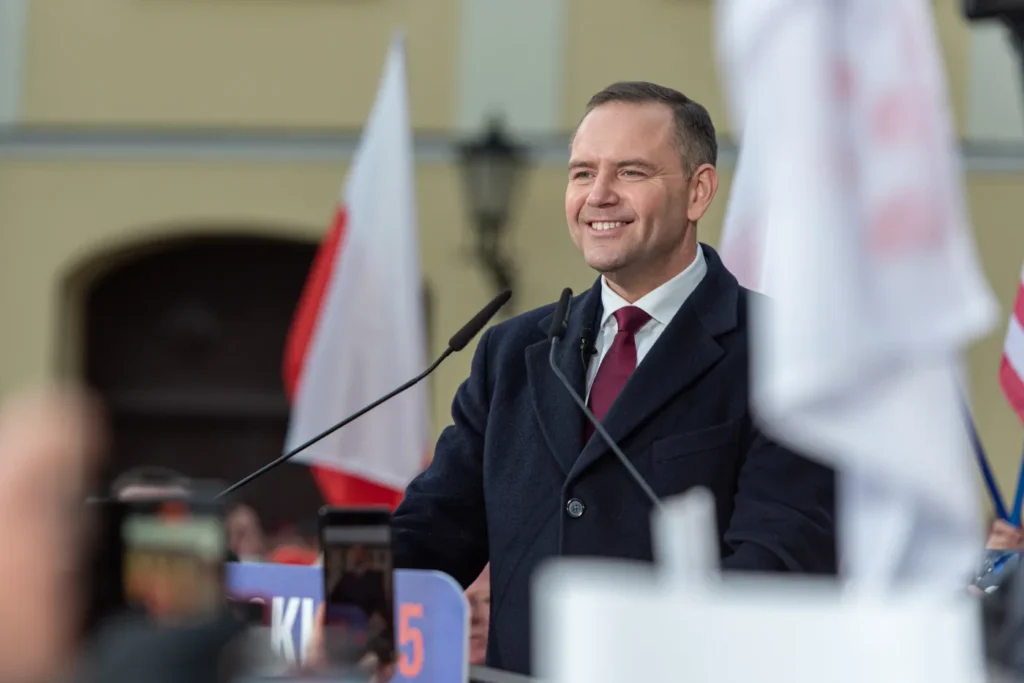
President Karol Nawrocki signed an amendment to the Education Law aimed at preventing the closure of small schools facing demographic decline in Poland.
New Law Aims to Preserve Local Schools
President Karol Nawrocki has signed an amendment to the Education Law designed as an alternative to the closure of small primary schools due to demographic changes. The President stated that decisions regarding schools should not be based solely on economic considerations.
The amendment allows for the creation of primary school branches and enables local governments to utilize unused space in schools, kindergartens, and other educational facilities for community purposes.
Expanded Community Use of School Facilities
The new regulations will allow for adapting primary education to demographic shifts while protecting, where possible, schools located near students’ homes. The President emphasized the importance of extending the consultation process and strengthening the voice of parents in school restructuring procedures.
Six-Month Notice for School Changes
The law introduces a six-month notification period for planned changes, such as school closures, which the President described as a “very important element” of the legislation. He warned that without the law, widespread school closures and political blame-shifting could occur.
Decision-Making Power Shifts to Local Authorities
The President clarified that the changes transfer the entire scope of decision-making regarding schools to local authorities, after extensive consultation with local officials and trade unions. He reiterated that decisions about schools should prioritize children, local communities, and the future, not just economic factors.
New Uses for School Buildings
Previously, only kindergartens were permitted to operate within primary school buildings. The amendment allows local governments to use school facilities for childcare for children under three, senior citizen programs, lifelong learning courses, healthcare, and cultural activities, provided these activities do not negatively impact school operations or safety.
Flexible School Structures for Demographic Challenges
The new regulations allow for the creation of primary schools with structures including grades I-III, I-IV, or IV-VIII, as well as primary school branches with grades I-III or I-IV, in areas facing demographic or geographical challenges. These branches will be organizationally subordinate to a primary school covering grades I-VIII or IV-VIII.
Streamlined School Restructuring Process
Local governments can now convert existing primary schools into branches or merge schools under a single resolution, with only one opinion from the education curator required. Current regulations only allow for the merging of similar institutions, such as kindergartens or general secondary schools for adults.
Extended After-School Care in Small Schools
Small schools (with up to 70 students) can now offer after-school care for students in preschool departments, based on parental requests or transportation needs. Students attending the after-school program will have access to a warm meal and snack, with participation being voluntary and fee-based.
Strengthened Role of Education Curator and Public Consultation
The regulations also strengthen the role of the education curator in cases of school district changes, closures, or transformations. They aim to make the school closure process more inclusive through mandatory public consultations and clear communication guidelines.
Appeals against the curator’s opinion on school closures will be directed to the appropriate administrative court, accelerating the proceedings.
Demographic Trends Driving the Need for Reform
The Ministry of Education, which prepared the legislation, cites data from the Central Statistical Office indicating a projected decline in the number of children aged 7-14 by approximately 5% by 2029, 19.5% by 2034, and 30% by 2060 (with a potential decline of 48.3% under an extreme demographic scenario).
Effective Date
The regulations will take effect 14 days after their official publication.