


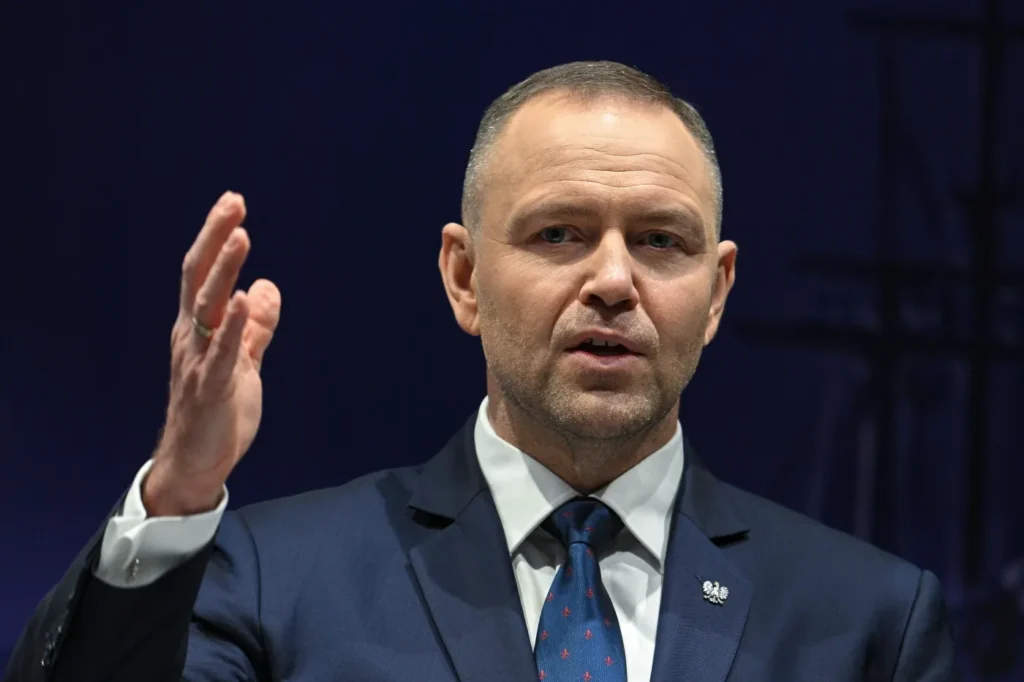
President Karol Nawrocki vetoed amendments to the electoral code and legislation allowing no-fault divorce, escalating tensions with the government.
Presidential Vetoes and Rising Tensions
President Karol Nawrocki has vetoed two significant bills: an amendment to the Electoral Code and legislation introducing “no-fault” divorce. He simultaneously signed three other legal acts, with details to be presented separately. This decision intensifies the conflict between the Presidential Palace and the government, marking a new phase in the dispute over Poland’s direction of systemic and social change.
Concerns Over Electoral Transparency
The President justified his decision primarily by expressing concerns about the transparency of the electoral process. He believes the parliamentary resolutions do not improve election standards and could potentially politicize them.
“I vetoed the electoral code bill. This bill raises very serious doubts regarding the impartiality and transparency of the electoral process,” emphasized Karol Nawrocki.
Dispute Over Election Commission Secretary Role
A key point of contention was the introduction of a new position of secretary for the election commission. The regulations would have allowed local government authorities – voivodes, mayors, and city presidents – to nominate the secretary. The President believes this change disrupts the existing balance, where commission members democratically elect their authorities.
“The secretary would not merely be a technical official. In practice, they could play the role of a ‘superintendent,’ with a real influence on the commission’s work,” he noted.
Opposition to No-Fault Divorce
The second veto concerned legislation allowing divorce outside of court. The proposal stipulated that, in certain cases – with the consent of both parties and no dispute – a divorce could be conducted before the civil registry office director.
The President firmly rejected this concept.
“Marriage is not merely an entry in a register. It is one of the foundations of social life,” stated Karol Nawrocki.
Protecting the Institution of Marriage
He argued that transferring the divorce procedure from the court to the registry office would diminish the rank of an institution protected by the Constitution of the Republic of Poland. He also emphasized that court control of divorce guarantees the protection of the interests of both parties, as well as children.
The no-fault divorce proposal was inspired by solutions functioning in some European countries, such as France and Spain, where simplified procedures aim to relieve the burden on courts and shorten proceedings. Supporters of the changes argued that the average duration of divorce cases in Poland often exceeds several months, and even years in more complex cases.
Opponents, including conservative circles and some lawyers, pointed to the risk of hasty decisions and insufficient protection for the weaker party in the relationship.
Political Consequences and Presidential Strategy
The President’s vetoes may have far-reaching political consequences. To override them, Parliament needs a three-fifths majority vote with at least half of the statutory number of deputies present. This effectively requires broad consensus across divisions, which seems unlikely in the current political situation.
Karol Nawrocki’s decision is part of a conflict between the ruling camp and the Presidential Palace. The dispute concerns not only specific laws but also the direction of changes in the legal system – from the organization of elections to moral and social issues.
The signing of three other laws demonstrates that the President is not blocking the entire legislative process but selectively evaluating individual projects. This strategy can be interpreted as an attempt to maintain a balance between cooperation and control over parliamentary actions.