


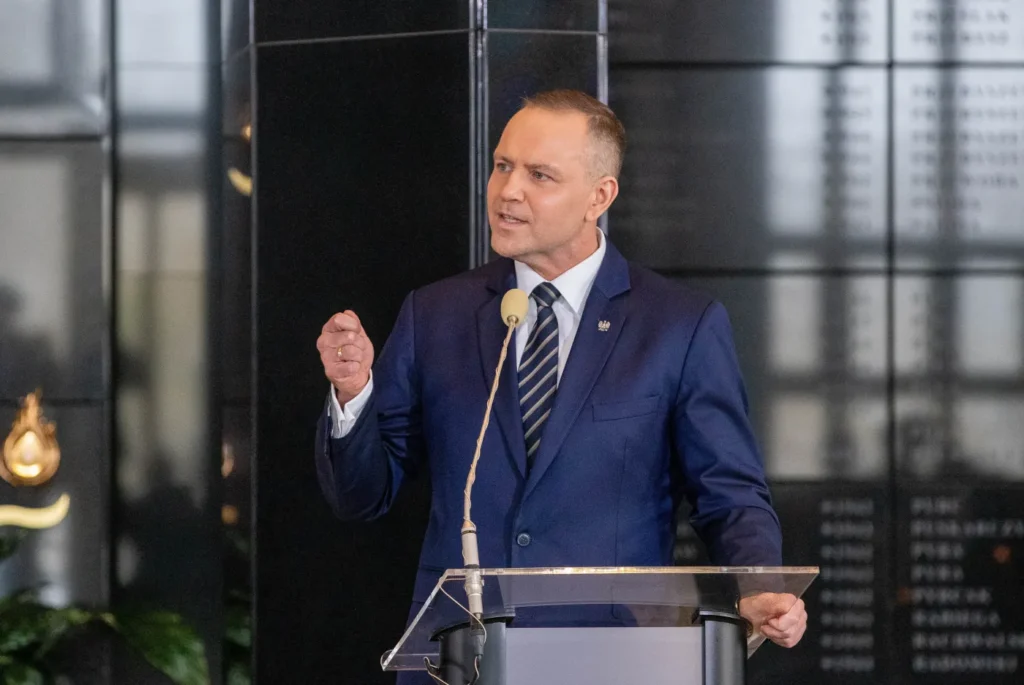
A recent poll reveals that more Poles disapprove than approve of President Nawrocki’s visit with Viktor Orbán ahead of Hungary’s April 2026 parliamentary elections.
Public Opinion Split on Presidential Visit
A visit by the Polish President to Hungary and a meeting with Viktor Orbán has caused clear divisions in public opinion. The latest poll indicates that more Poles view the move critically than positively, although a significant portion of respondents remain undecided.
Survey Details and Findings
A survey conducted by SW Research for Onet shows a mixed assessment of Karol Nawrocki’s visit to Budapest. The meeting with Viktor Orbán took place shortly before the Hungarian parliamentary elections, scheduled for April 12, 2026, adding to its political significance.
37.9% of respondents expressed a negative opinion of the visit. A positive opinion was expressed by 33.7% of respondents, while 28.4% of respondents had no firm opinion.
Controversies Surrounding the Visit and Russia Ties
The visit by the President to Budapest sparked considerable emotion from the outset, primarily due to Viktor Orbán’s foreign policy. The Hungarian Prime Minister has maintained relations with Russia for years, and his position on the war in Ukraine has repeatedly differed from that of most European Union countries.
Karol Nawrocki also found himself at the center of media discussion after a heated exchange with a TVN24 journalist. A question regarding Viktor Orbán’s pro-Russian activities met with a visibly emotional reaction from the President, which was widely commented on in the media and politics. Critics accused the head of state of avoiding a clear assessment of the Hungarian government’s policy towards the Kremlin.
Diplomatic Context and Election Timing
International relations experts emphasize that meetings with EU leaders are a standard element of diplomacy, but their context is crucial. In this case, the timing of the visit – just before the elections – was seen by some of the public as potential political support for the government in Budapest.
Impact on Hungarian Elections and Regional Policy
The upcoming parliamentary elections in Hungary are taking place in a tense political atmosphere. Viktor Orbán, who has been in power for many years, faces another test of public support, and his policy – both domestic and foreign – is the subject of intense debate.
In this context, the presence of a foreign leader, especially from a country in Central Europe, can be interpreted as a significant political signal. Some commentators point out that such visits are sometimes used in election campaigns as an element to strengthen the image of incumbent leaders on the international stage.
There are opinions that Poland should pursue a more balanced policy towards governments that present different positions towards Russia, especially in the context of regional security and the war in Ukraine.
Methodology
The poll was conducted on March 25, 2026, using the CAWI (Computer-Assisted Web Interview) method on a sample of 811 people. The sample structure was selected to reflect Polish society in terms of gender, age, and place of residence.