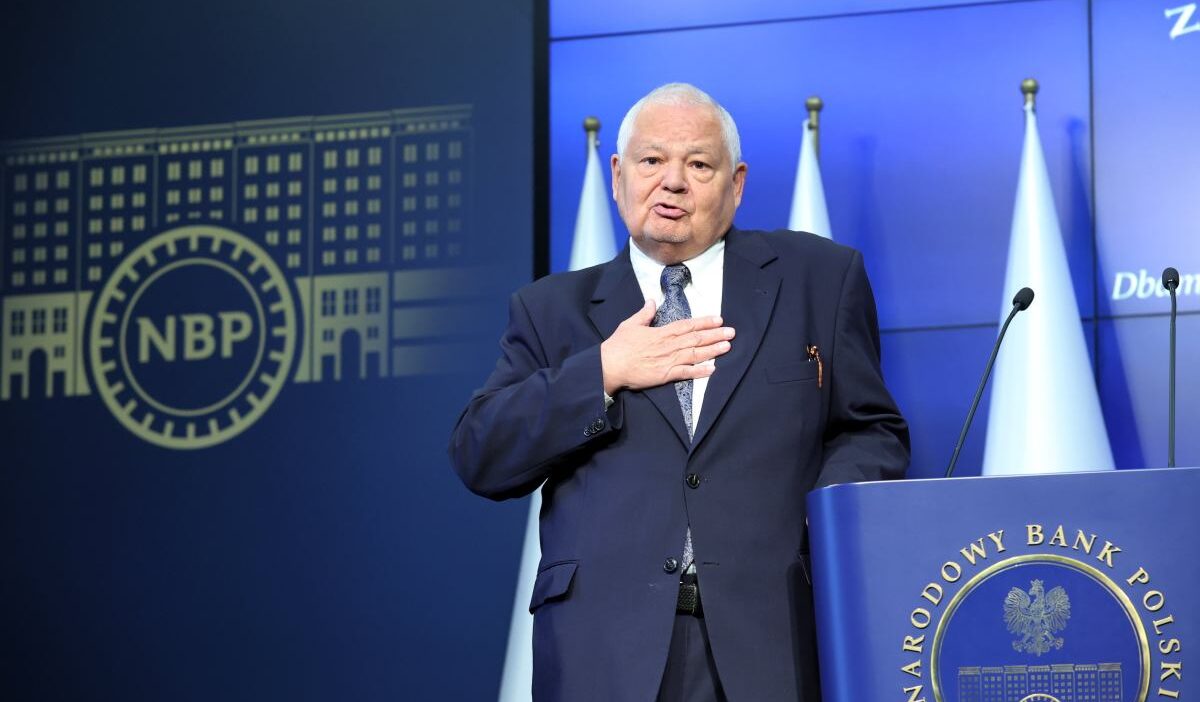
Poland’s ruling coalition is seeking to impeach National Bank of Poland (NBP) Governor Adam Glapiński, citing concerns over the bank’s independence and the “SAFE” funding program.
New Plan to Target NBP Head
Donald Tusk, before the October 2023 elections, pledged to fulfill 100 specific commitments within 100 days, including initiating proceedings before the State Tribunal against Adam Glapiński over alleged constitutional violations and breaches of the rule of law.
The stated reasons were the “destruction of the independence of the National Bank of Poland and the failure to fulfill the NBP’s primary task of combating inflation.”
SAFE Program as New Justification
After nearly three years, Glapiński has not faced repercussions, but a new argument has emerged to fulfill the promise. Janusz Cichoń of Civic Coalition (KO) pointed to Article 3 of the NBP Act, which states the NBP’s primary goal is to maintain price stability while supporting government economic policy, provided it doesn’t compromise the primary goal.
Allegations of Political Bias
Cichoń argues Glapiński’s actions regarding the SAFE program provide grounds for accusations of violating the bank’s political neutrality, potentially leading to a new complaint to the Constitutional Responsibility Commission or supplementing existing charges.
Ongoing Commission Work and Obstruction
The ruling coalition has previously accused Glapiński of unauthorized deficit financing, arbitrary currency interventions, paralyzing NBP operations, misleading the finance minister (regarding 2024 budget forecasts showing a 17 billion złoty loss instead of a projected 6 billion złoty profit), and violating political neutrality.
The Constitutional Responsibility Commission is currently conducting intensive investigations, having questioned most planned witnesses, with fewer than ten remaining. However, key NBP collaborators are reportedly consistently failing to respond to summonses.
Expanding Charges and Procedural Hurdles
The Commission could expand charges against Glapiński related to his involvement in the presidential SAFE program, requiring either a new complaint or a supplementary request. Both options necessitate gathering at least 115 parliamentary signatures and formally notifying Glapiński, restarting the procedural process.
Doubts About Maintaining Charges
Sources indicate an attempt was made to broaden the charges, but a commission member stated the matter hasn’t been officially discussed, with any discussions occurring informally. The source expressed skepticism about the charges holding up, suggesting even confirmed issues like obstructing board members or the Monetary Policy Council are matters for labor court, not the State Tribunal.
SAFE Funding Details
The SAFE program involves 150 billion euros (over 630 billion złoty) in low-interest loans for military equipment purchases, with no repayment required for the first ten years and a potential repayment period of up to 45 years. Poland is the largest beneficiary, having submitted 139 projects totaling 43.7 billion euros (approximately 185 billion złoty), with 89% intended for Polish defense companies.
However, the president vetoed legislation related to SAFE on March 12th. As an alternative, Nawrocki and Glapiński proposed a “Polish SAFE zero-percent” program, financed by the NBP.
The NBP stated it had fully presented its views on financing defense needs and would not participate in the increasingly political debate.