Archaeological research in Poland’s Mazovia region has revealed ten amber workshops from the 3rd and 4th centuries AD, indicating a major amber production center.
Przeworsk Culture and Amber Production
During the early centuries AD, the Mazovia region saw intensive production of amber ornaments. Archaeologists have discovered ten ancient amber workshops across five settlements. Some sites contained up to 20,000 fragments of amber, decorative beads, and pendants.
Amber as a Key Resource
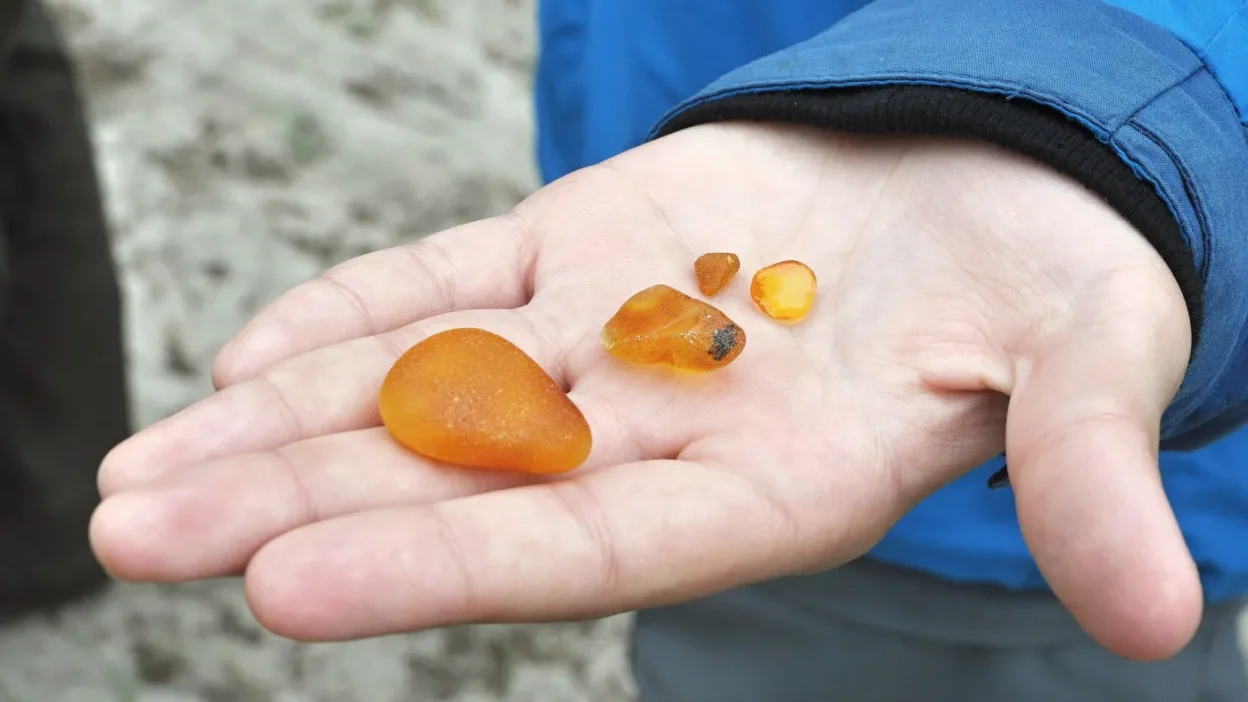
Amber, valued for its lightness and ease of processing, became a significant decorative raw material in Europe. While commonly associated with the Baltic coast, archaeological evidence shows amber workshops existed inland in Mazovia between the 3rd and 4th centuries AD.
The Mazovian Metallurgical Center
Much of present-day Poland was inhabited by the Przeworsk culture during the early centuries AD. These communities were skilled craftspeople, notably in large-scale iron production. Western Mazovia hosted the Mazovian Metallurgical Center, a large complex of settlements with iron production traces.
Discovery of Amber Workshops
Research by Dr. Adam Cieśliński of the University of Warsaw and Dr. Marcin Woźniak of the Museum of Ancient Metallurgy in Pruszków revealed amber processing alongside metalworking. Excavations since the 1970s uncovered the ten workshops across Biskupice, Izdebno Kościelny, Regów, Tłuste, and Wierzbina.
Mazovia: A Major Amber Center
Professor Cieśliński stated that Mazovia appears to be the largest amber processing center outside the Roman Empire, with numerous workshops also identified in Kujawy, though on a smaller scale.
Stages of Amber Production
The workshops contained items representing all stages of production: raw amber blocks, semi-finished products, and finished jewelry components like beads and pendants. The variety of forms indicates the craftspeople possessed diverse production techniques.
Scale of Production and Potential Trade
Biskupice and Izdebno Kościelny yielded particularly rich finds, including over 20,000 amber fragments in one workshop, indicating large-scale production. This suggests some output may have been intended for trade beyond local needs.
Workshop Structure and Tools
Workshops were typically located in semi-subterranean structures, small buildings partially dug into the ground, covering around 10-15 square meters. Amber’s relative softness meant processing didn’t require complex tools.
Amber Processing Techniques
Craftspeople used knives, bone or iron drills, and stone tools for grinding and polishing. Production involved initial shaping, grinding, drilling holes, and polishing surfaces. Some items were turned on primitive lathes to create regular, symmetrical shapes.
Amber Sourcing and Connections to Iron Trade
The origin of the raw amber is a key question. Mazovia has limited natural amber deposits, primarily in the northeast (Kurpie region), so it had to be imported, likely from the Baltic coast – particularly Sambia and the Gulf of Gdańsk. The import of amber may have been linked to the export of locally produced iron, though chronological discrepancies exist, with iron production peaking earlier.
Regional Amber Production
Amber processing also occurred in Kujawy and other parts of Poland, but rarely reached the scale seen in Mazovia. Regions rich in amber, like the Baltic coast and Scandinavia, show fewer workshop traces, potentially due to incomplete archaeological records or different production organization.