Poland’s Ministry of Culture retains culturally significant items seized by Nazis, Soviets, and communists instead of returning them to rightful owners, an author argues.
A Questionable Comparison
The comparison of Poland’s Ministry of Culture to Nazis, Soviets, and communists may seem absurd, but the ministry behaves like a fence by holding onto cultural property obtained through criminal acts committed during World War II by Nazis and Soviets, and later by communists in the Polish People’s Republic.
This issue concerns restoring justice and repairing wrongs committed by Nazi Germany, Soviet Russia, and the communist authorities of the Polish People’s Republic, to the extent that it remains possible today.
Three Important Caveats
Before addressing the unresolved problem of settling accounts with Nazism and communism regarding cultural property, monuments, and artworks, three important qualifications must be made.
First, this criticism is not aimed at specific governments, as the situation has remained unchanged for the past 35 years regardless of whether the minister came from PO, PiS, SLD or any other party.
Second, the important restitution work conducted within the ministry since wartime is not being questioned, and there is no doubt about the effort, labor input, and real achievements in this regard.
Poland’s Cultural Heritage Loss
Poland was a victim of wars and plundering that particularly affected cultural property. Plundering, destroying, and looting (organized and spontaneous) works of art and monuments is an element of almost every armed conflict.
Poland was particularly affected by the Swedish Deluge, followed by the partitions of Poland, then World War I and World War II, and finally, unfortunately, also the times of communist rule.
Lack of Systemic Solutions
Despite Poland’s return to democracy in 1989, no systemic solutions have been introduced for the restitution of cultural property to former owners, unlike in other Central and Eastern European countries.
As a result of this neglect, Poland is closest to the model known from Belarus, where no systematic approach to restitution exists.
The State as a “Fence”
The lack of systemic solutions doesn’t mean that individual artworks and monuments haven’t returned to their former owners or heirs. However, most often, what was looted by Nazis, Soviets, or communists and subsequently recovered did not return to rightful owners.
The state, specifically the Ministry of Culture, claimed cultural property as its own (so-called property of the entire nation, otherwise national property) and transferred it to subordinate cultural institutions, particularly museums.
Justice and Property Rights
According to the widely recognized formula of justice, we repeat with Ulpian that justice is the constant and unchanged will to give each person what is legally theirs.
At the same time, no one can transfer more rights than they possess themselves. Therefore, the Ministry of Culture, not being the owner, cannot decide on the ownership of a monument or artwork looted from a private entity.
Concrete Examples
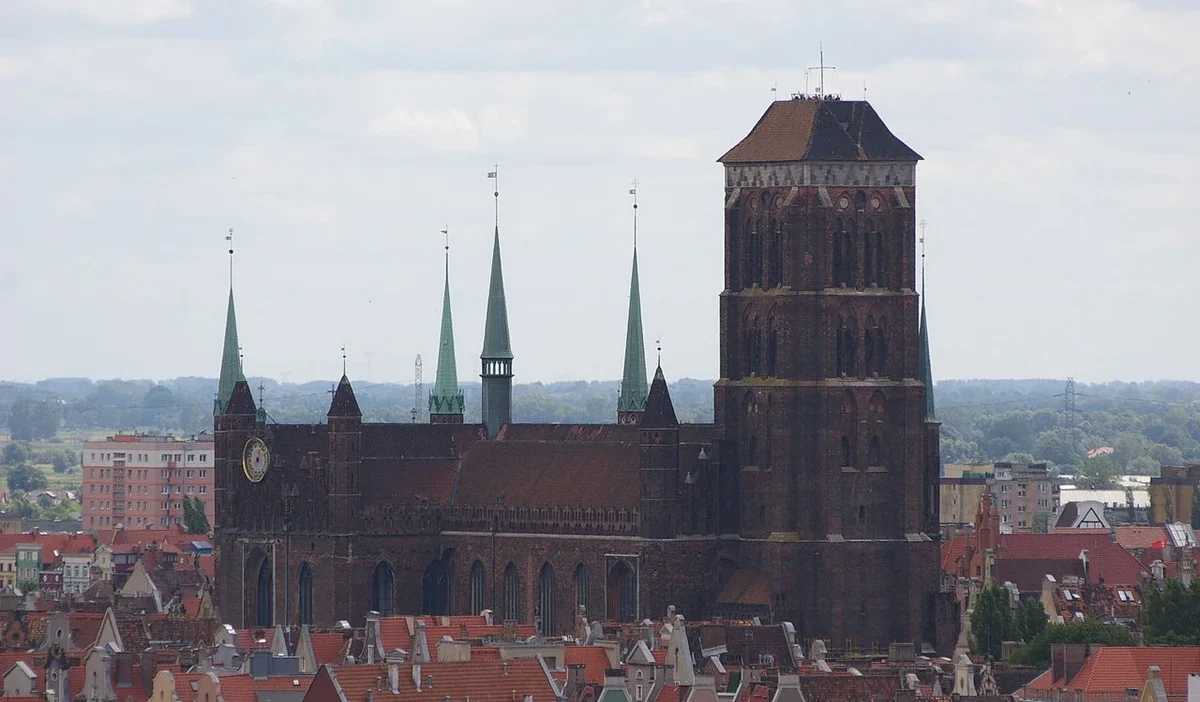
The author presents two concrete examples. The St. Mary’s Basilica in Gdańsk has been “shaken off” by every successive minister of culture.
Even during PiS governments, which supposedly strongly support the Catholic Church, the deputy minister responsible for monuments and museums not only refused to return altars and sculptures to the church but also threatened to reclaim those already returned (notably during the PRL era).
Questionable Legal Status
In one case, a Ministry of Culture publication regarding an object recovered abroad, also looted from the Church, stated: “as an object lost as a result of World War II, it has a special status and by law constitutes the property of the State Treasury of the Republic of Poland.”
The mere fact of recovering a wartime loss makes it the property of the State Treasury? The author knows of no such provision, and even if it existed, it would obviously contradict the Polish Constitution, constituting a form of neonationalization.