


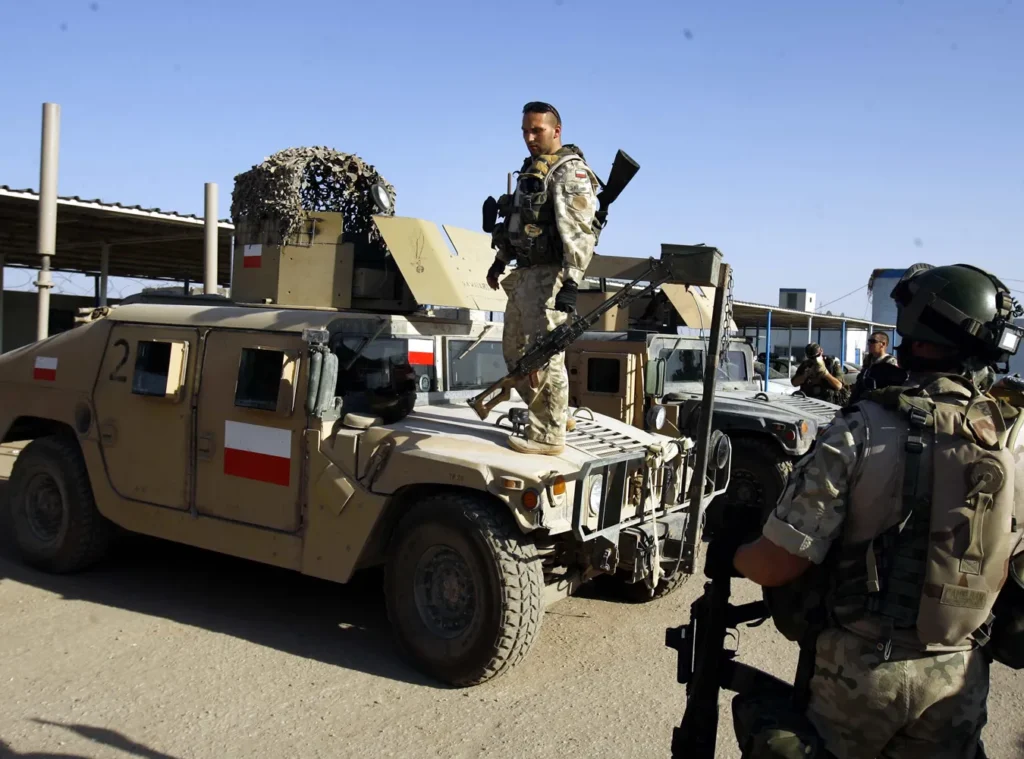
Poland has urgently relocated its military contingent from Iraq to Jordan following a rapid deterioration in regional security, spurred by escalating conflict.
Deteriorating Security Situation in the Middle East
The withdrawal of Polish troops from Iraq was prompted by a sharp escalation of conflict in the Middle East, beginning on February 28th with Israeli and U.S. strikes on targets in Iran. Tehran’s response was swift and multifaceted.
Iran launched attacks not only against Israel but also against countries in the Persian Gulf, targeting American military installations and civilian infrastructure, including airports and petrochemical facilities, significantly raising the threat level across the region.
Additionally, Tehran decided to block the Strait of Hormuz, a crucial global oil transport route, disrupting energy trade and increasing international tensions.
Polish Contingent’s Mission and Risks
The Polish Military Contingent in Iraq operated as part of international stabilization and training operations, including the NATO Mission Iraq, focusing on supporting Iraqi security forces, training soldiers, and providing strategic advice.
In recent weeks, the risk level for foreign contingents increased substantially, with rocket attacks and drone activity becoming more frequent, compromising the safety of military and civilian infrastructure.
Maintaining the mission under these conditions posed a real threat to the lives of soldiers, making the evacuation decision consistent with actions taken by other NATO nations reducing their presence in high-risk areas.
Coordination and Evacuation Process
Defense Minister Władysław Kosiniak-Kamysz stated that the relocation decision followed a detailed analysis of operational threats and was made in close cooperation with NATO allies, reflecting a broader alliance context.
The evacuation was conducted urgently but with adherence to safety procedures and international coordination, with the Operational Command of the Armed Forces playing a key role in logistics, transport, and soldier security.
Most personnel are now in Poland or en route, while some soldiers have been temporarily stationed in Jordan to maintain operational capabilities and potential for future regional deployment if conditions allow.
Israel-Iran-US Conflict: Regional and Global Implications
The conflict between Israel, the United States, and Iran has quickly taken on a regional character, featuring asymmetric warfare elements like drones, ballistic missiles, and cyberattacks.
Economic consequences are particularly significant, with the blockade of the Strait of Hormuz limiting oil exports from the Middle East – which accounts for 20-30% of global supplies – causing a sharp rise in international oil prices.
The risk of the conflict expanding to other countries is also a concern, with attacks on installations in Arab nations suggesting a wider area of the Persian Gulf could become involved, further complicating the military and political situation.
Prioritizing Soldier Safety
The Defense Minister emphasized that protecting the lives and health of Polish soldiers and contingent personnel was the top priority, with the relocation decision made when the risk of remaining in Iraq exceeded acceptable levels.
The operation was carried out in a coordinated and safe manner, thanks to pre-prepared evacuation scenarios, reflecting the Polish army’s long-standing practice of considering such situations in foreign mission planning.
The temporary transfer of some soldiers to Jordan allows for operational flexibility, enabling a rapid response to developments in the region and a potential return to Iraq in the future.