


Poland’s Ministry of Science will implement mandatory ethics codes, gender quotas, and feminine language requirements in higher education by January 2027.
Equality Package to be Included in Law with New Timeline
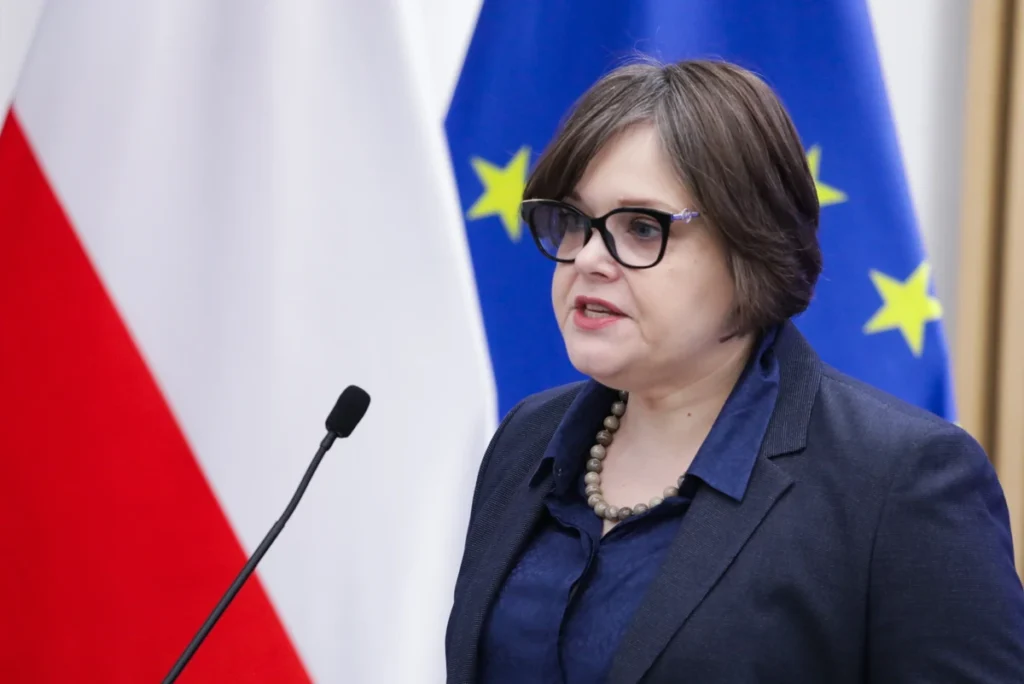
As announced at a press conference by Undersecretary of State for Science Dr. Karolina Zioło-Pużuk, equality measures for universities and institutes will be included in the bill to amend the Higher Education and Science Act. She estimated that the legislative process for the amendment should conclude by the end of this year, with new regulations to take effect from January 1, 2027. The document is set to go to public consultation in June.
Ministry Announces Anti-Discrimination Package as Response to Campus Issues
Minister of Science Dr. Marcin Kulasek informed that the package is the result of last year’s work by two bodies established by the ministry: the Women’s Council and the team for identifying best practices and developing mechanisms to counter harassment. “We know that the problems on Polish campuses are serious and we also know that the state has an obligation to respond,” he said. “The package we are presenting today is a clear signal: Polish universities must be safe places, free from violence, discrimination and harassment.”
Mandatory Ethics Code for All University Members
Undersecretary of State for Science Karolina Zioło-Pużuk reminded that both teams working on the anti-discrimination package have ceased to operate, and in their place a new body will be established in March, which will focus on “broadly understood equality, preventing unwanted behavior, harassment,” and creating “a safe place at the university.”
She mentioned that one of the points in the package includes the obligation for each university’s senate to adopt an ethics code covering employees, doctoral students, and students. “The code will regulate what is ethical and impose penalties on those who violate this code,” she explained.
Feminine Forms and Non-Discriminatory Language in Official Documents
The draft legal changes also foresee the obligation to use feminine forms and non-discriminatory language in all university and institute documents as well as in the Higher Education Act. One of the points also specifies provisions regarding subordination to prevent nepotism and conflicts of interest.
According to the proposed amendments, ombudsmen for student rights and doctoral student rights are also to be included in the law. Universities and institutes will also be required to ensure that at least 30% of representatives in university senates and councils, scientific institute councils, and advisory bodies of the Ministry of Science and Higher Education are of both genders.
“We Will Be Most Attacked For This” – Ministry Responds to Criticism
“I imagine that we will be most attacked for this. But I would bet my hand that in every community composed of women and men there is at least 30% of women who are appropriately educated and suitable for performing high functions,” said Karolina Zioło-Pużuk. “So let the opponents of this idea not get nervous.”
She argued that the proposed changes are only apparently revolutionary. “Many Polish universities already apply these provisions, just in their internal regulations, and we want them to become mandatory for everyone,” she summarized.
Dr. hab. Katarzyna Leszczyńska from the AGH University of Science and Technology, a member of the Women’s Council, assessed in an interview with PAP: “Our proposals receive legitimacy from the highest state institutions. Today, a lot is being done on universities to counter harassment and discrimination, but these are mainly soft actions, for example, training, workshops, education. However, for change to be effective, it must also work at the institutional level, in creating law, norms and sanctions.”