Polish National Security Council meeting Wednesday focused on SAFE program, Peace Council, and opposition leader Czarzasty, drawing expert scrutiny.
Political Game at National Security Council
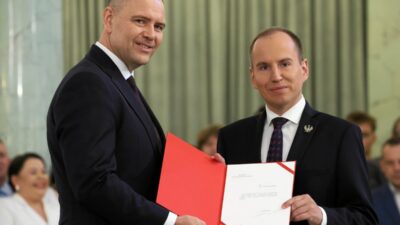
The National Security Council (RBN) meeting began Wednesday after 14:00 at the Presidential Palace. President Karol Nawrocki opened the public session, outlining three agenda items: the SAFE program, the Peace Council, and the “eastern contacts” of opposition leader Włodzimierz Czarzasty. Professor Agnieszka Kasińska-Metryka of Jan Kochanowski University noted the agenda seemed overly focused on Czarzasty.
“This is not an issue that should have been on the RBN agenda,” the political scientist told Gazeta.pl. She argued the RBN’s purpose and the president’s mandate were being “depreciated,” suggesting it was “simply an element of political game and an internal conflict moved to a different plane.”
Security Clearances Under Scrutiny
Nawrocki stated he had undergone multiple security service verifications and held access to classified information. He noted that Polish Sejm Marshal Czarzasty lacks a security clearance as he never underwent the procedure, despite serving on the special services commission where he abstained from “top secret” briefings. This proximity to BBN head Sławomir Cenckiewicz, whose clearance was revoked by the Military Counterintelligence Service (SKW), drew attention.
Professor Kasińska-Metryka acknowledged the situations differ. “A security clearance would be necessary for the BBN head. For the Marshal, it would be voluntary,” she explained, though she noted a discussion about its potential value might be warranted.
Controversial Attendance
The presence of Confederation of the Polish Crown MP Włodzimierz Skalik, who was the sole member to vote against a resolution condemning September’s violation of Polish airspace by Russian drones, sparked controversy. Despite this dissent, he participated in the confidential security discussions.
The politologist emphasized the guest list was the president’s prerogative. If President Duda didn’t want Confederation representatives like Grzegorz Braun, they wouldn’t have attended. She questioned whether allowing a known pro-Russian faction “truly serves Russia” in a meeting concerning confidentiality.
Presidential Cooperation With Government
Nawrocki stated issues concerning the SAFE program and Poland’s role in Donald Trump’s Peace Council would require government cooperation. He confirmed he had submitted his proposed amendments to the government’s draft SAFE legislation.
Professor Kasińska-Metryka interpreted this as part of Nawrocki’s pattern of proposing his own initiatives when possible. She also highlighted perceived constitutional overreach in implying foreign policy requires presidential consent, and Nawrocki’s continued use of the title “president” for himself, suggesting it was image-building and governmental counteraction.