


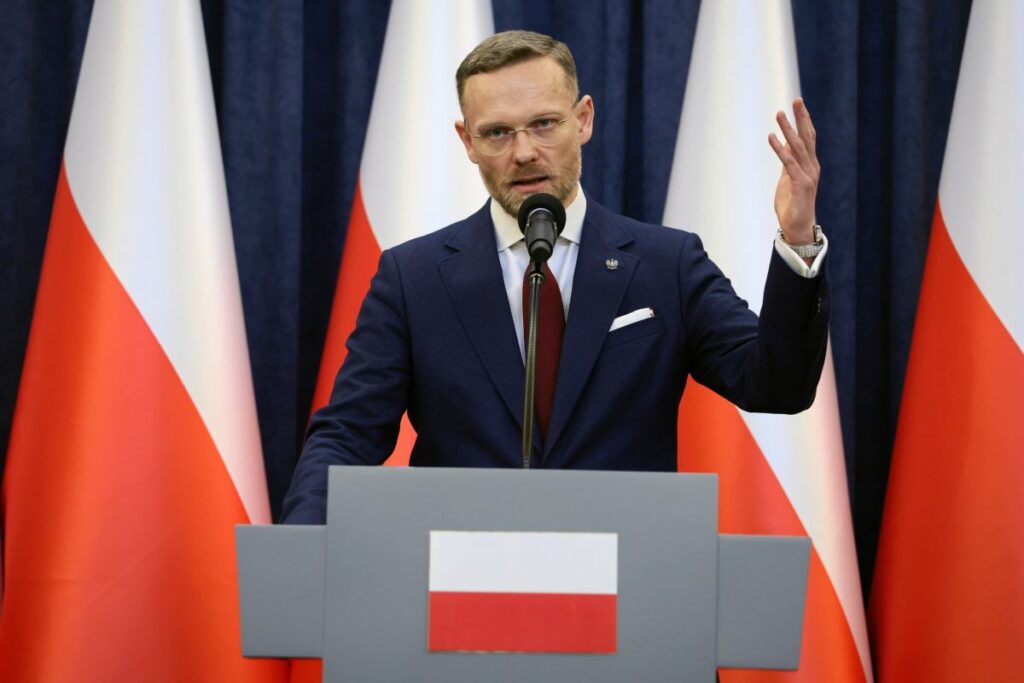
Two judges, Magdalena Bentkowska and Dariusz Szostek, took their oaths of office before the President, sparking debate over the selection process and constitutional authority.
Presidential Justification for Limited Swearing-In
Presidential Chief of Staff Zbigniew Bogucki explained the decision to invite only two judges for swearing-in was based on two primary reasons: existing vacancies in the Constitutional Tribunal (TK) dating back to the presidency of Karol Nawrocki, and the need to restore the Tribunal’s ability to issue rulings.
Bogucki noted that no decision has been made regarding the remaining four judges, with their cases currently under presidential review. Judge Dariusz Szostek echoed this explanation, stating the President cited existing vacancies during his term as the basis for the partial swearing-in.
Constitutional Concerns Raised by Professor Chmaj
Professor Marek Chmaj argues the President lacks the constitutional authority to selectively administer oaths to properly elected judges. He emphasized the President’s role is to uphold the Constitution, as outlined in Article 126 of the Polish Constitution.
According to Chmaj, Article 194 stipulates that the Sejm individually elects Constitutional Tribunal judges for nine-year terms, and a judge’s term begins upon the Sejm’s resolution. He further stated that judges are obligated to take the oath before the President, and the President is obligated to invite them to do so.
Alternative Paths to Oath-Taking
If the President fails to fulfill this obligation, Chmaj believes judges can independently take the oath before the President, choosing a written or oral form. He also addressed the argument that the Sejm did not specify which judge filled which vacancy, asserting the Constitution does not require the Sejm to assign each elected individual to a specific open position when filling multiple vacancies simultaneously.
Arguments Regarding Vacancy Timing
Chmaj dismissed the argument that only two vacancies arose during the current presidential term as justification for differentiating between the judges elected by the Sejm on the same day. He also pointed out that the Constitution does not specify a timeframe for the President to administer the oath, but it should be done “without delay,” meaning as quickly as possible.
Presidential Discretion and Competence
Chmaj clarified that while the President can analyze the situation, they have no authority to accept or reject the oath based on personal discretion. He reiterated that the Constitution does not grant the President such powers, and therefore, the arguments presented by the Presidential Office do not alter the fundamental requirement for the elected judges to take the oath before the President.
Context of Tribunal Functioning and Vacancies
Bogucki further argued the situation stemmed from a prolonged inaction by the Sejm majority, noting vacancies arose as early as December 2024 but remained unfilled for over a year. He highlighted the current state of the Tribunal, with only nine judges against a constitutional requirement of 15, and a minimum of 11 for a full panel, suggesting the partial swearing-in aimed to partially restore the Tribunal’s operational capacity.