


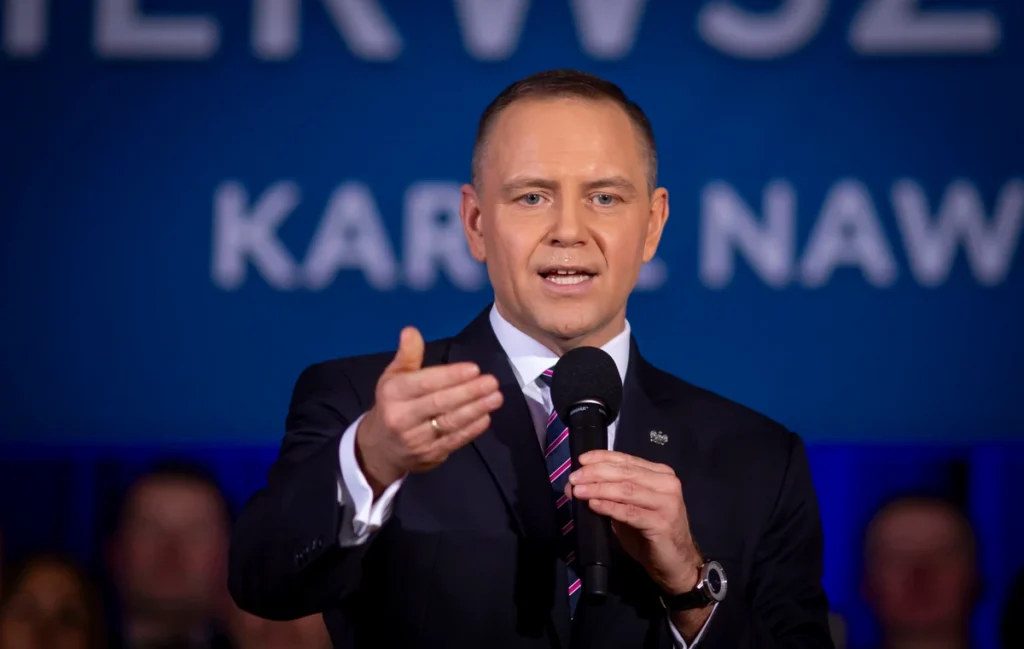
President Karol Nawrocki unveiled a law that could imprison judges for challenging the status of appointees since 2018.
Proposed Law’s Purpose
The President published a bill on restoring the right to a court and ensuring cases are heard without undue delay. This followed his refusal to sign amendments to the National Council of the Judiciary (KRS) law, which aimed to constitutionally select KRS members without political influence.
Karol Nawrocki criticized the earlier amendments as a “hastily drafted legal botch” rushed through parliament, hence proposing his own project to stabilize the judiciary and shorten proceedings.
Rejection of Dialogue
Dialogue proposals have been rejected. The President stated: “If proposals for dialogue are rejected – consistent with my commitment – I will ultimately appeal to the Nation with a referendum to restore normal functioning in the courts. Let the citizens decide. Their voice is always paramount.”
Blocking Challenges to Neo-Judges
The bill appears designed to block challenges to judges appointed after 2018. Article 4 explicitly states judges and court assessors cannot question rulings of the Constitutional Tribunal (TK) or undermine their existence or effectiveness. They also cannot evaluate KRS resolutions issued from March 5, 2018, to May 13, 2026, by disregarding, invalidating, or declaring them non-existent.
Invalidating Judgments
Under the proposed law, any judgment or court action based on questioning the status of a judge or court assessor appointed after March 5, 2018, would automatically be void. This includes decisions to exclude such judges or assessors.
Disciplinary and Criminal Liability
Judges refusing to apply the law, such as by refusing to sit with “neo-judges,” could be deemed to have relinquished their positions. The bill also expands disciplinary offenses to include actions undermining the status of the President, KRS, TK, or neo-judges.
A separate “Criminal Liability” chapter proposes imprisonment from 6 months to 5 years for public officials persistently questioning constitutional or legal powers of the President, KRS, TK, or State Tribunal. Harsher penalties of 1–10 years apply if motivated by personal or financial gain. Similar penalties would target those ignoring or refusing to apply laws governing judicial appointments.
Expanding Presidential Powers
The bill aims to transfer powers from the Minister of Justice. The President would announce vacant judicial posts, replacing the minister’s authority. Additionally, the President would gain the power to issue regulations governing the organization of ordinary courts, currently held by the minister.