


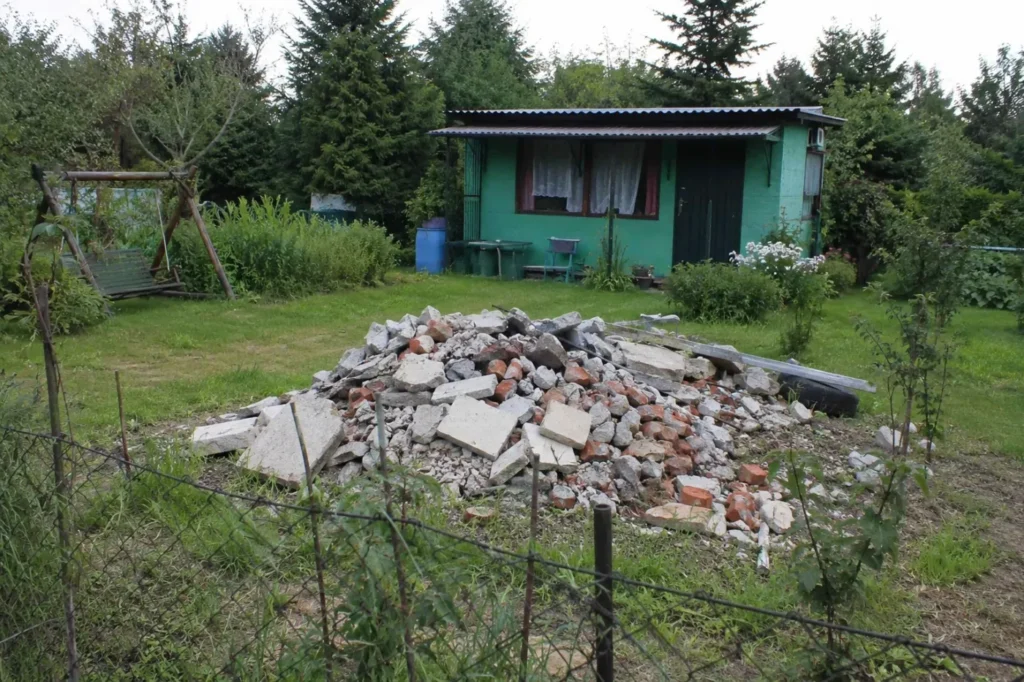
Polish allotment garden managers are warning users that improper use of plots, such as storing waste or conducting business, can result in heavy fines or total loss of lease.
Waste Disposal on Allotment Plots
One of the most frequent problems reported by garden boards is the treatment of plots as free storage for unnecessary items. Many gardens are being used to store old sofas, wardrobes, used tires, household furniture, or car parts.
Regulations clearly state that plots are intended for recreation and plant cultivation rather than waste storage. While construction materials like rubble or bricks are permitted temporarily during infrastructure repairs, persistent accumulation can trigger warnings or municipal guard interventions.
Hazardous Chemicals and Flammable Substances
While small amounts of fuel for garden tools are permitted, creating large stockpiles of gasoline, oils, or other flammable materials is strictly prohibited. Storing hazardous waste, such as asbestos-containing eternit or dumping used oils, can result in significant financial penalties.
In such cases, environmental protection services or municipal guards may be involved, with fines potentially reaching several thousand zlotys. Additionally, users may be required to clear the area at their own expense.
Vehicle Use and Regulations
Regulations limit parking and vehicle repairs to preserve the green, recreational character of the allotment gardens. Activities such as washing cars or changing engine fluids are banned to prevent the contamination of soil and groundwater.
Garden boards are increasingly reacting to cases where broken cars are left near huts or where plots are being used as unauthorized additional parking spaces.
Prohibition of Commercial Activity
The Polish Allotment Gardeners Association prohibits conducting business on the plots. This means a plot cannot function as a commercial warehouse, a service point, or a storage site for goods intended for sale.
An exception is made for the occasional sale of surplus crops or flowers during community events, but this must not develop into a regular commercial business.
Livestock and Animal Supervision
Large livestock, such as pigs, goats, sheep, or cows, are strictly forbidden on allotment grounds. Small animals like rabbits, chickens, or pigeons may be kept, but only after obtaining explicit approval from the garden board.
Owners must ensure proper sanitary conditions and prevent animals from causing noise, odors, or organic waste issues for neighbors. Furthermore, dogs must be managed so they do not threaten other garden users.
Loss of Allotment Rights
The most severe consequence of violating regulations is the termination of the allotment lease. The Polish Allotment Gardeners Association has the right to revoke the rights of any individual who continues to violate rules despite receiving written warnings.
The procedure typically begins with a formal notice to remove the violations. If ignored, the user may be forced to vacate the premises and dismantle any structures or plantings according to established procedures.