


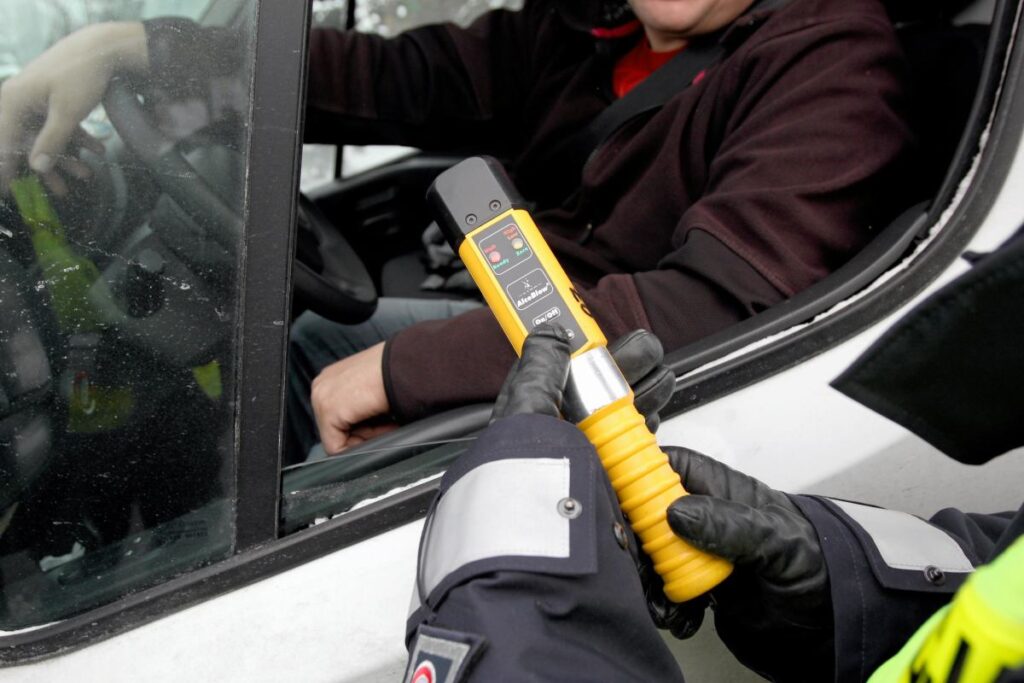
Last Thursday, around 4:30 p.m., Polish prosecutor Dariusz K. was arrested in Grzegorzew following a collision that harmed a four‑person family, and he faced charges for drunk driving and attempting to coerce police.
What exactly happened?
On last Thursday at about 4:30 p.m., a collision occurred on national road 92w near Grzegorzew in the Greater Poland Voivodeship. Prosecutor Dariusz K. was driving his car when it struck a stationary vehicle that had stopped because of a traffic shuttle control. Inside the struck vehicle were a four‑person family, including two children. Dariusz K.’s car tried to bypass the vehicle and depart on the emergency lane but was stopped by the traffic controller. Witnesses said he displayed clear signs of intoxication, with slurred speech, chaotic movements, shaky gait, and hyperactivity.
Surprising proposal from prosecutor
Two officers from the Traffic Department of the KPP in Kole arrived at the scene. Dariusz K. tried to convince the policemen that “nothing happened,” then hampered the breath‑alyzer test by breaking the first instrument and later pretending to blow, preventing a proper test. He allegedly told the police he was a prosecutor and asked one officer, “Will you blow for me?” The officer refused and informed the duty officer. Dariusz K. then made the same request to a second officer.
What the tests revealed
He was arrested by the policemen and taken to the Hospital in Kole for blood alcohol testing, after previously refusing a breath‑alyzer test. In his car, an empty 0.5 l vodka bottle was found. Blood samples showed concentrations of 2.10, 2.09, and 2.05 promille (taken at 19:12, 19:28 and 19:45). According to article 115 para. 16 of the Criminal Code, intoxication is defined as a blood alcohol level exceeding 0.5 promille.
Prosecutor faced two charges
On 12 December, Dariusz K. was suspended from duty by the district prosecutor in Konin. On the same day, the Internal Affairs Department of the National Prosecutor’s Office requested the Supreme Court lift his immunities and hold him criminally responsible. On 13 December he was officially adopted, and he was presented with two charges on Saturday. He was accused of driving under the influence (Art. 178a para. 1, up to three years’ imprisonment) and of inciting police to exceed their powers and obstruct criminal proceedings (Arts. 18 para. 2, 231 para. 1 and 239, up to five years’ imprisonment). He declined to testify, and preventive measures—suspension from duty, driving prohibition, and leaving the country—were imposed.
Significant changes to driving licenses
The European Parliament adopted new regulations on 21 October to enhance road safety by introducing stricter penalties for reckless driving, a two‑year probationary period for novice drivers, and a 15‑year licence validity.
Member states have three years to integrate these rules into national law. Under the new framework, losing a licence in one country will affect driving rights across the EU. Currently, a driver who loses a licence abroad may still drive in other EU states, including their home country; information exchange will now be mandatory. The regulations also lower the minimum driving age to 17, with the requirement that new drivers must travel with experienced drivers. Licence renewals will be country‑specific, requiring either medical tests or self‑assessment.