Presidential advisor Marcin Przydacz reveals President Karol Nawrocki was not informed about Poland’s talks with France on a nuclear deterrence program.
Poland-France Nuclear Talks
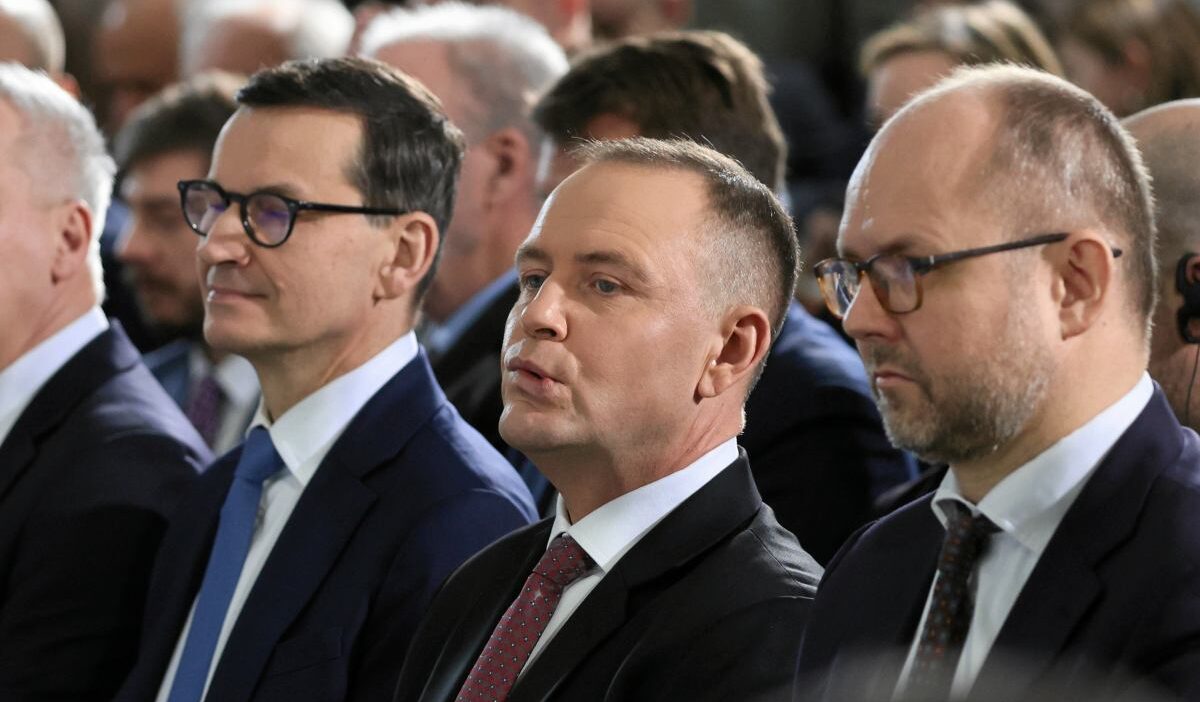
When asked about reports that Poland is conducting talks with France on a European nuclear deterrence program, presidential advisor Marcin Przydacz stated on Monday that President Karol Nawrocki was not informed about these talks.
“The basic question in this context is whether the French side has an appropriate nuclear arsenal to genuinely provide an umbrella of protection,” he said.
On Monday, Prime Minister Donald Tusk announced that Poland is conducting talks with France and a group of closest European allies regarding an advanced nuclear deterrence program. Earlier on Monday, French President Emmanuel Macron announced that eight countries have agreed to participate in France’s proposed advanced deterrence: Belgium, Denmark, Greece, Netherlands, Germany, Poland, Sweden, and the United Kingdom.
Nuclear Sharing Priority
The presidential advisor noted that only the United States possesses real nuclear deterrence capabilities, primarily through the Nuclear Sharing program, which is present in several European countries. He pointed out that there is currently no presence of American nuclear capabilities in Central Europe and on NATO’s eastern flank, while Russia has been expanding its infrastructure in the Kaliningrad region and on the territory of Belarus.
In light of this, the head of the International Policy Office argued that Poland should first seek to join the Nuclear Sharing program and talk to Americans.
Asked by the Polish Press Agency whether the president intends to take action in this matter, he accused the government of “not much happening” in this area for two years. He also pointed out that in the Sejm, a resolution calling on the government to act has been pending for two years and that he does not expect Marshal Włodzimierz Czarzasty to do anything with it.
Poland’s Position on Middle East Conflict
Speaking about the war in Iran, the presidential minister stated that “there is neither a request nor talks” from the American side about possible Polish involvement in operations in Iran. Asked directly if he rules out sending Polish troops to Iran, he answered: “as of today, I completely rule this out.”
At the same time, he called on the government to prepare evacuation actions for Polish citizens who are in the Middle East. He criticized the Ministry of Foreign Affairs for its response to Poles needing help, accusing the ministry of instead telling citizens “you shouldn’t have gone there” instead of organizing assistance. He described this as a “compromising” of consular services, pointing to a non-functional telephone line.
Recent Developments in Iran
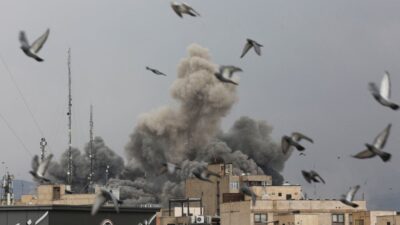
On the morning of Saturday, February 28, Israel and the US began airstrikes on targets in Iran, including the headquarters of Supreme Leader Ayatollah Ali Khamenei in Tehran as well as nuclear and military facilities.
Iranian authorities confirmed the death of Khamenei, Islamic Revolutionary Guard Corps commander Mohammad Pakpur, and security advisor Ali Shamkhani. In response, Iran attacked Israel and US military bases in countries in the region. The Israeli Army, in turn, conducted strikes on Hezbollah targets in Lebanon in response to earlier rocket fire.