


As Russia’s full-scale invasion of Ukraine marks its fourth anniversary, a Munich newspaper identifies European politicians allegedly acting as Putin’s “fifth column.”
Russia’s War and Setbacks
February 24 marks the fourth anniversary of Russia’s full-scale invasion of Ukraine. According to “Muenchner Merkur,” this date is symbolic not only for defending Ukraine and European states, but also for Russia itself. The editorial notes that Vladimir Putin’s campaign is increasingly producing effects opposite to those intended.
The newspaper states that Putin “allows himself to be portrayed by his state media as a great commander,” however, as emphasized, Russia has not yet had a worse war leader. Commentators point out that despite enormous human and material losses, Moscow has not achieved the strategic goals set at the beginning of the invasion.
The newspaper notes that recently the Russian army has barely recorded significant territorial gains, while Ukraine conducted a lightning offensive, regaining approximately 300 square kilometers of territory. This data aligns with broader analyses from Western research centers.
European Politicians Accused of Pro-Russian Stances
The sharpest part of the “Muenchner Merkur” commentary concerns the political situation in Europe. According to the newspaper, at the beginning of the fifth year of the war, for Kyiv, Putin’s “fifth columns” operating in the West may pose a greater threat than the Russian military. The paper lists in this context the leader of the right-wing populist AfD, Alice Weidel, and the head of the far-left BSW, Sahra Wagenknecht.
Both politicians oppose further military support for Ukraine and criticize the sanctions policy against Russia conducted by Berlin and the European Union. In the programs of the AfD and BSW, there are calls to halt arms supplies, resume dialogue with Moscow, and limit sanctions.
The Munich commentary goes further, suggesting that such a position could lead to Germany breaking away from the group of countries consistently supporting Ukraine. The text also contains the thesis that some European politicians want to subordinate Berlin to the will of Donald Trump and Vladimir Putin.
Strong Criticism of Orbán and Fico
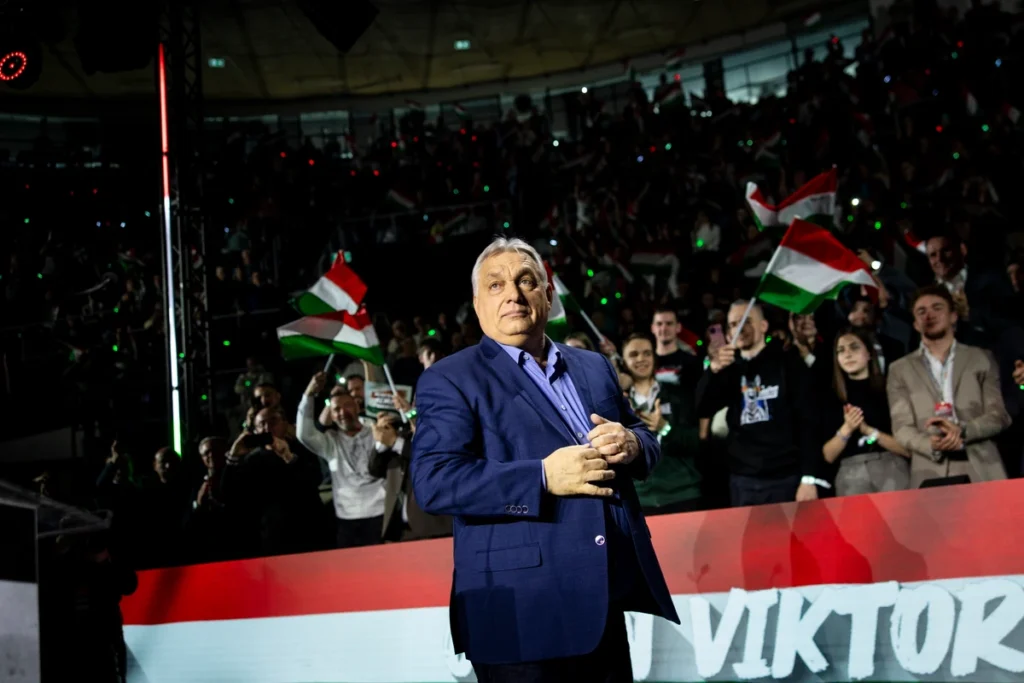
Particularly strong words were directed at Hungarian Prime Minister Viktor Orbán and Slovak Prime Minister Robert Fico. “Muenchner Merkur” described them as politicians who are increasingly shamelessly acting as Putin’s agents in Europe and trying to block EU aid to Ukraine.
In the context of Hungary, the newspaper wrote that “only Orbán’s betrayal makes Putin smile,” and in its conclusion stated that “Hungary, as a Russian submarine, has no place in the EU.” This is a reference to Budapest’s repeated blocking of sanction decisions.
On Monday, foreign ministers of EU countries did not reach a consensus on the 20th package of sanctions against Russia. Hungary objected. The government in Budapest announced it would block both the new sanctions package and the 90 billion euro loan for Ukraine.
EU Sanctions and Aid to Ukraine
Hungary’s position is in line with Orbán’s longstanding policy, who has criticized energy sanctions since the beginning of the war and maintained close relations with Moscow. Similarly, after returning to power in Bratislava, Robert Fico announced reducing military support for Kyiv and revising the sanctions policy.
The planned 20th sanctions package was to be adopted on the fourth anniversary of Russia’s invasion of Ukraine. Previous packages included, among other things, restrictions on access to dual-use technologies, personal sanctions against Russian officials and oligarchs, and restrictions in the energy and financial sectors.
Meanwhile, member states are discussing the launch of a 90 billion euro loan for Ukraine, which would support the state budget, reconstruction of energy infrastructure, and macroeconomic stability of the country under wartime conditions.
Threats to Western Unity
According to commentators, the lack of consensus on sanctions weakens the EU’s negotiating position vis-à-vis Moscow and strengthens the Kremlin’s message about the alleged Western fatigue with the war. This is precisely the aspect that “Muenchner Merkur” recognizes as one of the greatest threats to Ukraine in the next year of conflict.
In the final part of the commentary, the newspaper emphasized that Ukraine and Volodymyr Zelensky remain for Europe a symbol of resistance to tyranny and the fight for dignity. The paper assessed that just as Ukraine resists subjugation, Europe must defend its freedom and security.
The dispute over sanctions, financial aid, and arms supplies shows, however, that Western unity is not given forever. Under the conditions of changing political situation in the US and the growing influence of populist groups in Europe, the future of support for Ukraine is becoming one of the key topics of public debate in the EU.