


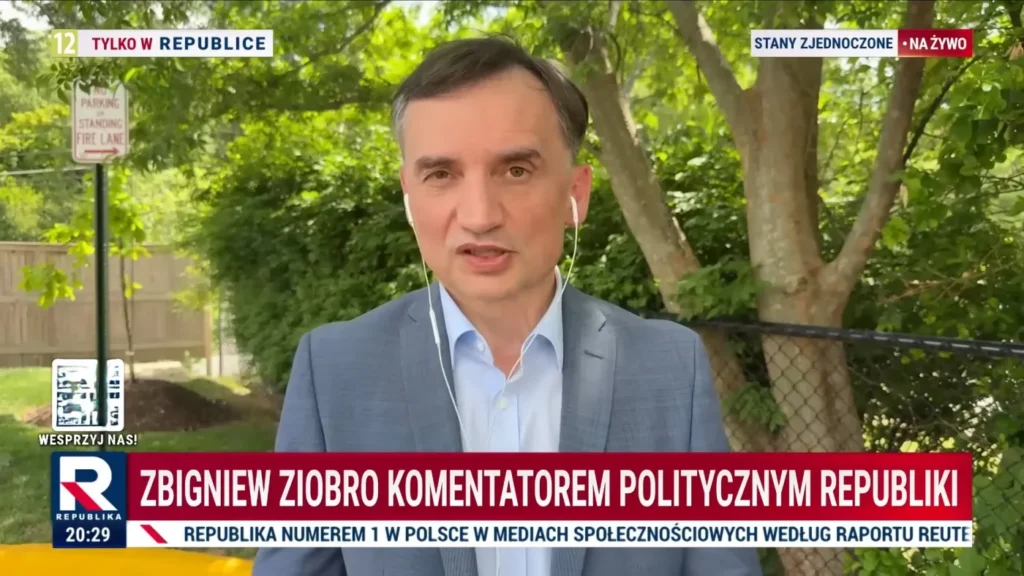
Former Polish Justice Minister Zbigniew Ziobro allegedly obtained a U.S. visa following a direct intervention by a high-ranking Trump administration official, amid ongoing criminal investigations against him in Poland.
The Intervention Behind the Visa
Reuters reports that Christopher Landau, a former U.S. official, instructed senior State Department personnel to facilitate and approve a visa for Zbigniew Ziobro. Three sources familiar with the matter indicated that the request was treated as an urgent “national security” priority, though the specific reasoning remains undisclosed.
Ziobro departed Hungary on May 9, just before Peter Magyar was sworn in as Prime Minister, a move that likely preempted potential extradition proceedings. Sources noted that the former minister traveled from Milan-Malpensa airport to Newark, New Jersey, accompanied by his son.
Legal Challenges in Poland
The Polish National Prosecutor’s Office has leveled 26 criminal charges against Ziobro related to his tenure as Minister of Justice and Prosecutor General. These allegations primarily concern the alleged embezzlement of funds from the Justice Fund for political gain and the controversial purchase and use of the Pegasus spyware system.
Ziobro has consistently denied these accusations, labeling them a political campaign orchestrated by the current Polish government. Following his arrival in the U.S., he publicly praised the country as a strong democracy and confirmed his new role as a commentator for Telewizja Republika.
Diplomatic Strains and Political Context
The incident has created friction between Warsaw and Washington. Poland has already revoked Ziobro’s passport and formally requested that U.S. authorities provide the legal and factual basis for his entry, given the outstanding criminal proceedings against him.
Reports suggest Christopher Landau acted on information provided by U.S. Ambassador to Poland Tom Rose, viewing Ziobro as a victim of politically motivated “lawfare.” This development complicates Polish-American relations, occurring simultaneously with broader debates regarding the scale of the U.S. military presence in Poland and the security of NATO’s eastern flank.