Polish legislation increasingly determines which forms of relationships receive legal recognition, privileging heterosexual marriage while marginalizing other partnerships.
Constitutional Rights and Marriage
The Polish Constitution, while guaranteeing personal freedom (Article 31), appears to excessively value certain human relationships. It grants one group full protection and symbolic acceptance, while offering another at best the advice to “not flaunt their feelings.” This applies not only to same-sex relationships but also to heterosexual couples who don’t want marriage but seek stability and protection in their partnerships.
Politicians reference Article 18 of the Constitution, which protects marriage as a union between a woman and a man, arguing this excludes other institutionalized forms of relationships. Lawyers, however, lack the certainty of politicians, leading to regular searches for obstacles to enacting partnership laws. Any issue, such as the risk of fraudulently acquiring agricultural land or military service benefits, can be presented as a barrier.
The “Closest Person” Legislation
Currently in the Sejm is a bill on the status of the “closest person” (to avoid naming them as a partner). The legislation aims to establish property regimes, rights to housing, access to medical information, health insurance coverage for partners, and inheritance matters. There would be no ceremony before a USC registrar nor child adoption.
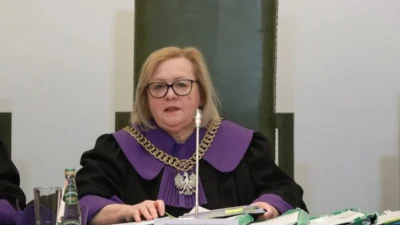
Despite addressing basic daily life issues, the bill has drawn criticism from various quarters, including Małgorzata Manowska, President of the Supreme Court. Few expect the President to sign such legislation.
The amendment to the format of civil status records remains another contentious issue. Following a November 25, 2025 ruling by the CJEU, a regulation is being prepared to register same-sex marriages from other EU countries. The documents will use “first spouse” and “second spouse” instead of husband and wife. How long such a legal change will endure is uncertain, likely until someone who has never had a wife objects.
Divorce Reform
Marriages face problems, mainly that sometimes relationships don’t work out, forcing separation. This creates bitterness and pain, not only for those involved but apparently also for political elites. Separations are inelegant and disapproved of by the Catholic Church, which is unfortunate because there’s a belief that it’s better not to provoke it.
Divorces before a court registrar, currently being considered in the Sejm, would be for marriages where a complete and permanent breakdown of the relationship has occurred. The couple would need to be married for more than a year without minor children or children conceived. During lower house discussions, Maria Kurowska of PiS argued that this is “an attempt to destabilize the institution of marriage by trivializing divorce. This law is a sham help for marriages.”
Artur Szałabawka from the same party furiously exclaimed: “By introducing this law, you support male chauvinists and act against women.” He added: “You are not serious. You don’t respect women, you hate them. That’s what you are.” It’s hard to imagine the head of state would sign such legislation.
Sex Education and Emergency Contraception
Regarding young people, the mandatory tale of bedroom secrets didn’t reach schools. The Ministry of National Education wanted to teach about human physicality within mandatory health education, but was blocked by Deputy Prime Minister Władysław Kosiniak-Kamysz. By training a doctor, by inclination a people’s brake.
The Supreme Medical Council recently convinced the MEN that health education should be mandatory. Education Minister Barbara Nowacka stated that the subject should be compulsory, with a decision on this and the final shape of the subject to be made by the end of March. If this fails, it will be an evident fiasco.
Relatively quick access to emergency contraception is still available. Within a pilot program, pharmacies sell it after issuing a pharmaceutical prescription. Data from the “Morning After” initiative for 2025 shows that nearly 53,000 prescriptions for emergency contraception were issued in Polish pharmacies. Most often, people aged 19-40 sought it, accounting for 69% of all cases.
Abortion and In Vitro Fertilization
Halfway through the coalition government’s term, they still can’t agree on situations where abortion should be available. Those who expected change were probably naive. After all, Szymon Hołownia, before becoming Marshal, was a TVN showman and before that, a church storyteller without papers for celebrating Mass.
On the positive side, the introduction of in vitro fertilization funding should be noted. Here the state really stood on the side of real human needs rather than ideological fears and moralizing instructions. This helped many loving people who finally had a child together.
Valentine’s Day is a good moment to remind that love doesn’t need legislation to exist. And while the right to love can’t be found in the Polish Constitution, we can find dignity, freedom, and the right to decide about one’s personal life. These are rights and freedoms that have their source in the very fact of being human.