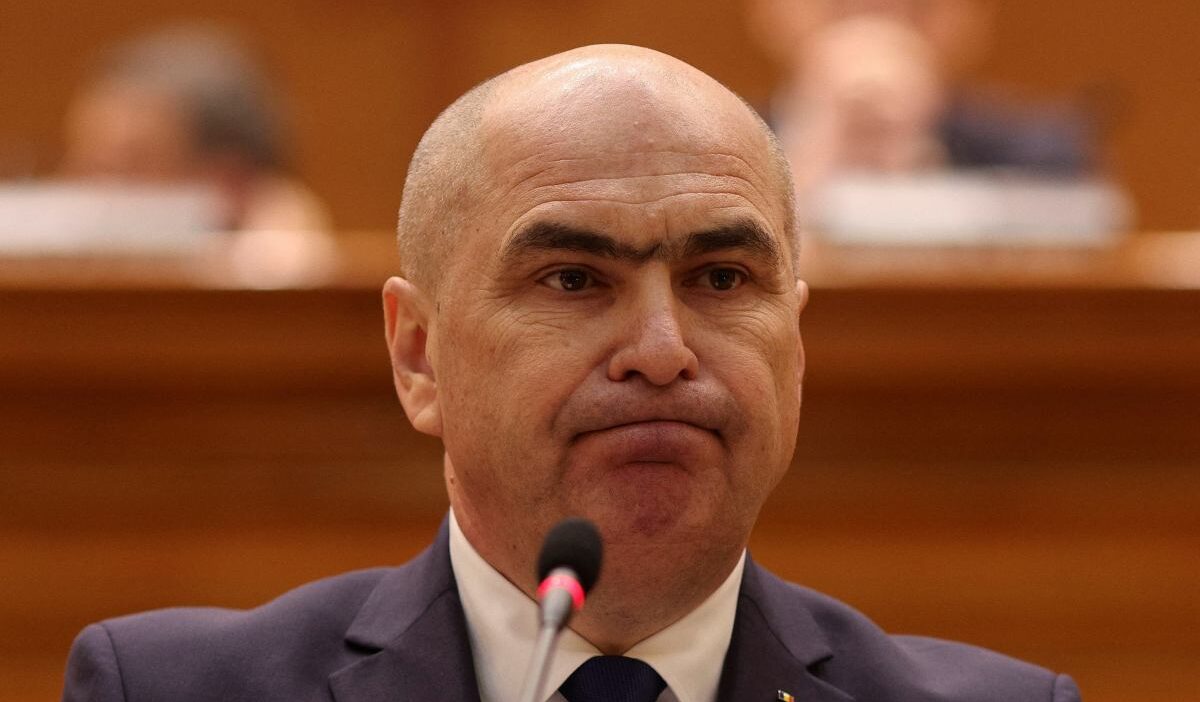
Romania’s pro-European government led by Ilie Bolojan collapsed after a no-confidence vote, opening a new chapter in the country’s turbulent politics.
Government Collapses Amidst Crisis
Prime Minister Ilie Bolojan described the no-confidence motion as “false, cynical, and artificial,” emphasizing that countries typically consolidate governments during multiple crises rather than changing them.
The fall of Bolojan’s government marks a new phase in Romania’s recent political instability. Exactly one year prior, on May 5, 2025, then-Prime Minister Marcel Ciolacu announced his resignation and the withdrawal of the PSD from the previous coalition government.
Vote Details
A total of 431 members of parliament and senators were present during the vote, out of a total of 464 Romanian parliamentarians. 233 votes were required to overthrow the government.
A total of 288 votes were cast, with three invalidated. 281 deputies voted in favor of the no-confidence motion, while only four voted against.
George Simion as Key Figure
Romania: No-confidence vote in the government. George Simion is identified as the “mastermind” of the operation.
PSD’s Role and Simion’s Influence
The votes of the Social Democratic Party (PSD) were crucial in the no-confidence vote. The PSD left the governing coalition last month and announced cooperation with the far-right Alliance for the Unity of Romanians, led by George Simion.
Politico reports that Simion is considered the “brain” behind the removal of the prime minister. His far-right party is gaining popularity in polls, and its chances will likely increase during the prolonged instability that threatens the country’s already uncertain economic prospects.
Future Government and Elections
The outgoing cabinet will continue to perform administrative duties until a new government is formed. However, it is uncertain whether early elections will be held.
Romanian President Nicusor Dan will begin consultations regarding the selection of a new government and a new prime minister. Politico suggests, “Another possibility is that Bolojan will be appointed to lead a minority government.”
Coalition Crisis and PSD Departure
On April 23rd, seven ministers representing the Romanian Social Democratic Party (PSD) resigned from the governing coalition, causing Ilie Bolojan to lose his parliamentary majority.
The PSD, the largest party in Romania, had been one of four groups forming the government coalition since June 2025, alongside the National Liberal Party (PNL) of Prime Minister Bolojan, the liberal Union for Saving Romania (USR), and the Democratic Union of Hungarians in Romania (UDMR).
Economic Policies and PSD Decline
The coalition government implemented several unpopular measures, such as tax increases and spending cuts, to reduce the budget deficit, the highest in the EU. These decisions negatively impacted the PSD’s ratings, as voters shifted to the far-right opposition.
The PSD has stated it is open to joining a “new, pro-European government” and supporting another prime minister, “regardless of whether it is a politician or a technocrat, open to the problems of citizens and able to cooperate with parties to ensure a parliamentary majority.”