

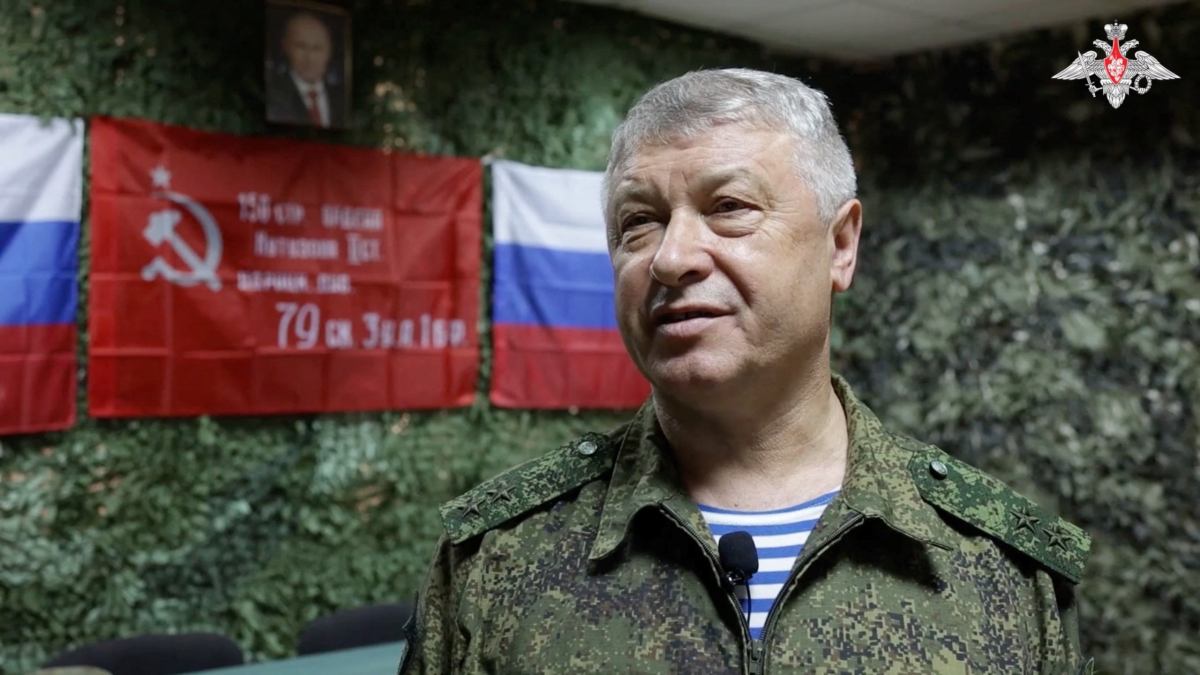
Russian security services claim Polish intelligence helped recruit the assailant who shot a high-ranking GRU general in Moscow.
Assassination Attempt on Military Official
The assassination attempt on Vladimir Alekseev, Deputy Chief of the Main Intelligence Directorate of the GRU, occurred on February 6 on a Moscow residential estate. The Russian military commander was shot on a staircase – according to one version, in the chest, arm, and leg. On February 7, Alekseev regained consciousness after surgery. His condition is serious but stable.
Russia’s Accusations Against Ukraine and Poland
According to Russia’s Federal Security Service (FSB), the Security Service of Ukraine (SBU) was behind the assassination attempt on Vladimir Alekseev, and Polish intelligence was involved in recruiting the perpetrator. Notably, the FSB provided no evidence to support its accusations. Russian Foreign Minister Sergey Lavrov accused Ukraine on February 6, stating that the goal of the attack was to sabotage peace talks.
Arrests and Confessions
Two days after the attack, Russian services announced the arrest of the perpetrator – 66-year-old Russian-born Ukrainian Lubomir Korba. One accomplice was arrested in Moscow. Both confessed to acting on orders from the SBU, according to FSB cited by Russian media.
Alleged Recruitment Process
According to the FSB, co-perpetrator Viktor Vasin admitted to being a supporter of Alexei Navalny’s Anti-Corruption Foundation, which has been designated as terrorist by the Moscow regime. The FSB claims Korba was recruited by an SBU officer in Ternopil in August 2025, received firearms training in Kyiv, underwent a polygraph test, and was trained in communication via Zoom. He was then transported to Russia via Kyiv-Chisinau-Tbilisi-Moscow and was promised $30,000 for killing the high-ranking Russian military officer. The FSB further alleges that Korba’s son, Polish citizen Lubosz Korba (born 1998, living in Katowice), participated in the recruitment with the support of Polish intelligence services.
Polish Response
Spokesperson for the Polish Ministry of Foreign Affairs Maciej Wewiór stated that commenting on pro-Kremlin agency reports is “pointless” and that Poland will not comment on “Russian propaganda.”


