


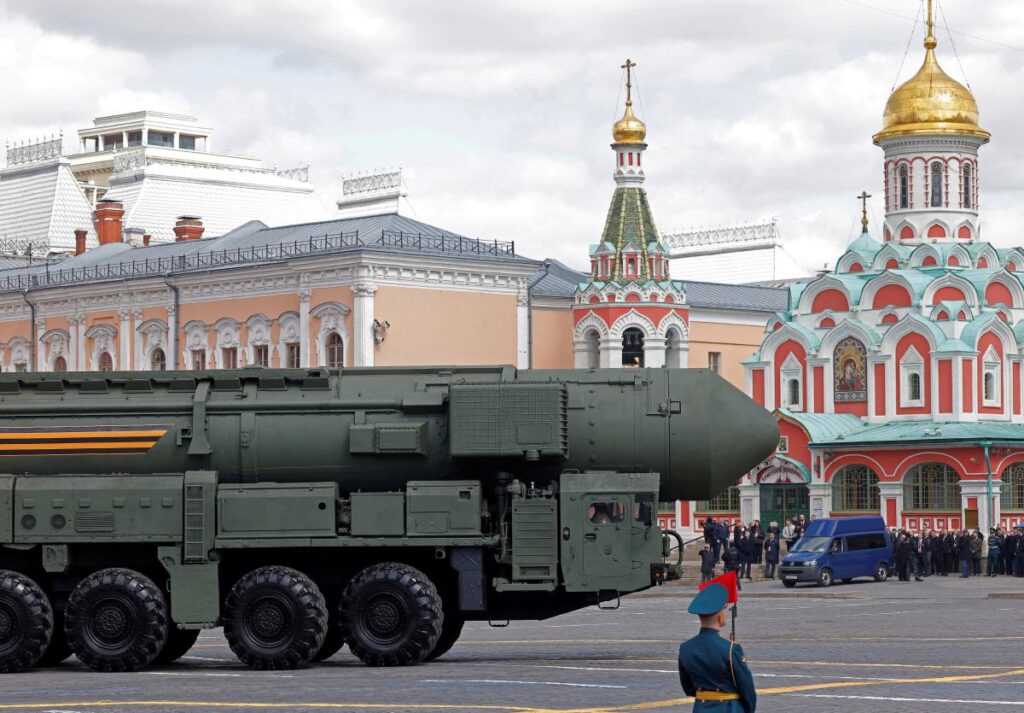
The last nuclear arms control treaty between Russia and the United States expires, leaving no such agreement between the two nations for the first time in over 50 years.
Treaty Expiration
The New START treaty expires on Thursday, February 5. According to information obtained by Politico, Russia had proposed renewing the agreement as early as September, but the US administration avoided providing a formal response. Donald Trump suggested in an interview with The New York Times that he intended to let the treaty expire. “If it expires, it expires,” he said. “We’ll make a better deal.” Trump indicated that any new agreement should also include China, which is also expanding its nuclear capabilities.
The expiration of New START would mark the first time in over 50 years without a nuclear arms control treaty between Russia and the United States. The two countries collectively control 80% of all nuclear warheads. “This is a new moment, a new reality – we are ready for it,” said Russian Deputy Foreign Minister Sergei Ryabkov.
Moscow’s Concerns
However, some recent statements from Russian politicians suggest that Moscow is actually concerned about the lack of agreement, notes CNN. The station cites Dmitry Medvedev, who signed New START in 2010 as Russian president. “I don’t want to say that this (the treaty’s expiration) immediately means a catastrophe and a nuclear war, but it should still concern everyone,” he said. “For the first time, the United States and Russia, the two countries with the largest nuclear arsenals in the world, will be without a fundamental document that limits and establishes control over these arsenals.”
Kremlin spokesman Dmitry Peskov stated that Russia believes this is “very harmful to global and strategic security.” CNN notes that the concern expressed by the Kremlin has an “egocentric and strategic” character and is the result of fears about potentially unlimited US nuclear expansion.
UN Secretary’s Warning
Meanwhile, UN Secretary-General Antonio Guterres has appealed to the United States and Russia to sign a new nuclear arms control agreement. He noted that the current treaty expires “at a serious moment for international peace and security.” “To lose achievements accumulated over decades could not happen at a worse time – the risk of using nuclear weapons is the highest in decades,” he said, cited by The Guardian. Former President Barack Obama also spoke in a similar tone, stating that the expiration of this agreement “could trigger another arms race, which will make the world less safe.”
Understanding the New START Treaty
The Russian-American nuclear arms control treaty, known as New START, was signed in 2010 by then-presidents of the USA and Russia – Barack Obama and Dmitry Medvedev. The document established limits on strategic nuclear weapons. It limited the number of deployed warheads to 1,550 on each side, with no more than 700 launchable from land or submarine-launched ballistic missiles and bombers, and 800 launchers. The treaty also provided for a mechanism of mutual inspections, allowing each side to ensure that the agreement was being complied with. In 2023, however, Vladimir Putin suspended Russia’s participation in this mechanism. The agreement could only be extended once, which happened in 2021 under the Biden administration, so currently a new treaty would need to be negotiated.
US Position
According to Reuters, one reason for the US not agreeing to extend the treaty may be the desire to “free” itself from the limitations contained in the document and begin expanding its nuclear arsenal in response to China’s growing capabilities. Another theory comes from The Guardian. “Some observers, however, suggest that the expiration of the New START agreement has less to do with ideology than with the actions of the Trump administration, where professional diplomats are sidelined because they simply do not have sufficient capacity to negotiate complex agreements,” writes the newspaper. Donald Trump himself suggested in an interview with The New York Times that a possible solution would be to develop a new treaty that would also include China.