


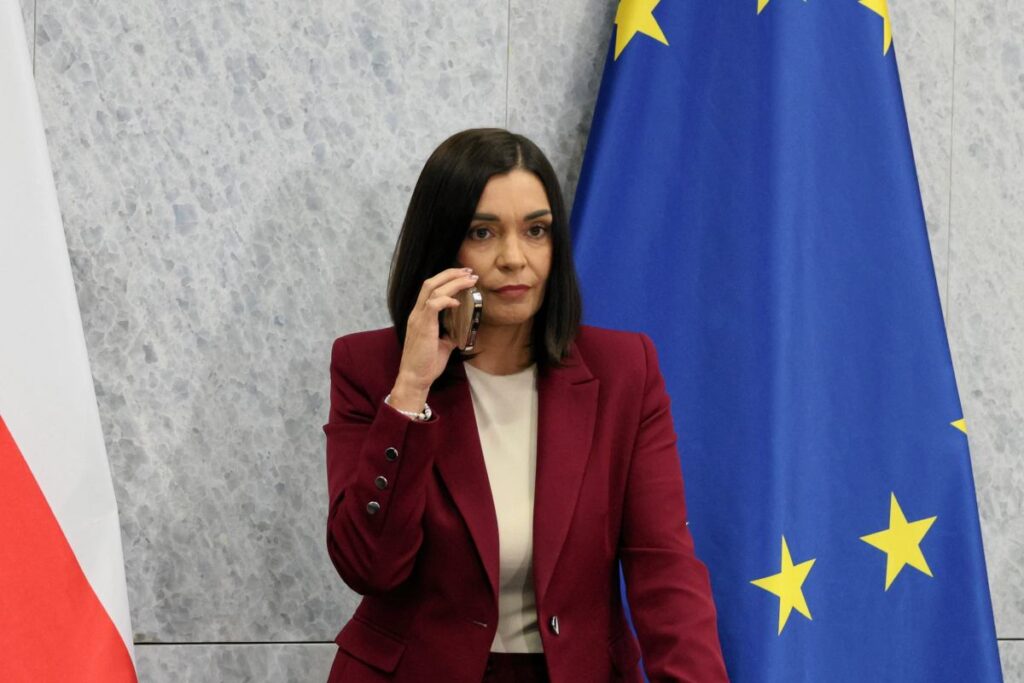
On Monday, June 8, a 54-year-old man identifying himself as a “Russian agent” left a suspicious package at the parliamentary office of Magdalena Sroka, triggering a police response and pyrotechnic inspection.
The Incident at the Pegasus Committee Office
The event occurred before noon at the office of Magdalena Sroka, head of the parliamentary investigative committee on Pegasus. A man entered the building, informed a staff member he was a “Russian agent,” and left a package behind. The MP was not present during the incident.
Police detained the 54-year-old resident of the Gdańsk district, who had no prior criminal record. Following an emergency call from the office, pyrotechnicians inspected the package, which contained items including hand-written notebooks.
Context of Polish-Ukrainian Relations
Sroka expressed gratitude to the police for their professional response, noting that tensions regarding Polish-Ukrainian history, specifically the Volhynian Massacre, have been high in recent weeks. She emphasized the need for historical honesty and responsibility in public discourse.
The controversy stems from President Volodymyr Zelenskyy’s decision on May 26 to bestow the honorary title “Named after the Heroes of the UPA” upon the 10th Separate Special Operations Detachment “North.” The UPA is historically linked to the massacres of 100,000 to 130,000 Poles between 1943 and 1945.
Diplomatic and Political Reactions
Karol Nawrocki argued that the move provided “oxygen to Russian propaganda,” while Ukrainian Foreign Minister Andrij Sybiha responded on June 3, asserting that the unit’s name was a choice by soldiers to honor those who fought against imperial Moscow and Bolshevik occupation, with no anti-Polish intent.
Władysław Kosiniak-Kamysz, head of the Ministry of National Defence, appealed to Ukrainian authorities to reconsider the unit’s name. He stated that while Poland understands Ukraine’s search for symbols of resilience against Russian imperialism, the UPA remains a symbol of crimes against civilians for Poles.
Ongoing Exhumation Efforts
The Institute of National Remembrance (IPN) announced that the Ukrainian Ministry of Culture has agreed to exhumations in Ostrówki and Wola Ostrowiecka, sites of UPA pacification in 1943. Similar search works are set to begin in Huta Pieniacka, where approximately 850 civilians were killed in 1944 by a joint force of Ukrainian nationalists and the 14th SS Division Galizien.