


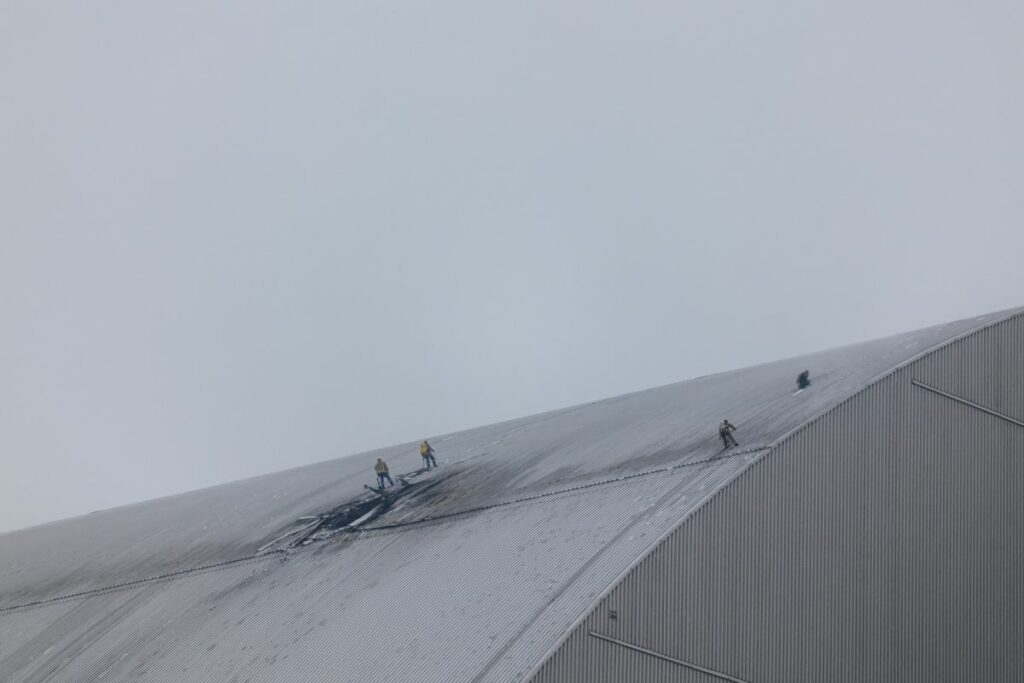
A Russian drone attack on February 14, 2025, caused significant damage to the New Safe Confinement structure at the Chernobyl Nuclear Power Plant, potentially costing at least €500 million to repair.
Drone Attack and Initial Damage
The drone used in the attack was identified as a Russian Geran-2, a variant of the Iranian Shahed-136, commonly employed by Russia against Ukrainian infrastructure. The drone created a 6×6 meter hole in the New Safe Confinement, also known as the “Arch.”
Initial assessments revealed corrosion of structural elements visible through the opening. The damage, while seemingly small in scale, proved to be more extensive upon closer inspection.
Costly and Complex Repairs
Repair work is estimated to take years and cost at least €500 million. A major challenge will be minimizing radiation exposure for workers involved in the repairs.
The New Safe Confinement was constructed by moving the massive structure over the ruins of reactor No. 4 on rails, allowing for final work to be completed with limited exposure. This option is no longer available, requiring repairs to be conducted directly over the most contaminated area.
Extent of the Damage
The scale of the necessary repairs is greater than it appears. While the opening created by the drone seems small compared to the 110-meter-high Arch, the structure is complex and critical for containing the reactor ruins.
The damage extends beyond the immediate impact point, encompassing specialized membranes and seals under the metal roof, which were compromised by the resulting fire.
Fire and Water Ingress
The fire, triggered by the drone strike, affected approximately 25% of the roof’s surface area. Firefighters had to cut numerous temporary openings to extinguish the blaze, further damaging metal elements.
Water and moisture are now entering the structure due to the damage, leading to corrosion of metal components. Temporary patches installed by Ukrainian teams are insufficient to address the problem.
Labor Costs and Timeline
The Novarka consortium, comprising Bouygues Travaux Publics and Vinci Construction Grands Projets, which built the Arch, has submitted a preliminary repair plan to Ukrainian authorities, IAEA, and EBRD. The estimated cost of labor alone is at least €500 million.
If repairs begin in 2027, they could be completed by 2030, though these timelines are considered optimistic. The original construction of the Arch was also delayed by five years and exceeded its initial budget by almost double.
Radiation Concerns and Workforce
Worker safety is a primary concern, requiring strict adherence to radiation protection protocols. Radiation levels under the Arch range from 100-300 microsieverts per hour, increasing with height due to the thinner old sarcophagus.
Workers will likely need to limit their time on-site and rotate shifts to minimize radiation exposure. Skilled labor will need to be brought in from outside the exclusion zone, adding to the costs.
Impact of the War
The ongoing war in Ukraine complicates the repair efforts. Russian drones and missiles continue to pose a threat to the exclusion zone, hindering investment and scientific work, including the dismantling of the old sarcophagus.