


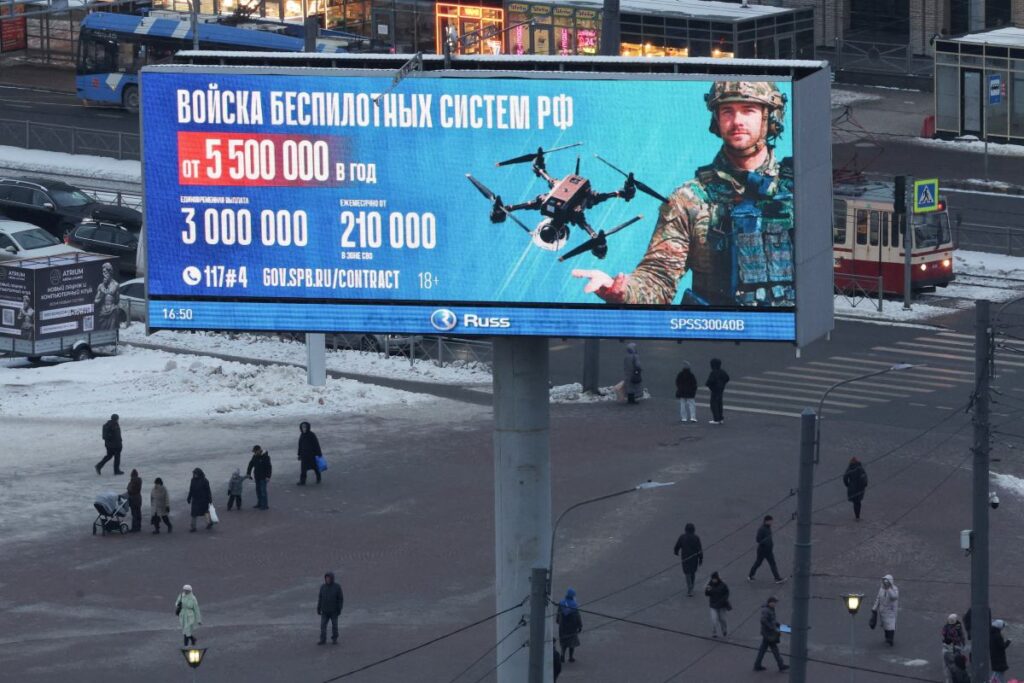
Data indicates a 20% drop in Russian volunteer recruitment in the first quarter of 2024, despite substantial financial incentives offered by the government.
Financial Incentives and Recruitment Mechanisms
Moscow employs a system of attracting volunteers to the military through monetary incentives, aiming to maintain pressure on Ukraine without resorting to a compulsory draft that could destabilize public sentiment.
Significant sums are offered for military service, intended to be life-changing for both the volunteer and their family, including substantial compensation for injuries or death.
Tracking Recruitment Through Budget Data
Janis Kluge, a German analyst, tracks Russian recruitment by analyzing publicly available budget data from Russian regions (covering approximately 50% of the country’s population) and the federal government. This data reveals spending on enlistment bonuses.
By combining this with publicly advertised bonus amounts, Kluge estimates the number of recruits nationwide.
First Quarter Recruitment Figures
Kluge’s data shows a clear slowdown in recruitment in the first months of 2024, with a 20% decrease compared to the first quarter of 2023—approximately 70,000 contracts signed, averaging around 800 per day.
Dmitry Medvedev, head of the Recruitment Commission, claimed “over 80,000” recruits (around 1,000 daily) by late March, but Kluge’s analysis of regional budget data does not corroborate these figures.
Regional Bonuses and Financial Strain
Incentives include a fixed federal bonus of 400,000 rubles (approximately $18,900) and additional regional payments, which are constantly adjusted based on progress towards recruitment quotas set by Moscow.
Currently, the average regional bonus is nearly 1.5 million rubles (around $70,000), up from 1.3 million rubles at the end of 2023, though a temporary peak of almost 1.4 million rubles was reached in the autumn.
The end of 2023 was difficult for Russian regions, which absorbed many of the costs of the war, including increased recruitment funding. Debt crises forced some regions to reduce bonuses, or because they met their quotas.
Economic Context and Attractiveness of Service
With an average gross salary of 83-89,000 rubles (median of 40-48,000 rubles), the nearly two million rubles offered for enlistment, plus subsequent military pay and injury/death compensation, represents a substantial sum for most Russians.
Additional benefits and debt forgiveness further enhance the appeal of military service, despite the declining recruitment rate.
Kremlin’s Difficult Choices
Even a decrease of 200 recruits daily poses a problem for the Russian army, which is estimated to suffer 20-30,000 casualties per month. A recruitment rate of around 1,000 daily barely compensated for these losses, allowing for slow army expansion.
This situation was acceptable to the Kremlin, aiming to exhaust Ukraine and the West, viewing its own losses as a necessary cost of victory. However, if voluntary recruitment fails to meet military needs, the Kremlin faces a dilemma.
Increasing Pressure and Potential Conscription
The Kremlin may increase pressure on citizens to sign contracts, as evidenced by a late March directive in the Ryazan region requiring companies to “nominate” employees for military service—at least two from firms with under 300 employees, and three from larger ones. Russian lawyers consider this directive legally questionable.
CNN reported growing pressure on university students to enlist, particularly in drone units.
Even increased pressure may be insufficient, potentially leading to a return to compulsory conscription, as in autumn 2022—a step the government would prefer to avoid due to potential social unrest and economic disruption.
Alternative Strategies and Limitations
The final option is to reduce losses on the front line, but the Russian military is unlikely to quickly change its tactics or significantly reduce casualties through innovation.
This leaves limiting the pace of combat operations, effectively abandoning the strategy of continuous pressure on Ukraine since autumn 2023.
Strategic Implications and Ukrainian Response
Both limiting offensives and reinstating conscription would be significant setbacks for the Kremlin, indicating a failure of its current strategy. Ukraine is actively attempting to increase Russian casualties to exacerbate the mismatch between military needs and recruitment capabilities.
The Kremlin will likely attempt to maximize the effectiveness of voluntary recruitment, even under increasing pressure.