Polish authorities reveal evidence that railway sabotage may have been engineered over years, implicating Ukrainian operatives and linking Belarusian cooperation to a wider destabilisation scheme.
Deputy Minister Reveals New Evidence
Deputy Minister Czesław Mroczek of the Polish Ministry of Internal Affairs and Administration disclosed that the SIM cards used to register sabotage transmissions were activated years earlier, not purchased at the last minute. This suggests that preparations may have stretched over several years and involved more than the four suspects previously considered.
Investigators are now examining who could have participated in the operation and how long it had been planned, indicating that sabotage might have been part of a larger, long‑term campaign.
Poland Seeks Belarusian Cooperation
Mroczek said the suspect list could be expanded and that Poland has asked Belarus to hand over two individuals deemed direct perpetrators. Belarus has pledged to assist in locating them.
Poland highlighted the broader international dimension, noting that the sabotage could be part of a wider destabilisation operation.
Recent Rail Sabotage Incidents
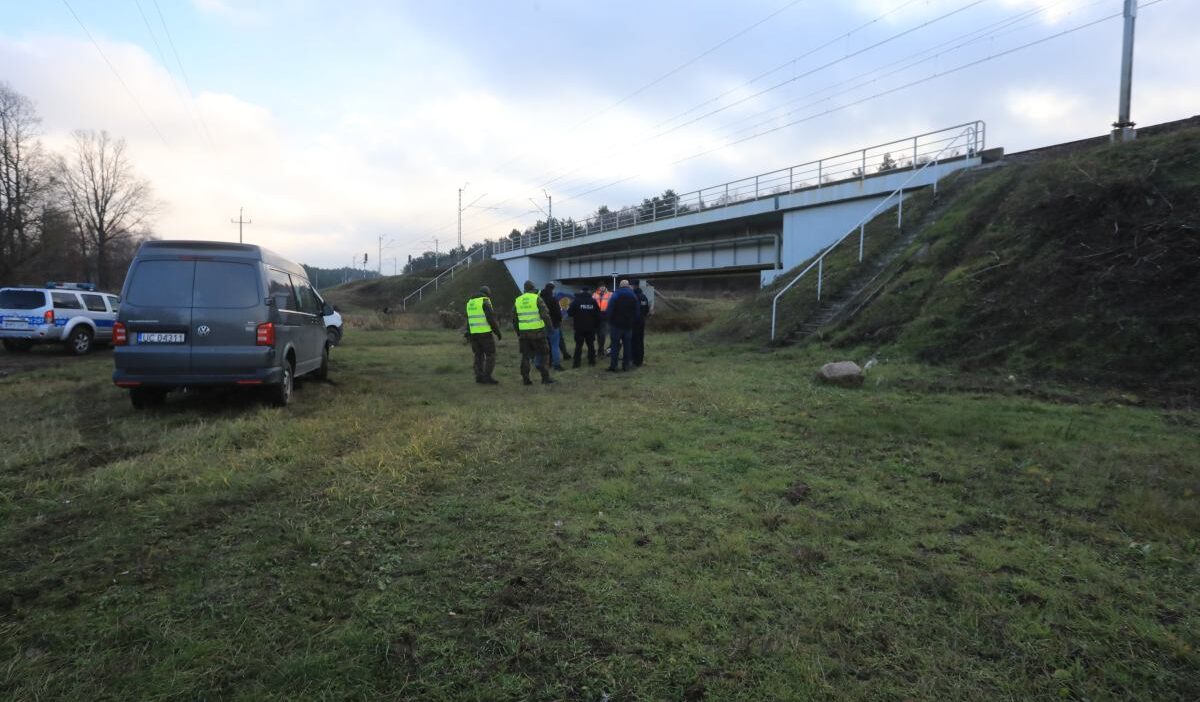
In Mika, Masovian Voivodeship, a cargo explosion damaged the rail line. Hours later, near Gołąb station in Lublin, a train carrying 475 passengers braked abruptly due to a damaged traction network.
Both incidents are linked to sabotage ordered by Russian intelligence, and charges have been brought against two Ukrainian citizens, including Jewhenij I., who was allegedly recruited by the GRU in 2024.
Arrest of Ukrainian Citizen from Kharkiv
On 20 November, Volodymyr B., a Ukrainian national who had lived in Kharkiv before the war, was arrested. He moved to Poland in 2022, settled near Warsaw, and ran a transport business. His wife and son live in Crimea and hold Russian passports.
Prosecutors allege that money was transferred to B.’s account for cooperation with Russia’s GRU, and that he regularly visited Crimea, Belarus, Moscow, and St. Petersburg. He is charged with aiding the sabotage of railway line 7.
Logistical Support in Miki and Gołąb
Investigators say B. ferried Jewhenij I. to the Miki and Gołąb area to conduct reconnaissance and select bomb sites. Prosecutors argue that this logistical support enabled precise placement of explosives and recording devices.
After the attack, Jewhenij I. fled to Belarus. B. was detained on 20 November, released no later, and the court imposed temporary detention.