Polish lower house votes to change how judges are selected for the National Council of the Judiciary, moving from parliamentary to judicial elections.
Sejm Votes on KRS Amendment
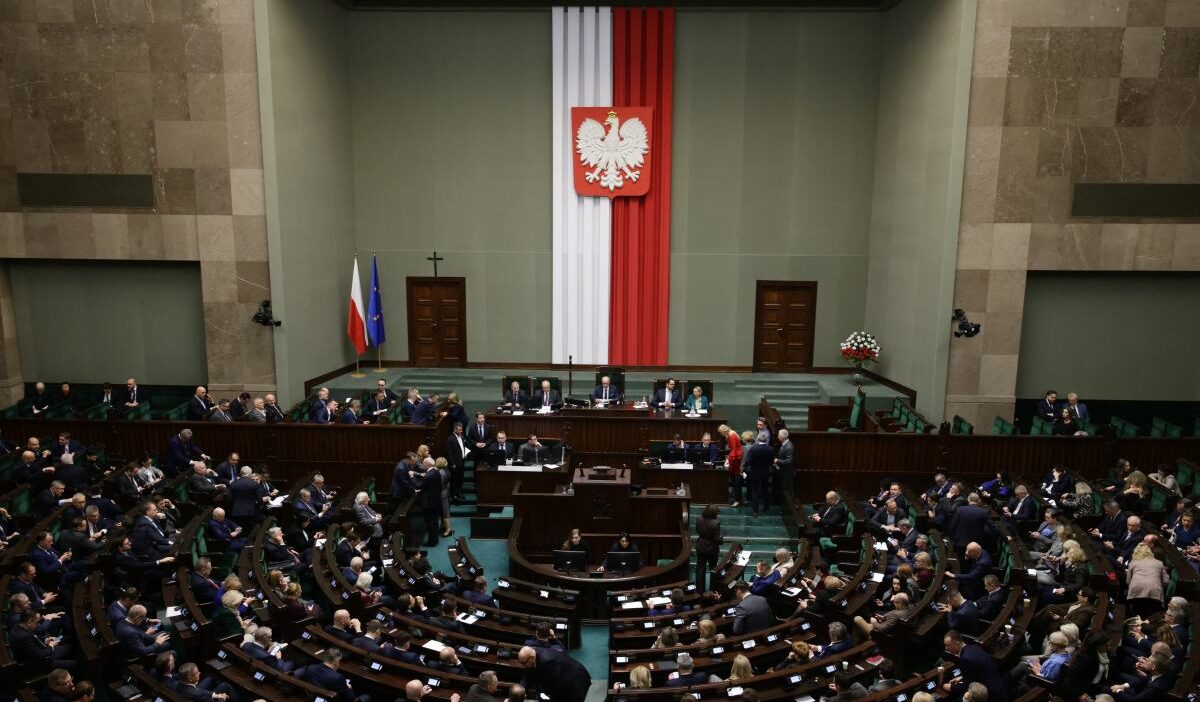
The Sejm has voted on an amendment to the law on the National Council of the Judiciary (KRS). For the adoption of the law, 232 deputies voted, 183 were against, 12 abstained, and 33 deputies did not participate in the voting at all.
Change in Judge Selection Process
The amendment to the KRS law changes the rules for selecting fifteen judges-members of the National Council of the Judiciary. Currently, this is the competence of the Sejm. The project provides that they will be elected in direct and secret elections with the participation of all judges.
Deputy Minister’s Perspective
“The KRS law is a restoration of balance between the legislative and judicial powers. Deputies (members of the KRS – ed.) are elected by the Sejm, and senators (members of the KRS – ed.) by the Senate. So why shouldn’t judges elect their representatives?” commented on Friday on the X platform by Deputy Minister of Justice Arkadiusz Myrcha.
Presidential Chancellery’s Position
“This KRS project is not a project that speaks of the sovereign role of the nation. The nation is sovereign in article four (of the constitution – ed.), and Minister Żurek wants to return to judges electing judges, without any control,” said on Friday in the Sejm by the Head of the Chancellery of the President of the Republic of Poland Zbigniew Bogucki.
“But attention, not all judges, only those who will vote, I understand, to your liking, to Minister Żurek’s liking. Because those who do not have 10 years of seniority, those who are not in position for 5 years, so all those who were appointed to positions in accordance with the law and in accordance with the constitution by the new National Council of the Judiciary, in essence are to be excluded,” he added. “There is no agreement from President Nawrocki,” he declared.
Key Provisions of the Amendment
“I can say with full conviction: this is a compromise project. A compromise that does not mean giving up principles, but balancing them, so as to restore compliance with the constitution and fulfill obligations arising from rulings of European tribunals and the Convention on Human Rights and Fundamental Freedoms,” said in November by Minister of Justice Waldemar Żurek.
The selection of 15 judge-members would be conducted by the National Electoral Commission. “Candidates may be judges with at least ten years of seniority in the position of judge, with five years in the court where they currently adjudicate,” informed the Ministry of Justice. Judges of the Supreme Court, ordinary courts, military courts, and administrative courts in active service could vote.