


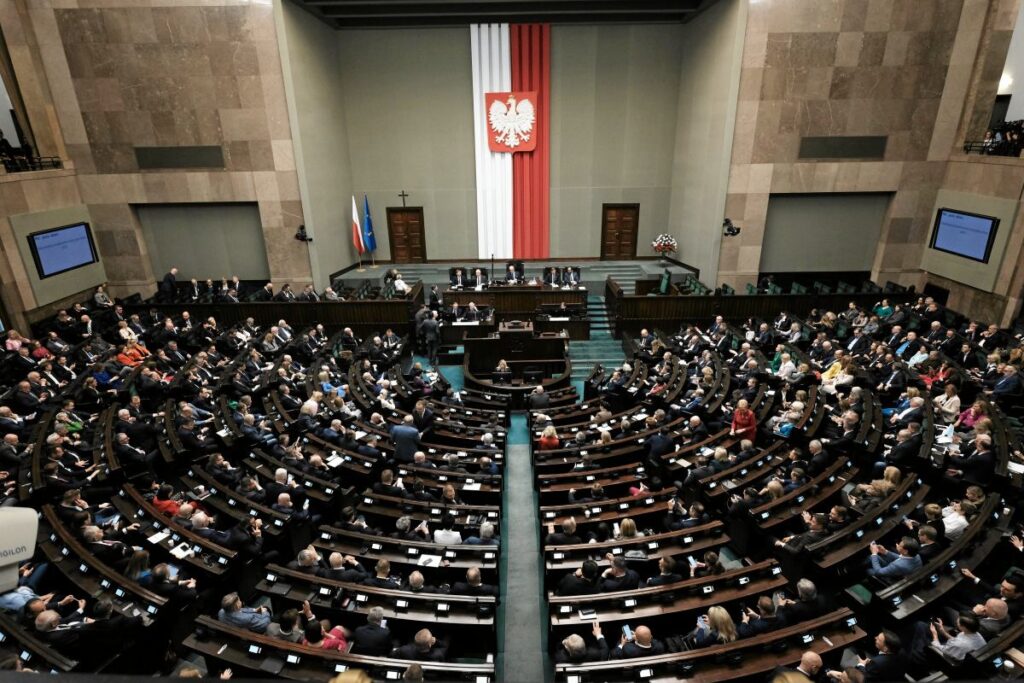
The Sejm voted on Friday, May 29, to advance a bill establishing the legal status of a “closest person” in a shared cohabitation agreement, despite opposition from PiS and Confederation.
Legislative Progress in the Sejm
On Friday, May 29, the Sejm voted on the draft law concerning the status of a closest person in a relationship and cohabitation agreement. During a special committee session held on Wednesday, the bill received support from the KO, PSL, Left, Center, and Poland 2050 parliamentary clubs, while PiS and Confederation members submitted motions to reject the proposals in their entirety.
The final vote saw 230 deputies in favor of the bill, 198 against, and one abstention. Prior to this vote, deputies rejected motions to discard the bill from PiS, Confederation, the Confederation of the Polish Crown, and the Direct Democracy circle. Parliament also rejected a package of amendments from MP Marta Stożek of the Razem party, while adopting three technical and unifying amendments submitted by the Left club.
Scope of the Proposed Regulation
The draft law allows two adults, regardless of gender, to enter into a notarized agreement. Once registered at the Civil Registry Office, this agreement enables parties to select a property regime, establish maintenance obligations, and secure rights to use a shared apartment.
Furthermore, the status grants individuals the right to access medical information regarding their partner and authorizes them to act as proxies in daily life matters.
Presidential Opposition to Partnership Unions
Head of the Presidential Cabinet Paweł Szefernaker stated that there will be no presidential approval for the legalization of partnership unions. He argued that the current bill essentially equates these unions with marriage, noting that the administration views this as a “policy of small steps” that could eventually lead to adoption rights.
Szefernaker criticized the parliamentary coalition’s efforts, labeling them an attempt to force “unconstitutional” partnerships into Polish law. While a final decision on a potential veto by President Karol Nawrocki remains pending until the legislative process concludes, the administration maintained that their philosophy focuses on assisting individuals in daily functioning without granting the full privileges associated with marriage.