


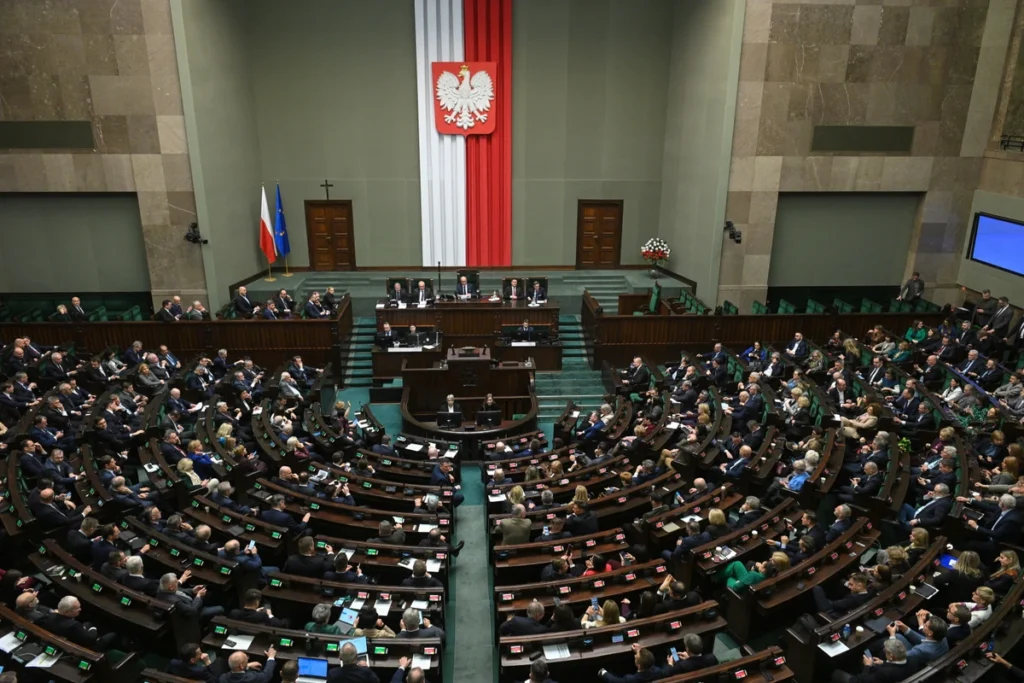
Polish Sejm approved a bill reforming judicial council selection process despite presidential objections.
Legislative Approval
The Polish Sejm passed the amendment to the KRS Act with 232 deputies voting in favor, 183 against, and 12 abstaining during Friday’s session.
The bill now moves to the Senate, which will consider it during the upcoming session on January 28, though it still requires presidential approval to become law.
New Voting System
Under the new law, active judges from the Supreme Court, ordinary courts, military courts, and administrative courts will participate in selecting KRS members.
Mandates will be distributed proportionally according to the number of judges in each court, with specific allocations: one Supreme Court judge, two appellate court judges, three regional court judges, six district court judges, and one each from military courts, the Supreme Administrative Court, and voivodeship administrative courts.
Candidate Requirements
The amendment originally required nominations from a group of 100 judges or legal professional bodies, but was changed to reduce the signature threshold to 50.
A last-minute amendment also removed provisions that would have barred current KRS members from seeking re-election, making such candidacies possible under the new law.
Candidates must have at least 10 years of judicial experience, including five years in the court where they currently serve, a requirement that will disqualify most but not all judges appointed before the 2017 KRS reform.
Presidential Opposition
The presidential office strongly opposes the bill, with Zbigniew Bogucki, head of the president’s chancellery, criticizing the government’s approach to judicial reform.
Presidential Minister Tomasz Żurek has argued that the bill lacks provisions recognizing the supreme role of the nation and would allow judges aligned with the government to select future judges without proper oversight.
President Andrzej Duda has indicated he is unlikely to sign the bill into law, creating a standoff between the legislative and executive branches.