


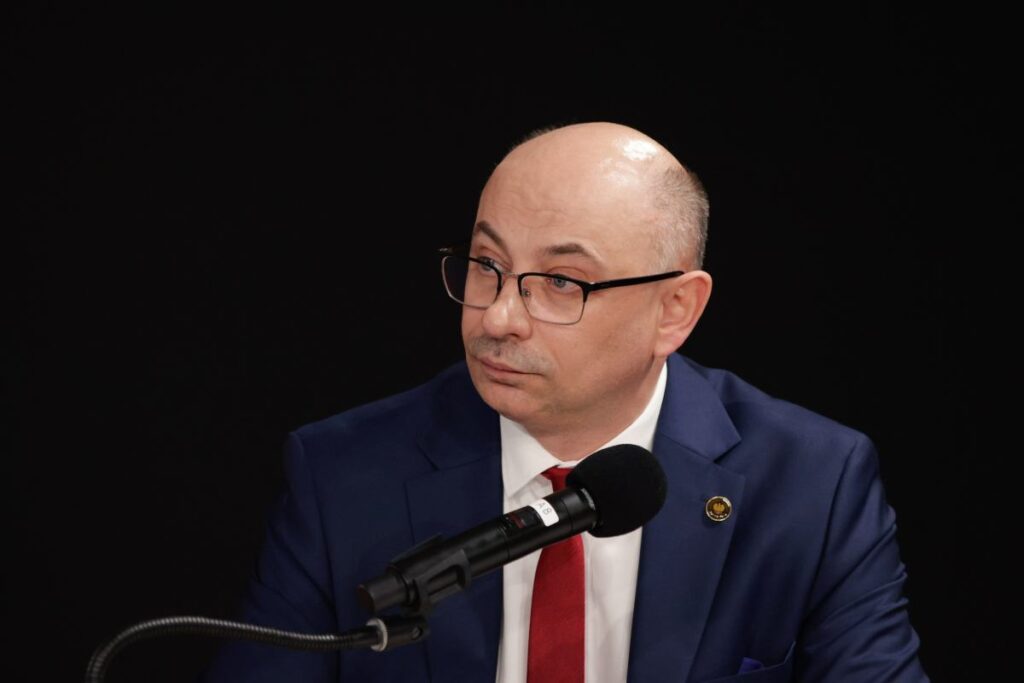
The Sejm has removed the vote on Dr. Mateusz Szpytma’s candidacy for president of the Institute of National Remembrance from its agenda, as divisions persist within the ruling coalition.
Last-Minute Withdrawal
The IPN college recommended Dr. Mateusz Szpytma for the position following interviews and deliberations. Although a vote was scheduled for Friday, May 15, the item was unexpectedly removed from the agenda, and no vote took place.
Civic Coalition (KO) representatives expressed confusion regarding the cancellation. Dorota Łoboda, spokesperson for the KO parliamentary club, stated that she arrived at the session expecting the vote to proceed.
Internal Coalition Maneuvering
Zbigniew Konwiński, head of the KO club, identified Deputy Speaker Piotr Zgorzelski of the Polish People’s Party (PSL) as the official who requested the removal of the item. Reports suggest the delay aims to provide PSL time to persuade coalition partners to support Szpytma, despite opposition from KO and the Left, who maintain a majority in the Senate.
Marek Sawicki of the PSL remains optimistic, suggesting that some decisions must transcend party divisions. However, Konwiński affirmed that KO’s position is unchanged and they will not support Szpytma. Sources indicate the coalition leadership sought to avoid a public display of division that could be framed as a victory for the Law and Justice (PiS) party.
Political Allegiances and Public Criticism
The controversy is fueled by reports that Szpytma could garner support from parts of the PSL and Poland 2050, as evidenced by a positive opinion from the Justice and Human Rights Committee. MP Tomasz Zimoch publicly criticized the alignment, questioning the stance of PSL leadership and highlighting the committee’s voting results.
A group of historians issued an appeal against the candidacy, characterizing Szpytma as a central figure in the politicization of the IPN. The experts accused the institute of personnel purges and substantial budget growth during the 2020-2023 period, arguing that it has functioned as a subsidiary of the PiS.