


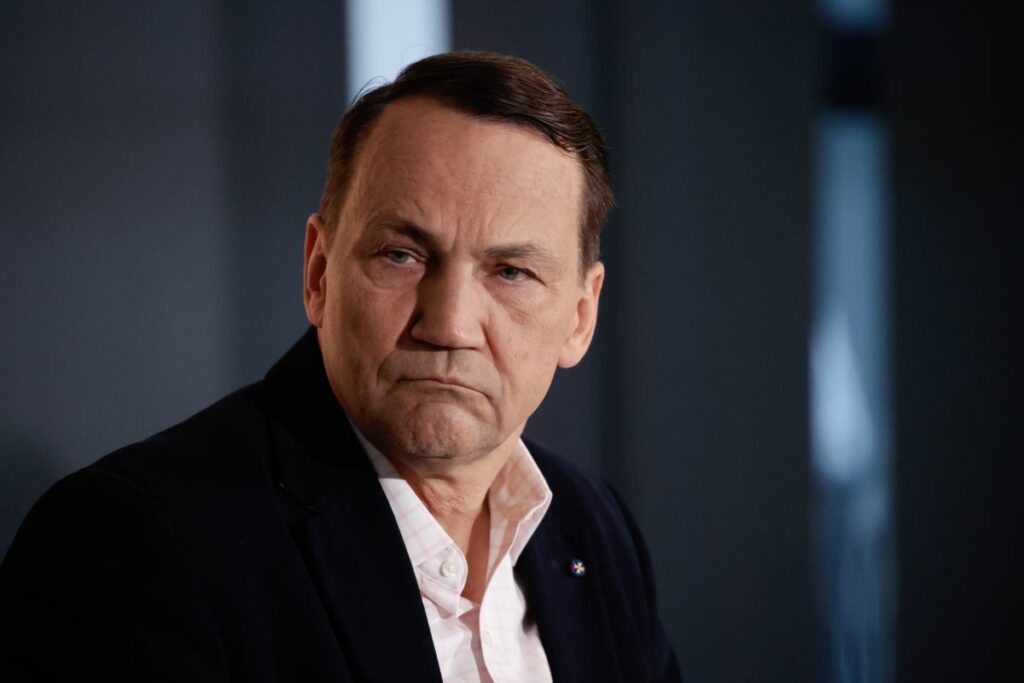
Polish Foreign Minister Radosław Sikorski abandoned talks with Karol Nawrocki on ambassadorial appointments, citing U.S. influence and European criticism while refusing to sign nominations.
Sikorski’s Condemnation
“War at the borders and a reset between the U.S. and Russia are underway. The President, instead of intervening with his patron in Washington, attacks the European Union and Ukraine. I will not sign the ambassadorial nominations of 40 Polish diplomats. No, thank you,” Radosław Sikorski wrote on Tuesday, 2 December.
Tusk Calls For Unity
On Sunday, 30 November, Donald Tusk reminded that “according to the Constitution, the government leads foreign policy, and the President is obliged to cooperate with a government worthy of representing Poland.” He urged everyone to stick to this principle for the country’s benefit.
Nawrocki’s Unfulfilled Meeting
Karol Nawrocki had promised a meeting with the foreign minister to discuss ambassadorial nominations, but it never materialised. “The meeting will take place in October, where we will discuss our expectations about fixing the situation in Polish diplomacy. It is alarming that at least half of our diplomatic missions do not have their ambassadors,” Nawrocki said to Radio ZET.
“The constitutional prerogatives of the President of Poland must be preserved, and I hope we can reach an agreement somehow.”
Why Nawrocki Fails to Sign
Unofficial reports from Wirtualna Polska claim the dispute stems from recommending Bogdan Klicha, the Polish ambassador in Washington, as ambassador to the USA—a move the president rejects. “The Palace will block other nominations because it believes pushing the former Chief of Armed Forces from Donal Tusk’s first government is ‘laughing in Poles’ faces,’” the outlet wrote. Nawrocki also announced on Radio ZET that he would not sign Ryszard Schnepf’s nomination.
U.S.–Russia Talks
According to Meduza.io, in February this year a meeting between U.S. and Russian delegations took place. Participants included U.S. Secretary of State Marco Rubio, national security adviser Mike Waltz, special envoy to the Middle East Steve Witkoff, Russian Foreign Minister Sergey Lavrov, and RDIF Chairman Kirill Dmitriev. The discussion covered the war in Ukraine and mutual interests for improving relations.