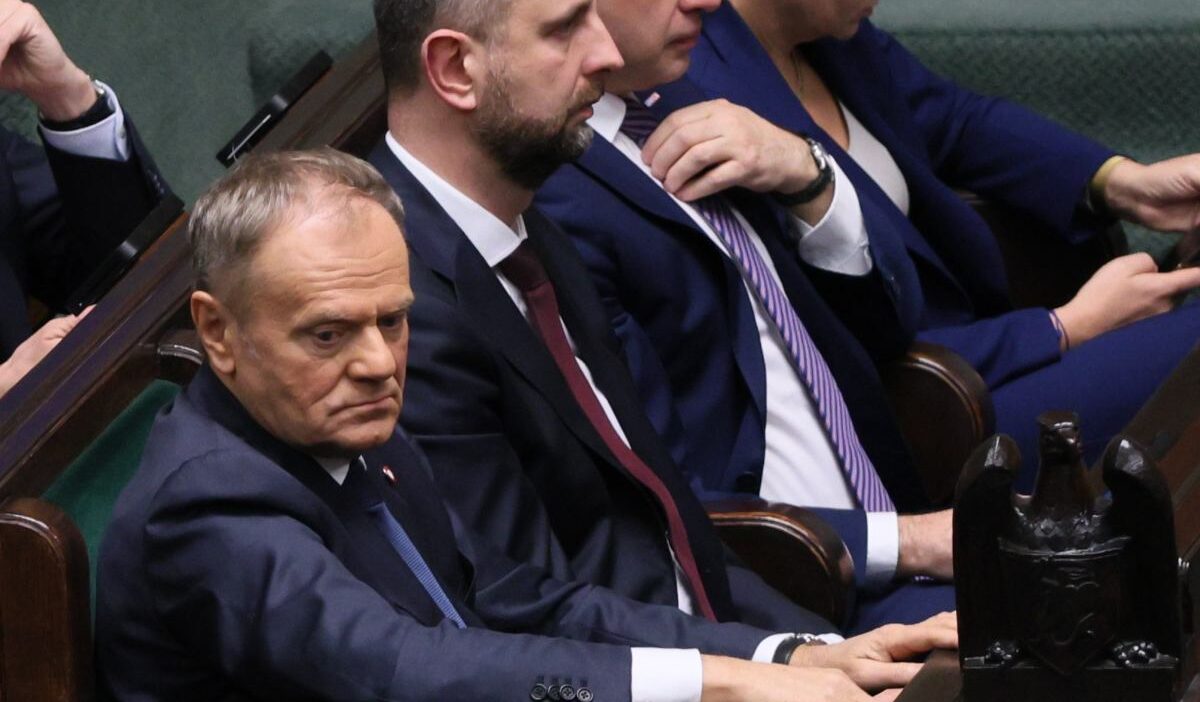
Polish lawmakers and President Donald Tusk erupted after a December 17 vote on a “chain law” that ended a presidential veto, sparking accusations of abandoning animal rights.
After Chain Law Vote: Tusk’s Criticism
Donald Tusk blasted the ruling Law and Justice (PiS) party for upholding the president’s veto on the “chain law,” describing the move as a symbolic capitulation of Jarosław Kaczyński. He accused Kaczyński of lacking the courage to defend animals, claiming the country lost on humanity and empathy in the Sejm.
Marcin Kierwiński and Dorota Niedziela echoed Tusk’s criticism, noting that PiS members had switched from supporting the chain law to backing the presidential veto, signaling a defeat for animal rights advocates.
Parliamentary Reversal: From Chain Law to Veto
Karol Nawrocki first vetoed the chain law and later proposed amendments that removed requirements for cage dimensions based on animal weight. On 17 December, the Sejm attempted to reject the presidential veto but failed, securing only 263 votes needed for a 3/5 majority out of 438 participants.
Reinstating the law in its original form would have required 246 votes from the 15 October coalition; opposition numbered 192, mainly PiS MPs, while 22 members abstained.
Analysts and Journalists Weigh In
Journalist Patryk Michalski argued that PiS and its allies did not push the veto as expected, suggesting Kaczyński had a chance to enact animal‑safety changes but economic calculations prevailed.
Jacek Nizinkiewicz of Rzeczpospolita expected the veto to remain intact, warned that Nawrocki could face public backlash, and implied that the government would appear powerless, with public sympathy tilting toward Donald Tusk’s camp.
What Is the Chain Law?
The chain law sought to modify Poland’s animal‑protection regulations by specifying enclosure sizes relative to animal weight. Nawrocki’s veto and subsequent amendment proposal eliminated these guidelines, prompting parliamentary debate over the law’s future.