


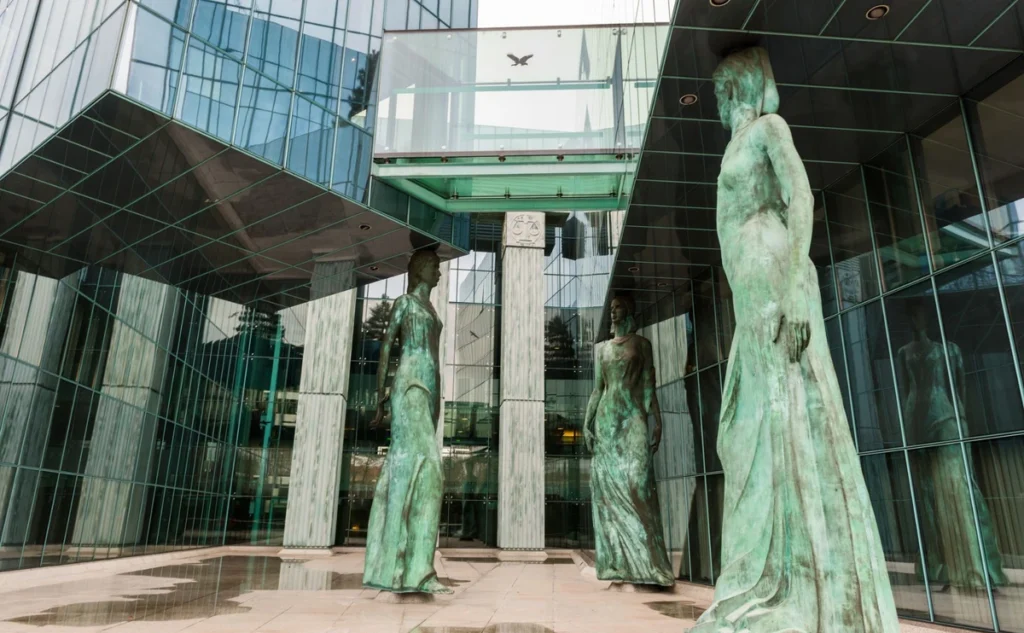
Poland’s Supreme Court General Assembly failed to elect First President candidates due to insufficient quorum.
Session Halted for Lack of Quorum
Supreme Court spokesperson Igor Zgoliński confirmed during a press conference that a roll-call revealed an insufficient number of members present, halting proceedings. A new session was scheduled for Wednesday at 11:30.
Some absences were formally justified for health or vacation reasons. Prior to the session, a group of judges submitted a statement announcing their non-participation, citing ambiguity regarding the participants’ status.
Quorum Rules and Electoral Process
The 100-member General Assembly requires a minimum of 84 judges for the initial vote on First President candidates. If quorum isn’t met, the threshold drops to 75 for a subsequent session. A third session could proceed with only 32 members present.
Current First President Małgorzata Manowska’s six-year term ends in May 2025. She announced in February she would not seek reappointment, necessitating the candidate selection process in the coming weeks for presidential nomination.
Constitutional Selection Procedure
Under Polish Constitution and Supreme Court Act, the President appoints the First President for a six-year term from five candidates elected by secret ballot in the General Assembly. Without a valid assembly, the constitutional nomination process cannot begin.
Conflict Over Judicial Reforms
Tuesday’s absences reflect a years-long conflict stemming from 2017 judicial reforms, particularly concerning the selection method for judges in the National Council of the Judiciary (KRS) and the 2018 Supreme Court Act.
An informal divide exists between judges appointed before and after these reforms. Some pre-reform judges challenge the legitimacy of “new judges” recommended by the reformed KRS, citing domestic and European case law. Key rulings include a January 2020 ruling by three chambers stating improper composition occurs when post-2018 KRS appointees sit, and a December 2025 ruling by two chambers asserting no court can declare Supreme Court rulings void.
Next Steps and Concerns
The Wednesday session will determine if the 75-judge quorum is met, impacting the timeline for candidate selection and presidential nomination before Manowska’s term expires. Persistent boycotts could force the 32-member threshold for the third session.
Such an outcome risks deepening divisions and undermining the new First President’s authority, though current laws aim to prevent institutional paralysis through the graduated quorum mechanism.