

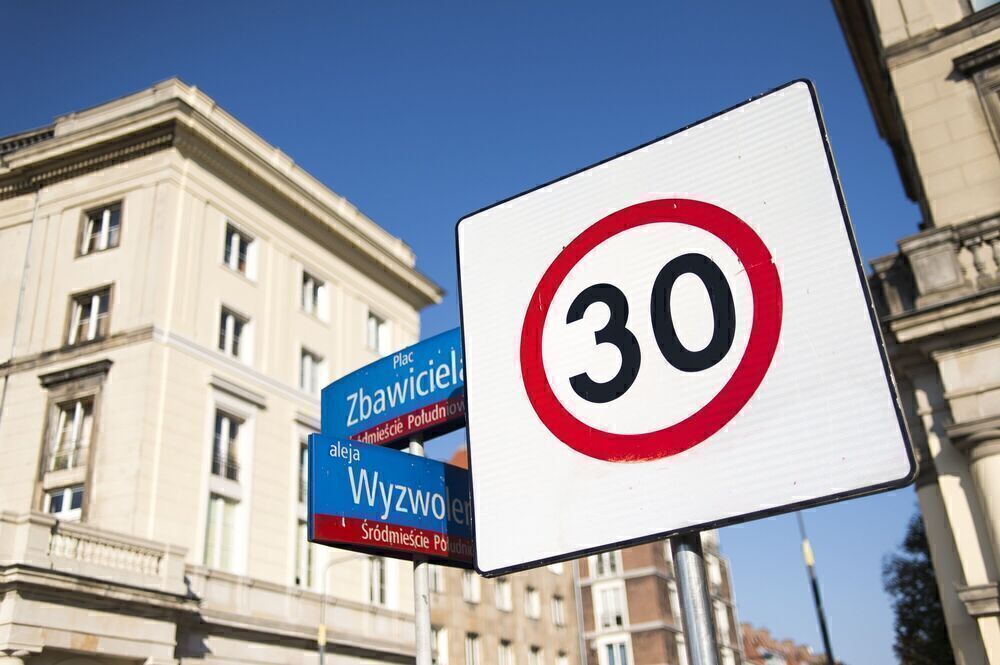
Despite strong criticism from opposition, Warsaw’s city council is widening the Tempo 30 speed‑limit zones to more streets, rolling out changes in stages despite political opposition.
Implementation Process
The city’s official information service 19115 recorded that public consultations on Tempo 30 zones ran from 14 October to 30 November 2022. After the consultations, 47 adjustments were incorporated into the map based on residents’ feedback.
Śródmieście Południowe
One of the first central districts to receive a speed‑calming zone is the quarter bounded by Piękna Street, Ujazdowskie Alleys, Łazienkowska Trail, and Marszałkowski Street. The 30 km/h limit was applied here before the broader city debate on Tempo 30 began.
Stara Ochota i okolice
Documents from the City Roads Board show that a large portion of Stara Ochota is already under Tempo 30, notably Spiska Street where the limit is 30 km/h. The area has undergone detailed consultations as part of extending paid‑parking zones and traffic‑calming measures.
Gocław i południowo‑wschodnia część miasta
On Warsaw’s right bank, the “Gocław circuit”—a stretch surrounding major housing estates—is largely functioning as a calm street, equipped with speed bumps, lane narrowing, and pedestrian priority. Nałęczowska Street also received physical speed regulators after resident requests, bringing the entire segment into the Tempo 30 zone.
Mała Radzymińska
Another significant addition is the segment of Radzymińska Street known as Mała Radzymińska. Unlike the main arterial, this local section has been earmarked for the 30 km/h limit.
Kolejne dzielnice w kolejce
The plan aims to cover most access and local streets in districts such as Mokotów, Ochota, Praga‑Południe, Praga‑Północ, Rembertów, Śródmieście, and Targówek. Implementation will occur in stages aligned with road reconstruction, paid‑parking expansions, and other transport projects. Mokotów, for instance, will see new Tempo 30 zones coinciding with the launch of a paid‑parking area in February 2025. The city evaluates streets based on function and surroundings, keeping higher limits (50 km/h or more) on distribution or transit arteries like Łazienkowska Trail, Jerozolimskie Avenues, or the main Radzymińska.