


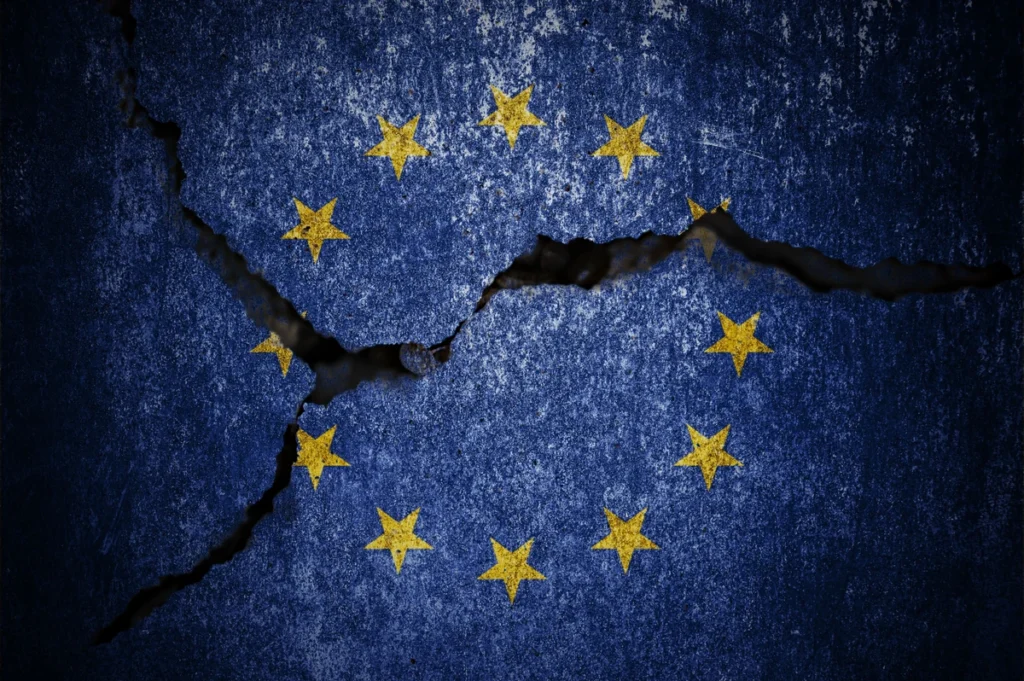
Judge Szydłowski examines how the EU’s Lisbon Treaty repackaged the rejected European Constitution without public referendums.
The Lisbon Treaty and the Hidden Constitution
In the Lisbon Treaty, the content of the rejected “constitution” was actually parceled out and hidden in hundreds of articles, protocols, annexes, and declarations. The whole thing was packaged in the form of a technical treaty, carefully avoiding national referendums.
Almost 90% of the content contained in the “Constitution for Europe” was transferred to the new document, and this prepared “product” was sold to the member states – and in fact to their citizens. The most sensitive symbols disappeared. Concepts that could directly suggest the emergence of a “superstate” were removed. European laws were replaced with directives and regulations. The sense remained, only the label changed.
The Foundational Lie and Federalist Agenda
So, is there a “foundational lie” at the base of the European Union as we know it? No. It was rather a classic trading maneuver: a previously rejected product was sold in new packaging. Since the original idea of the “Constitution” – deepening integration – became the foundation of the Lisbon Treaty, it’s not surprising today that the next step is such an interpretation of its provisions that consistently realizes this idea.
Law knows systematic and purposive interpretation. In the implementation of the “European federalism” project, both work perfectly together. Therefore, it’s natural that subsequent rulings – especially those of the ECJ – are painfully predictable. The goal is one: further centralization. “The elevator always goes up or down, never sideways”. Expecting any of the “groundbreaking” rulings to change this direction is as naive as being surprised that the sun shines in the summer.
The Disappearing Citizen and Judicial Activism
And it is at this point that the citizen disappears. No one asks for their opinion. No one wants a referendum on federalization. The risk of a negative answer is too great, and its political consequences too costly. It’s easier to replace the voice of society with the opinions of experts, politicians, and lawyers.
The European legal area, devoid of one coherent code, becomes an ideal field for overinterpretation and expansive interpretation. And when we add to this the mechanism of “money for rule of law” – understood “as WE understand it” – we get a tool with the political power of an atomic bomb. Ready to be used against any recalcitrant member state.
The Need for Democratic Consent
The Union we joined almost a quarter of a century ago is not the same Union today. Changes are natural. Development is necessary. But processes as fundamental as federalization cannot take place in political offices or in rulings of judges nominated by politicians.
EU federalization, creating a European legal order superior to national constitutions, is not a technical correction. It is a constitutional decision. And as such, it requires the consent of almost half a billion Europeans. Through referendums. Without accomplished facts. Without bypassing societies.
Protecting National Sovereignty
No nation in EU history has voluntarily renounced sovereignty. Competences were transferred – not sovereignty. Attempts at expansive interpretation in this area are not only mistaken but dangerous.
The European judge is not an official of the “center”. They are not a preacher of Europeanism. They do not replace citizens in making political decisions. Their role is to protect rights, not to educate societies.
Pragmatism Over Dogma
The European Union is not a club of altruistic wise men. It is an arena of tough negotiations, pressure, and realization of interests – including national and corporate ones. If we give up the legal tools that allow questioning or correcting these interests, we will be completely defenseless.
Therefore, be careful with unreflectively recognizing the primacy of EU law over the constitution. Be careful with piously accepting ECJ rulings that directly realize the idea of the rejected “Constitution for Europe” through expansive interpretation.