


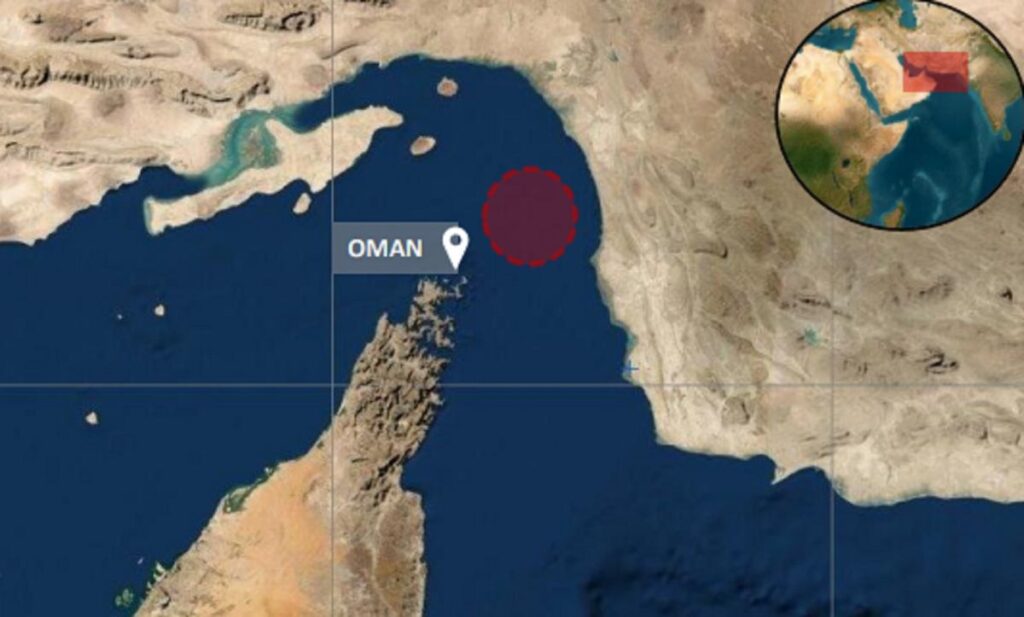
British maritime authorities reported attacks on three container ships in the Strait of Hormuz on Wednesday, with Iran’s Revolutionary Guard threatening further strikes.
Initial Attacks and Damage Reports
The UK Maritime Trade Operations (UKMTO) received reports of incidents 15 nautical miles northeast of Oman. A container ship captain reported an approach by a vessel belonging to Iran’s Islamic Revolutionary Guard Corps (IRGC), which then opened fire, causing significant damage to the ship’s bridge.
No fires or environmental damage were reported, and the entire crew was confirmed safe.
Iranian Account and Warnings
Iran’s Tasnim news agency stated that the container ship had ignored warnings from Iranian armed forces. Later reports indicated another incident eight nautical miles west of Iran, where a departing cargo ship captain reported being fired upon, with the crew remaining safe and no ship damage reported.
Third Vessel Targeted, Liberia-Flagged Ship
Reuters reported unofficially that a third container ship was attacked approximately eight nautical miles west of Iran while transiting the Strait of Hormuz. The vessel was flying the Liberian flag, and the crew was unharmed.
Incident Count and Regional Tensions
From February 28, 2026, to 8:00 AM on April 22, the UKMTO received 35 incident reports (including 22 attacks) concerning ships operating in the Persian Gulf, the Strait of Hormuz, and the Gulf of Oman. A total of 22 attacks were reported.
IRGC Threat to Persian Gulf States
The IRGC announced on Tuesday that it would strike oil installations in Persian Gulf states if neighboring countries allowed their territory and infrastructure to be used for another attack against Iran.
IRGC Air Force Commander Majid Musawi stated that if neighboring countries permit attacks originating from their territory, they “will have to say goodbye to oil extraction in the Middle East.”
Previous Iranian Attacks and Current Ceasefire
Iran has previously attacked the production infrastructure of Persian Gulf states in retaliation for the war initiated by Israel and the USA against Iran on February 28. A two-week ceasefire is currently in effect, extended late Tuesday evening (April 21) by Donald Trump.
US Position and Continued Blockade
The US President announced that the ceasefire is in effect until negotiations with Iran conclude. He emphasized that American forces will continue to maintain a blockade of Iranian ports. US Treasury Secretary Scott Bessent announced further economic pressure on Iran, including a blockade, predicting that oil storage facilities on Khark Island will fill within days, forcing Iran to halt production.
Iran Demands End to “Policy of Pressure”
Iranian authorities rejected negotiations conducted under pressure or talks that require capitulation. An Iranian official stated that they would engage in negotiations with the USA if Washington abandoned its “policy of pressure and threats.” They added that the US side “is creating new difficulties instead of solving problems.”
Strait of Hormuz Blockade and Global Oil Prices
The situation around the Strait of Hormuz complicates negotiations. Iran has almost completely blocked this strategically important shipping lane for oil and gas exports since the start of the war. The US announced its own blockade of Iranian ports after the ceasefire came into effect, aiming to weaken the Iranian economy. The suspension of traffic through the Ormuz Strait has caused global commodity prices to rise.