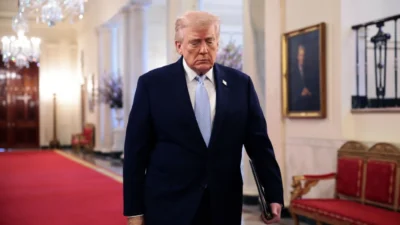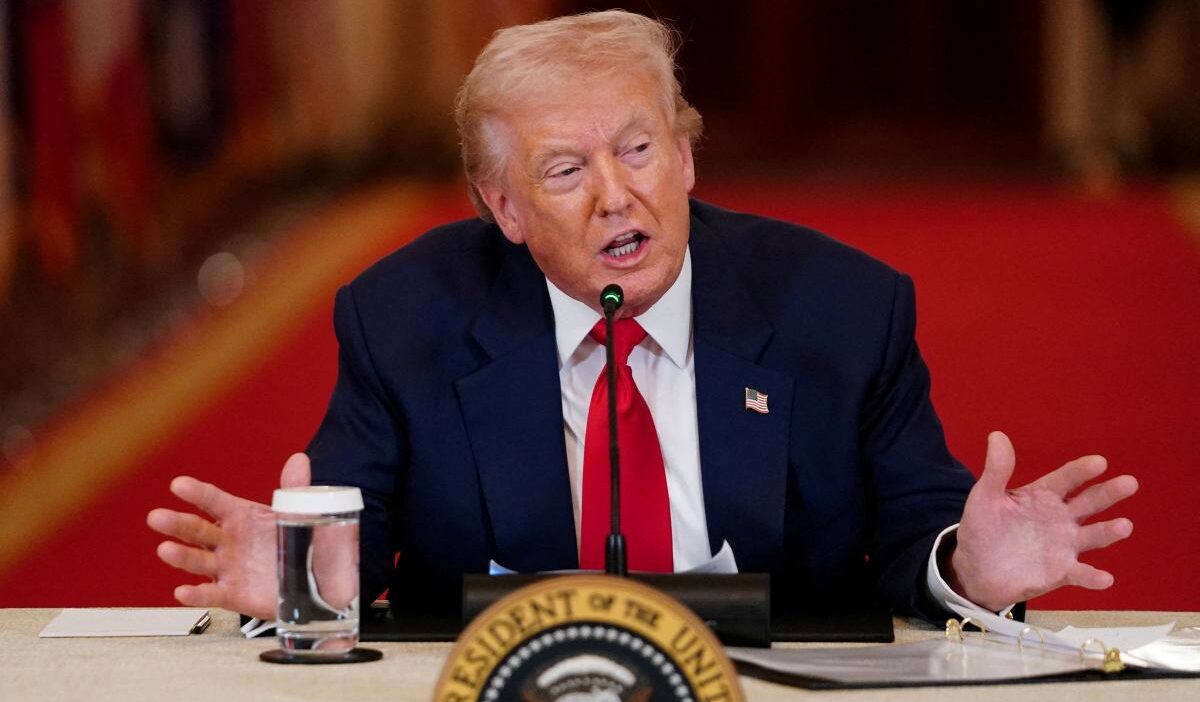
Following ongoing US and Israeli attacks on Iran since February 28th, Donald Trump claimed progress in negotiations, a claim Iranian media vehemently denies.
US and Israeli Attacks on Iran
Attacks by the US and Israel on Iran have been ongoing since February 28th, with the stated goal of limiting Iran’s nuclear program. Ali Laridjani, Secretary of Iran’s Supreme National Security Council, announced in early March that Iran would not negotiate with the US on the matter.
The following day, Donald Trump stated that Tehran “wanted to talk,” but he had declined to engage.
Reported Communication Channel and Iranian Denial
Last week, Axios unofficially reported the re-establishment of a direct communication channel between Trump’s envoy Steve Witkoff and Iranian Foreign Minister Abbas Araghchi.
However, Iranian Foreign Minister Araghchi denied these reports, claiming they were intended “solely to mislead oil traders and the public.”
Trump Announces Delay of Attacks
On Monday, March 23rd, Donald Trump announced a breakthrough. He stated that the US and Iran had engaged in “very good and productive” conversations over the past two days regarding a “total solution” to their conflicts in the Middle East.
Based on the nature and tone of these detailed, in-depth, and constructive talks, which are to continue throughout the week, Trump directed the Department of War to postpone any military action against Iranian power plants and energy infrastructure for five days, contingent on the success of ongoing meetings and discussions.
Trump’s Ultimatum Regarding the Strait of Hormuz
Trump had previously issued an ultimatum to Iran on Sunday, March 22nd, demanding the complete and unconditional opening of the Strait of Hormuz within 48 hours. He threatened to destroy various Iranian power plants, starting with the largest, if the demand was not met.
The ultimatum was set to expire shortly before 1:00 AM Polish time on the night of Monday to Tuesday.
Iranian Response and Media Statements
Iranian state media reports that the Foreign Ministry denies any negotiations with the United States. They allege that the US President’s statements aim to lower energy prices and buy time for military planning.
Two Iranian semi-official news agencies, Fars and Tasnim, affiliated with the paramilitary Revolutionary Guard, claim there have been no negotiations – direct or indirect – with Washington, as described by Trump.
Tasnim reported that “From the beginning of the war, some mediators sent signals to Tehran, but Iran clearly responded that it will continue to defend itself until the required level of deterrence is achieved.” Iranian state television displayed the message: “The US President backs down after Iran’s firm warning.”
Trump’s Objectives and the Strait of Hormuz
Trump stated on Friday that the US was “close to achieving” its objectives in the Middle East, including weakening Iran’s missile capabilities, destroying its defense industry base, and eliminating its navy and air force, including anti-aircraft weaponry.
He also asserted that the US would not allow Iran to “even approach nuclear capability” and assured that the US would maintain the ability to respond quickly and decisively if necessary. Protecting US allies, including Israel, Saudi Arabia, Qatar, the United Arab Emirates, Bahrain, and Kuwait, was also a key objective.
Trump stated that the Strait of Hormuz would need to be protected and monitored by other nations that use it, offering US assistance if requested, but suggesting it shouldn’t be necessary once the threat from Iran is eliminated. Tasnim reported that the Strait of Hormuz would not return to its pre-war state.