


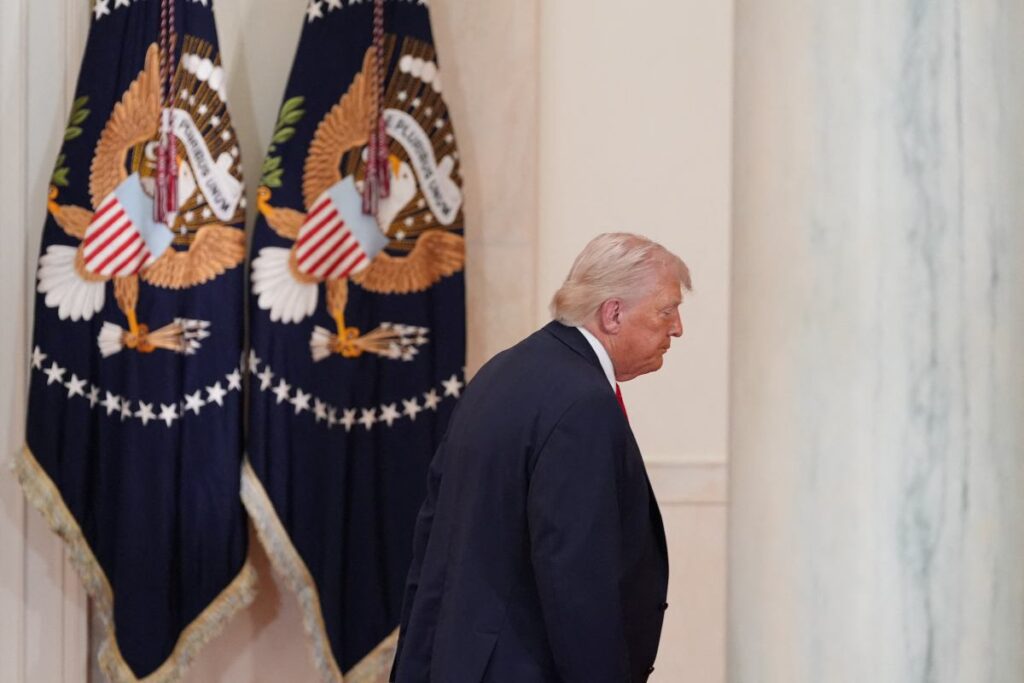
In a late-night address, President Trump asserted success in the ongoing conflict with Iran, sparking criticism over a lack of clear strategy and escalating global economic anxieties.
Delayed Conflict Advertisement
President Trump delivered a late-night address on Thursday, April 2nd, outlining progress in the conflict in the Middle East. He claimed the Iranian fleet had been destroyed, its air force eliminated, and most of its leadership neutralized.
Trump threatened, “Within two or three weeks, we will hit them [Iran] extremely hard, we will bring them back to the stone age, where they belong.” He emphasized the protracted nature of previous U.S. conflicts.
Strait of Hormuz and U.S. Energy Independence
Trump also addressed the blocked Strait of Hormuz, urging allies to secure it. He stated the U.S. does not require Middle Eastern gas or oil.
Criticism of Lack of Clear Plan
Melissa Toufanian, a former advisor to Secretary of State Antony Blinken, stated to BBC, “I don’t think anyone watching the speech [by Trump] came away with the impression that there was a clear plan, a clear timeline, that we are safer.” She believes American viewers are likely “even more confused” after the address.
Recycled Rhetoric and Unanswered Questions
Observers noted Trump “recited the same statements” previously made. Ivo Daalder, former U.S. representative to NATO, pointed out the speech failed to address key questions, such as why the U.S. continues military operations in Iran given Trump’s claims of destroying Iranian capabilities.
Israel’s Disagreement and NATO Reassurance
Sky News reported the most significant quote from Trump’s speech was his assertion that “America’s core objectives are nearing realization” in the war with Iran. However, Israel likely disagrees, viewing these objectives as “completely incomplete” and believing the war must continue.
Notably, Trump did not repeat his threat to withdraw the U.S. from NATO, offering some reassurance to allies. He stated that countries utilizing the Strait of Hormuz “must take care of it themselves.”
Echoes of Past Statements and Domestic Concerns
Niall Stanage, Deputy Editor of The Hill, commented that the speech “gave us a preview of what we already knew… largely reciting the same statements he’s made before.”
Stanage highlighted Trump’s “visible inability to present a clear justification” for U.S. involvement in the war with Iran as problematic. Rising fuel prices, a consequence of the conflict, are a “pressure point” for Trump’s popularity among voters, and he won’t be able to “withstand that pressure for long.”
Global Economic Disruption and Uncertain Objectives
The Guardian noted Trump declared the month-long war in Iran a success, arguing the conflict is nearing its end. However, the war has “triggered economic turmoil worldwide, could lead to the collapse of NATO, and has lowered the president’s ratings among his voters.”
The newspaper emphasized that “key U.S. objectives remain unclear” in the fifth week of the war, with “thousands of American troops still stationed in the region, creating the possibility of a wider ground campaign after weeks of airstrikes on Iran.”
CNN: A Delayed Conflict Advertisement
CNN characterized the speech as a “delayed advertisement” for the conflict, despite expectations of “important information” regarding the war in Iran. The station noted Trump did not answer the key question for many American voters: “when exactly will the war end?”
CNN also pointed out Trump did not specify the war’s concrete goals, including whether he plans to deploy ground troops to seize Iranian enriched uranium or control the Strait of Hormuz.
Washington Post: A Plea to the American People
The Washington Post described the address as an attempt to “defend the president’s actions and a direct plea to the American people” as the White House attempts to mitigate the effects of the conflict, including rising fuel prices and deteriorating public sentiment six months before upcoming elections.
The publication noted Trump mentioned “ongoing” talks with Iran but failed to mention the list of 15 demands sent to Tehran via Pakistan or Iran’s offer of a ceasefire.
New York Times: No Clear Path to Resolution
The New York Times reported Trump “did not lay out any clear path to ending the war in the Middle East, pledging only to bomb Iran for another two or three weeks.” The newspaper stated Trump made “no groundbreaking declarations,” instead characterizing the military action against Iran as a “crushing success” and seemingly appealing to concerned Americans to remain detached.
The New York Times found it surprising that Trump “barely mentioned the economic consequences of the war, while Americans across the country continue to feel the effects of high gasoline prices.” The paper predicts the address will “certainly disappoint some Republicans, as well as investors who had hoped the president would announce how he plans to end the war.”
Democratic Condemnation and Republican Support
Senator Chuck Schumer (D-NY) stated Trump’s actions in Iran “will be remembered as one of the greatest political miscalculations in our country’s history,” adding that Trump “cannot articulate goals, alienates allies, and ignores the everyday problems facing Americans.”
Senator Chris Van Hollen (D-MD) accused Trump of “lying as usual,” questioning why the U.S. remains in Iran if, as Trump claims, Iranian capabilities have been destroyed. Congresswoman Yassamin Ansari (D-AZ) criticized Trump’s rhetoric about bringing Iran “back to the stone age,” calling it “vile, terrifying, and ominous.”
Senator Lindsey Graham (R-SC) praised Trump for “laying out objectives that would eventually destroy the ability of that regime [Iranian] to survive.” He stated Tehran has two choices: reach an agreement or face further bombing.