


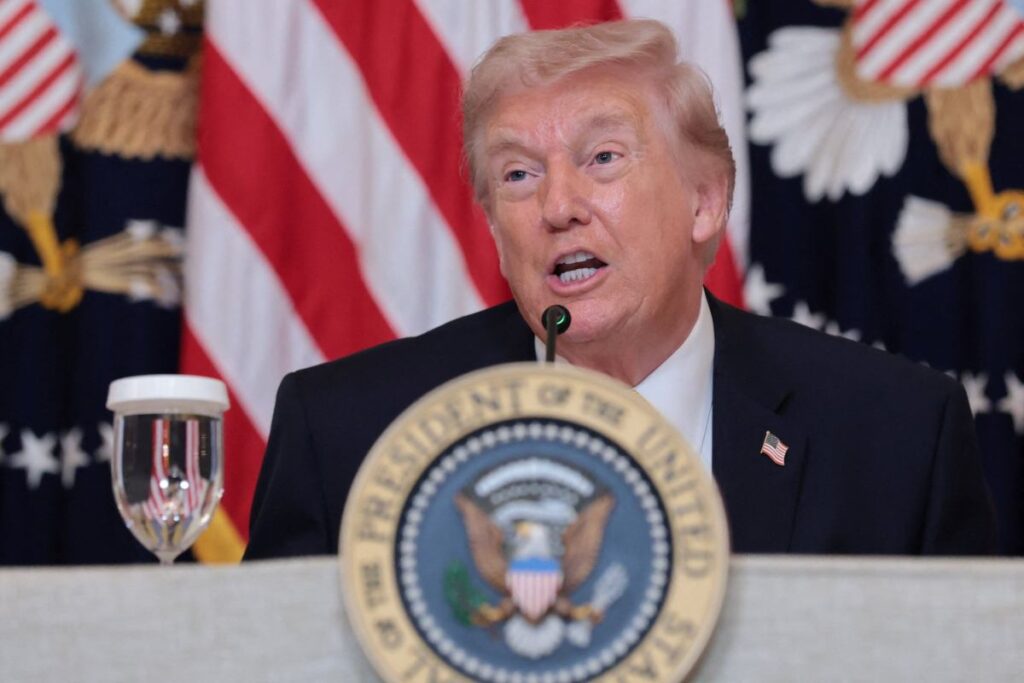
Donald Trump urged European nations to join U.S. military action in Iran, specifically regarding the Strait of Hormuz, warning of consequences for NATO if they refuse.
Trump Issues Stark Warning to NATO Allies
Donald Trump, in an interview with the “Financial Times,” warned that failure by NATO allies to participate in securing the Strait of Hormuz would have “very bad consequences for the future of NATO.” He appealed for European countries to join potential U.S. military actions against Iran.
Trump specifically requested allies provide naval vessels, noting Europe possesses a larger fleet than the United States, and suggested deploying commando units to counter Iranian drone and naval mine operations in the Gulf.
Expectations for French and British Support
Trump expressed confidence that France, and potentially the United Kingdom, could support U.S. efforts to reopen the Strait of Hormuz. He stated his relationship with French President Emmanuel Macron is an “eight out of ten.”
He anticipates similar support from the UK, stating they “should be involved enthusiastically.”
Polish Response and EU Considerations
Polish Foreign Minister Radosław Sikorski stated Poland would consider a U.S. request for NATO discussion on protecting the Strait of Hormuz, but President Karol Nawrocki has ruled out Polish military participation.
Sikorski suggested the EU could initiate dialogue with Washington regarding the potential use of existing EU naval missions to secure the waterway, following a similar suggestion from EU foreign policy chief Kaja Kallas.
International Reactions to Trump’s Call
EU foreign policy chief Kaja Kallas announced a “clear will” to strengthen the EU’s maritime mission in the Middle East, but no agreement has been reached to expand its mandate to the Strait of Hormuz.
Norway’s Prime Minister Jonas Gahr Stoere stated his country will not deploy forces to the Persian Gulf or participate in operations to maintain shipping in the Strait of Hormuz. Greece will only participate in the EU’s Aspides mission protecting ships in the Red Sea.
Germany also announced it would not participate in a military operation in the Strait of Hormuz, with all factions in the Bundestag opposing involvement. German Foreign Minister Johann Wadephul seeks clarification from Israel and the U.S. regarding their military objectives in Iran.
British Prime Minister Keir Starmer cautioned against being drawn into a wider Middle East war, but pledged cooperation with allies on a “realistic joint plan” to restore freedom of navigation.
China, through Foreign Ministry spokesperson Lin Jian, did not directly address Trump’s request, instead appealing for de-escalation.
Iran Closes Strait of Hormuz, Global Oil Prices Rise
Iran has closed the Strait of Hormuz in response to operations by Israel and the United States. Approximately 20% of the world’s oil supply passes through the strait, and its closure has caused a sharp increase in global oil prices.
A Pakistani tanker was one of the few ships to leave the Persian Gulf on Monday since the start of the conflict. Iran thanked Pakistan for its stance and Islamabad officially condemned Israeli attacks, expressing support for Iranian sovereignty.