


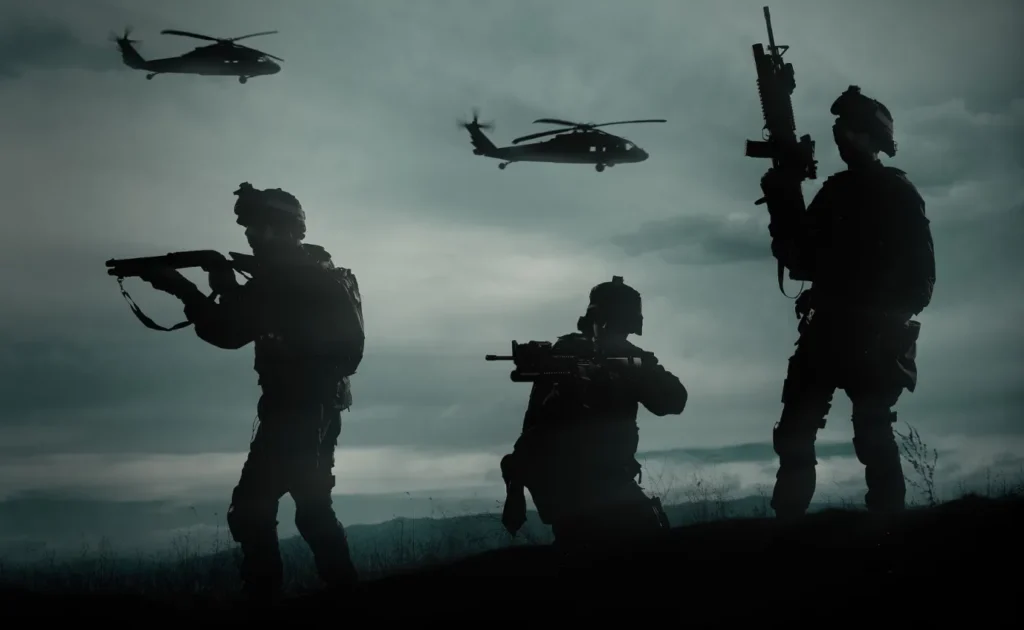
The United States is deploying additional forces to the Middle East, with a potential operation against Iran’s strategic Khark Island under consideration.
US Military Deployment and Potential Iran Operation
The United States is transferring additional forces to the Middle East, raising the possibility of an operation against Iran. The deployment of a Marine infantry unit to the Persian Gulf region has fueled speculation that Washington is considering a strike on the strategic Khark Island – a key point for Iranian oil exports.
Tensions are also rising between the US and its European allies, who are distancing themselves from potential conflict escalation.
Trump Calls for NATO Allies to Increase Engagement
Donald Trump’s statements clearly indicate that the US administration expects greater engagement from its NATO allies. The US President emphasized in conversations with American media that the United States has repeatedly supported Europe, including in the context of the war in Ukraine, and now expects reciprocity. He believes a lack of response could have consequences for the future of the entire alliance.
“We were very nice. We didn’t have to help Ukraine (…). Now let’s see if they help us,” Trump said, suggesting that solidarity should work both ways.
European Hesitation and Focus on Existing Operations
Meanwhile, Europe’s reaction is restrained. French President Emmanuel Macron and head of German diplomacy Johann Wadephul clearly signal a lack of willingness to participate in military actions against Iran. Paris only allows limited support for protecting shipping, and only after the situation stabilizes. Berlin goes even further, ruling out participation in the conflict.
The Strait of Hormuz and Operation Aspides
The Strait of Hormuz remains a key element of the tension – one of the most important oil transport routes in the world. According to the International Energy Agency, around 20 percent of global oil supplies flow through this narrow passage. Any disruption to traffic in this region immediately translates into fuel prices and market stability.
The European Union is currently focusing on Operation Aspides on the Red Sea, aimed at protecting ships from attacks by Yemeni Houthis. This allows European countries to argue that they are involved in ensuring shipping safety, but are avoiding direct confrontation with Iran.
US Military Capabilities and Khark Island’s Strategic Importance
In practice, this means that any offensive action in the Persian Gulf would rest almost entirely on the United States. The decision to send forces was made at the US Central Command (CENTCOM), which is responsible for operations in the Middle East. The Amphibious Task Group with the 31st Marine Expeditionary Unit, stationed on Okinawa, has been directed to the region.
The group is centered around the USS Tripoli – a modern America-class amphibious assault ship commissioned in 2020. The unit can carry both helicopters and F-35B short takeoff/vertical landing aircraft. The standard configuration includes:
The ship’s crew numbers around 1200 sailors, and it can also transport approximately 1700 Marine soldiers. The entire expeditionary unit totals around 2200 people with logistical, aviation, and command support.
This type of formation is not designed for long-term land warfare. Its main task is rapid operations: landings, securing infrastructure, evacuations, or short-term strikes on selected targets.
Khark Island: A Vital Hub for Iranian Oil Exports
The focus of speculation is Khark Island, located in the Persian Gulf, several dozen kilometers from the Iranian coast. Although small – about 8 km long and up to 5 km wide – it has enormous strategic importance.
This is where one of Iran’s most important oil terminals is located. According to energy analysis, up to 90 percent of Iranian oil exports pass through Khark. The island has extensive storage facilities, pipelines, and port infrastructure capable of handling the largest tankers.
From a military point of view, the island is both easy and difficult to capture. Its small area facilitates rapid takeover by landing forces, but the lack of natural terrain cover makes it difficult to conceal troops. Additionally, Iran maintains air defense systems, coastal artillery, and an extensive observation network there.
Limited Operation Scenario: ‘Hit and Run’ Strategy
Analysis of the forces sent by the US suggests a scenario of a limited operation rather than a full-scale invasion. Marine units are capable of carrying out a rapid landing, taking control of key facilities – ports, oil installations, or logistical hubs – and withdrawing after completing the task.
Maintaining control of the island for a longer period would be much more difficult. The limited number of forces and the threat of missile fire from Iranian territory mean that the operation would be point-based and short-lived.
Military experts emphasize that this scenario fits into a “hit and run” strategy, aimed at disrupting oil exports and exerting economic pressure on Tehran.
Potential Consequences for Oil Markets and Security
A potential strike on Khark Island could have far-reaching consequences. Disruption of oil exports from Iran would immediately affect global commodity prices. Even the threat of escalation in the Strait of Hormuz region is causing prices to rise in global markets.
There is also a high risk of retaliation from Iran. Possible scenarios include attacks on tankers, mining of shipping lanes, or asymmetric actions carried out by Tehran’s allies in the region, such as the Houthis in Yemen. As a result, a local military operation could quickly escalate into a conflict with global economic and political consequences.