


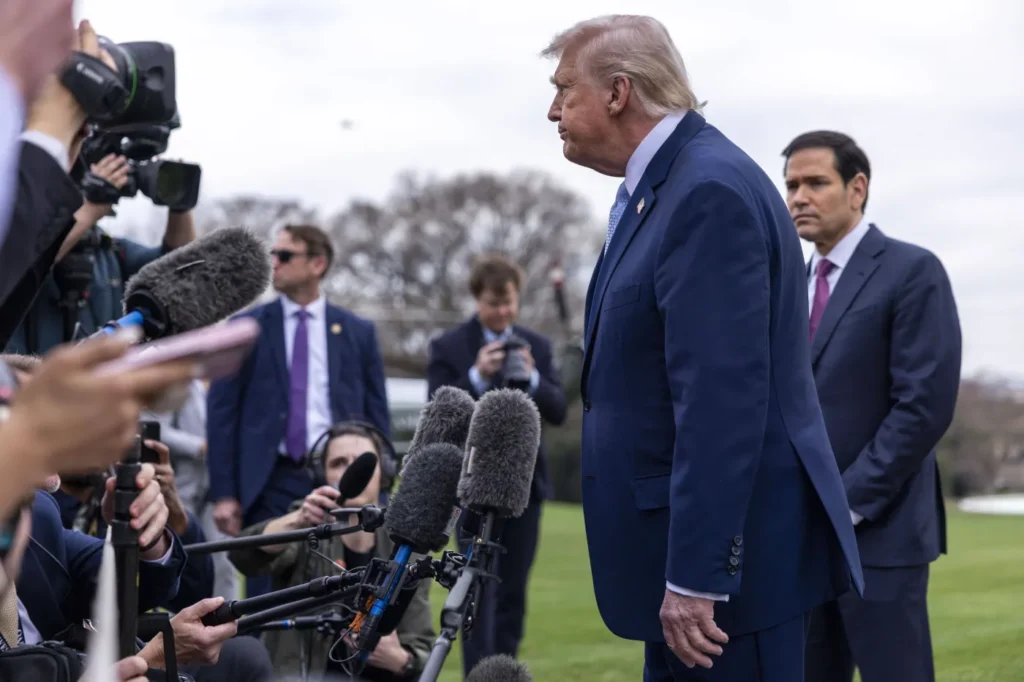
Donald Trump gave Iran 48 hours to restore navigation through the strategic Strait of Hormuz, threatening direct strikes on Iranian energy infrastructure if the demand isn’t met.
Trump’s Ultimatum and Threat of Force
Donald Trump has issued a 48-hour ultimatum to Iran, demanding the immediate reopening of the Strait of Hormuz for maritime traffic. Failure to comply will result in direct U.S. strikes targeting Iran’s energy infrastructure, beginning with its “largest” facility, according to a post on Truth Social.
The U.S. President is demanding the immediate unblocking of the Strait of Hormuz. Should this not occur, the United States intends to launch massive attacks on Iranian power plants.
Strategic Importance of the Strait of Hormuz
The Strait of Hormuz is a critical waterway for the global economy, facilitating approximately 20% of the world’s oil trade during peacetime. Its closure by Iran immediately triggered shocks in commodity markets, pushing Brent crude oil prices above $105 per barrel and potentially fueling global inflation.
Military Buildup and International Pressure
The U.S. is deploying additional military forces to the region, including thousands of Marine troops. Washington is also urging its allies to actively participate in securing the shipping lane.
Iran’s Response and Justification
Iran justifies its actions as a response to attacks from countries involved in the conflict. Foreign Minister Abbas Araghchi stated that restrictions apply only to vessels linked to nations acting against Iran, while neutral ships will receive support.
Iranian military officials have warned that any U.S. action will be met with retaliatory strikes against U.S. and allied energy infrastructure and desalination plants in the region, raising the risk of a large-scale military confrontation.
Regional Tensions and Attacks
The United Arab Emirates reported aerial attacks following Tehran’s warnings regarding potential use of its territory for operations against Iran.
Escalation of Conflict with Israel
Simultaneously, the conflict is escalating between Iran and Israel. Iranian missile strikes on southern Israel injured over 100 people, including 84 civilians in Arad, 10 critically. Another 33 were injured in Dimona, near Israel’s nuclear facility.
The strikes caused significant infrastructure damage, including destroyed residential buildings and extensive damage to urban areas. Children were among the injured, including a 10-year-old boy in critical condition.
Israeli Prime Minister Benjamin Netanyahu vowed a decisive military response “on all fronts,” and Israeli forces have launched retaliatory attacks on targets in Tehran.
Nuclear Program and Natanz Facility
Iran justified the attacks as retaliation for previous strikes on the Natanz facility, a key uranium enrichment installation that has been previously targeted by sabotage and military action.
Rafael Grossi, Director General of the International Atomic Energy Agency, appealed for restraint, warning of the risk of a nuclear catastrophe, emphasizing that military actions near such facilities could lead to uncontrolled contamination.
Israel has not officially confirmed responsibility for the Natanz attack but admitted to striking a research facility in Tehran linked to missile and potentially nuclear technology development.
International Reaction and Concerns
The closure of the Strait of Hormuz has drawn strong condemnation from the international community. Countries including the UK, France, Germany, Italy, South Korea, and Australia issued a joint statement condemning Iran’s actions and pledging to ensure freedom of navigation.
Donald Trump criticized NATO allies for a lack of resolve, calling for greater military engagement, further complicating transatlantic relations.
Japan, which imports approximately 90% of its oil through the Strait of Hormuz, suggested the possibility of sending mine-sweeping forces, but only if a ceasefire is declared, requiring special justification due to constitutional limitations.
Economic Impact and Rising Oil Prices
The blockade of the Strait of Hormuz has already caused significant turbulence in financial markets. Brent crude oil prices have exceeded $105 per barrel, with analysts warning of further increases if the situation does not stabilize.
Experts warn that a prolonged conflict could lead to a global energy crisis, disrupting oil supplies and impacting Asia, Europe, and the United States, increasing costs for transportation, production, and daily life.