One year after taking office, President Trump’s approach to the Ukraine war has shifted from isolating Putin to direct engagement, with US military aid falling by 99%.
Civilian Situation Worsens in Ukraine
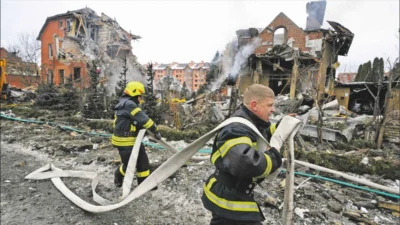
The New York Times has assessed that the situation for civilians in Ukraine has deteriorated over the past year, with increased casualties and Russian drones and rockets increasingly striking city centers. Russia has captured additional territories, and massive attacks on energy infrastructure have caused significant power and heating outages during winter.
Trump Shifts from Isolation to Direct Engagement
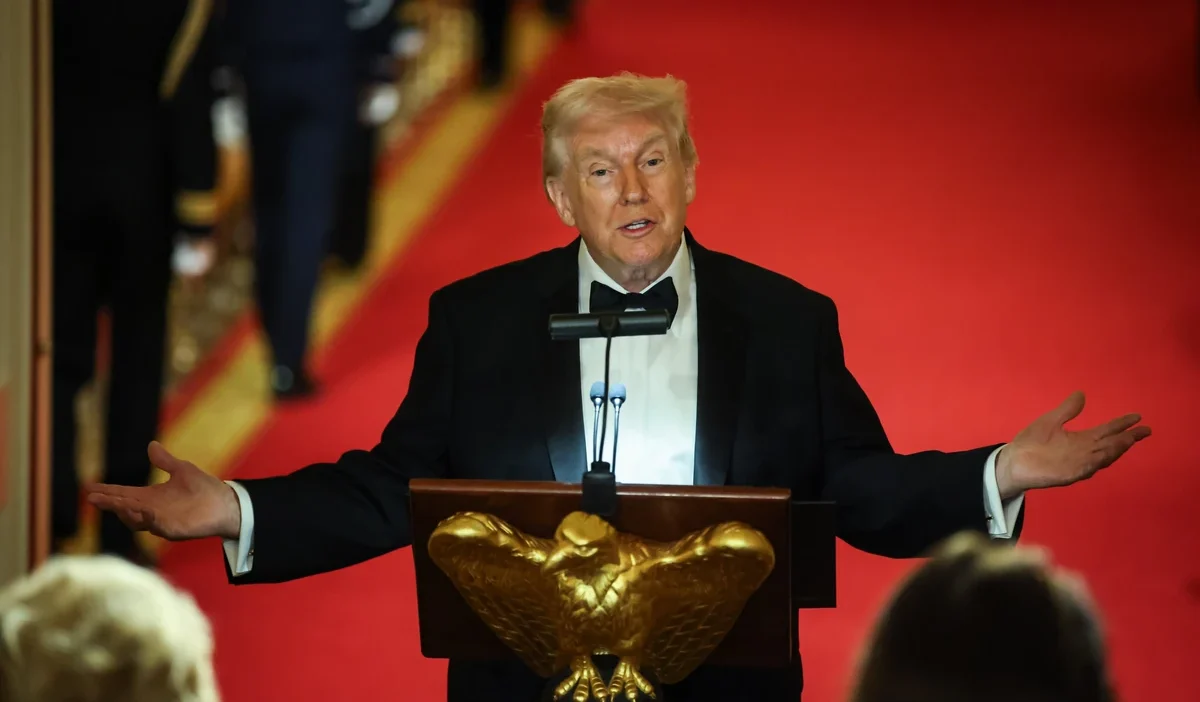
Upon taking office, Donald Trump abandoned the strategy of isolating Vladimir Putin that had dominated previous years. Instead of continuing diplomatic pressure and sanctions, he opted for direct contacts with the Kremlin. Trump publicly emphasizes that Putin holds him in “respect,” which in his view increases the chances of reaching an agreement. A joint photo of both leaders from the Alaska summit even hangs in the White House.
At the same time, Trump distances himself from unequivocal support for Kyiv. In recent weeks, he has twice stated that Ukraine should show willingness to make concessions. President Volodymyr Zelensky has deemed such a position unfair, noting that public pressure is directed mainly at the victim of aggression rather than the aggressor state.
US Aid to Ukraine Plummets
White House spokesperson Karoline Leavitt responded that “the entire situation is unfair” from the perspective of American taxpayers as well. Trump emphasizes that the United States no longer provides weapons to Ukraine directly but sells them to European countries, which then transfer them to Kyiv. However, data from the Kiel Institute for the World Economy shows that in 2025, the value of U.S. aid to Ukraine decreased by 99% compared to the previous year.
This represents a radical change considering the scale of support provided from 2022-2024. According to Kiel Institute analysis, the USA had been the single largest donor of military and financial aid to Ukraine. Cutting transfers increases pressure on European countries, particularly Germany, Poland, and Baltic nations.
Diplomatic Efforts Show Limited Progress
NATO Secretary General Mark Rutte assessed that Donald Trump may be the only leader capable of ending the war. Meanwhile, the Alliance maintains declarations of long-term support for Ukraine. The Trump administration has opted for non-standard diplomacy, with special envoy Steve Witkoff and Jared Kushner representing the American side in talks with Russia and Ukraine. The U.S. President believed that the traditional diplomatic apparatus had not produced results, so he turned to a duo that had previously participated in ceasefire talks in the Gaza Strip.
However, the talks have not produced a breakthrough. Ukraine’s ambassador to the U.S., Olha Stefanishyna, pointed to an “enormous gap” between diplomatic efforts and realities on the front. As long as the military situation does not stabilize, it is difficult to speak of real progress.
Sanctions and International Response
According to The New York Times analysis, the Kremlin is using ongoing negotiations to buy time and intensifying military actions. Russia has not retreated from its maximalist demands, including recognition of occupied territories and permanent restrictions on Ukrainian military sovereignty.
Donald Trump announced sanctions aimed at limiting Russian oil export revenues. However, he has not activated the full range of available instruments. The bill co-authored by Senator Lindsey Graham, which provides for additional sanctions against Russian oil companies, the banking sector, and the so-called shadow fleet, as well as tariffs of up to 500% on goods from countries purchasing Russian raw materials, has remained in the Senate committee since April of last year. The lack of processing is due to the President’s disapproval.
Experts indicate that without sanctioning entities bypassing restrictions through third countries, the Russian economy will be able to maintain its ability to finance military operations.
Public Opinion in the United States
A study by Ipsos and the Chicago Council on Global Affairs shows that 57% of Americans support continued military assistance to Ukraine. In July 2025, this figure was 62%, indicating a 5 percentage point drop, but still a clear majority. 67% of respondents oppose leaving Russia with already occupied territories, and 76% do not accept ceding to Moscow additional areas of eastern Ukraine controlled by Ukrainian forces. 50% of respondents support U.S. participation in future peacekeeping forces. The same number advocate for strikes on Russia in case of attacks on such forces. 48% declare support for long-term military support for Kyiv.
During demonstrations in Washington marking the fourth anniversary of Russia’s full-scale invasion of Ukraine, participants expressed disappointment with the administration’s policies. Henry, a 25-year-old American of Ukrainian descent, stated that current actions are “a betrayal committed in a cynical way” and expressed pride in the stance of Poland, Germany, Baltic states, and Finland. In his view, Vladimir Putin has no intention of genuinely negotiating, and his goal remains the destruction of Ukraine.
Martha Drum from Virginia assessed the Russian invasion as the most glaring example of violation of international law in her life and expressed shame over the U.S. authorities’ position. She believes most Americans still support increasing aid to Ukraine.