


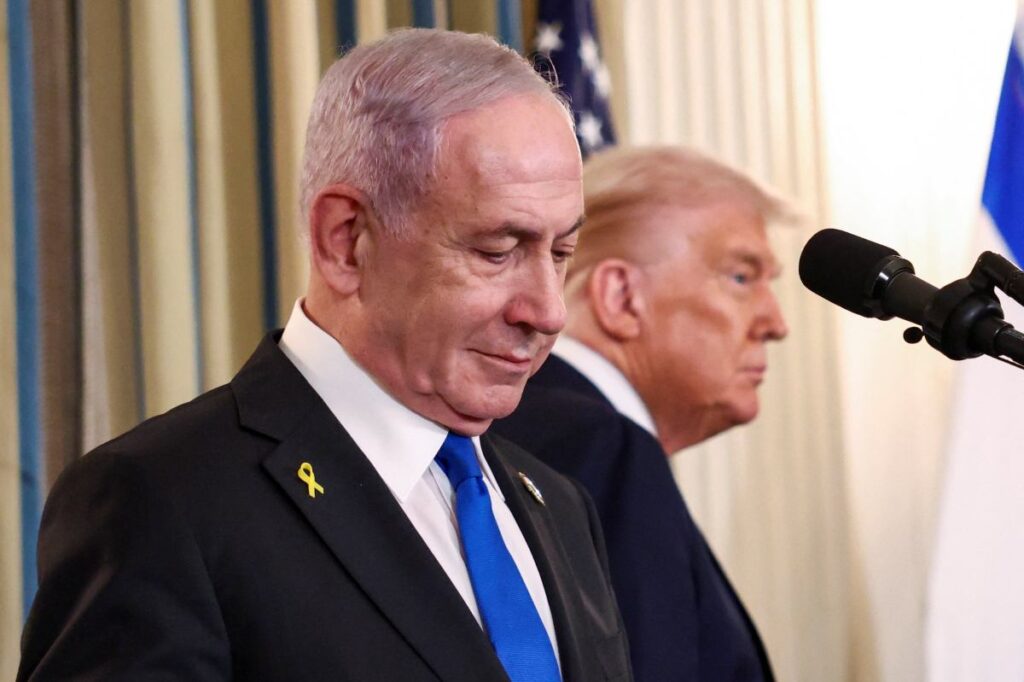
Donald Trump has unveiled a 20‑point plan demanding Gaza be a de‑terrorised zone, tying hostage releases to Israel’s compliance and promising an end to fighting—yet critics warn it may consolidate Israeli control instead of Palestinian sovereignty.
Timing of Trump’s Proposal
Trump’s 20‑point plan was unveiled as Israel intensified air strikes on Gaza and faced organized resistance. With humanitarian assistance cut for months, civilians had nowhere to flee, prompting Trump to push for a ceasefire that Israel appeared ready to accept. However, after the meeting Netanyahu said he had no intention of withdrawing troops from Gaza.
Core Conditions and Hostage Clause
The first point declares Gaza a “de‑terrorised zone free from a threat to neighbours.” The pledge is not a peace deal but a capitulation framework, offering no assurance that similar terms would apply to Israel. The plan also ties any hostage release to Israel’s acceptance of the conditions, with hostage surrender from Israeli prisons contingent on Hamas disarming its own forces.
Historical and Ongoing Israeli Actions
Israel’s record since the 1980s—operational withdrawals in Lebanon, massacres in Beirut, and continuous attacks on the West Bank—exemplifies a pattern of violence that persists even after supposed disarmament. The United Nations and NGOs have documented escalating civilian casualties, including 38 children killed in September 2023 alone.
Reconstruction Plans and Aid Concerns
Trump’s blueprint offers vague economic proposals, proposing that foreign corporations manage reconstruction while Gaza’s hospitals, water plants, schools and universities lie destroyed. The Gaza Humanitarian Foundation (GHF), created in May 2025, has distributed limited aid and been linked to daily mass shootings and forced marches that expose civilians to Israeli fire and cut off medical treatment.
Political Governance and International Forces
In the absence of elections, Gaza would be governed by a technocratic “peace council” led by Trump until the Palestinian Authority reforms and gains recognition. Netanyahu conditioned reform on the Authority’s restraint in media criticism of Israel and severing ties with the International Criminal Court, effectively limiting Palestinian self‑governance and international oversight.
Possible Benefits and Remaining Risks
The proposal promises an end to fighting and the restoration of humanitarian aid consistent with Israel’s 2025 ceasefire, with no forced displacement and a right of return for voluntary departures. Yet critics question whether the arrangement truly offers Palestinian sovereignty, the role of external security forces, and the likelihood that the ceasefire will hold in practice.