


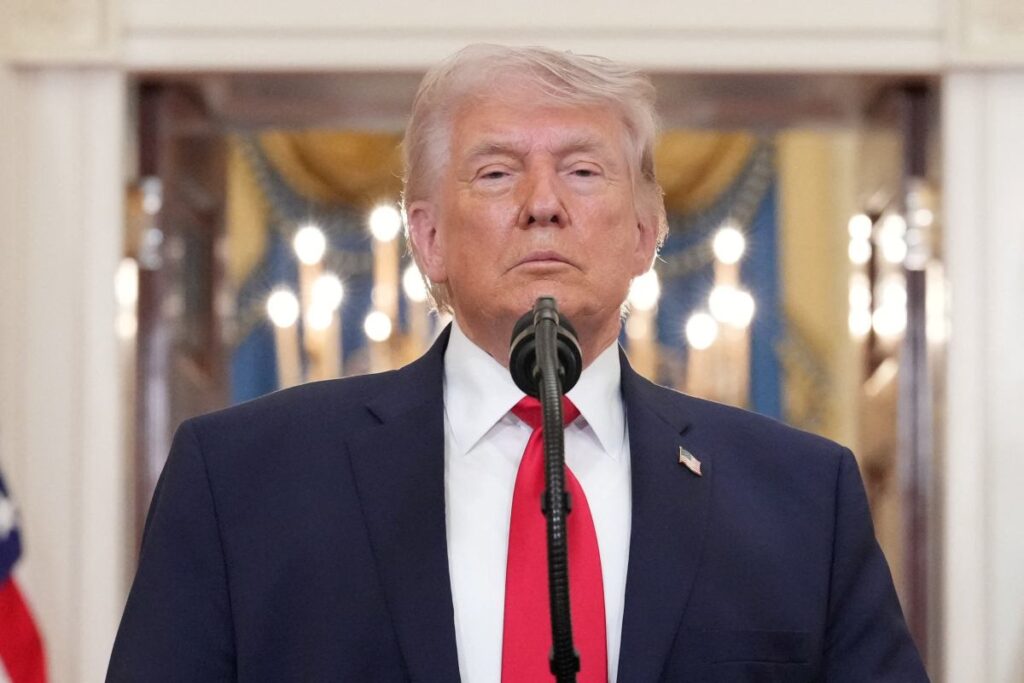
Donald Trump vowed to pursue journalists who reported on a U.S. pilot’s situation in Iran, threatening imprisonment for revealing sources.
Threats Linked to Information Leaks
The threats stem from information that reached the public before the completion of the rescue operation following the downing of an aircraft.
During a Monday press conference, Trump announced that his administration would seek to identify the source of the leak, stating he would request news outlets to reveal the informant, citing national security concerns. He warned, “You’re going to reveal it, or you’re going to go to jail.”
Impact on Rescue Operation
The president asserted that media coverage of the matter may have hindered the rescue operation. He claimed Iran learned about the presence of the missing soldier on its territory due to press reports.
Justice Department Response
According to “The Washington Post,” the Department of Justice has not directly responded to these statements. The White House only stated that an investigation is underway.
Shift in Media Policy
In 2025, the Trump administration reversed a previous policy limiting the ability to subpoena journalists to reveal sources in leak cases.
Concerns Over Press Freedom
Jameel Jaffer, Executive Director of the Knight First Amendment Institute at Columbia University, assessed that the president’s actions raise serious concerns about press freedom. He added that journalists’ ability to do their work relies on protecting anonymous sources, and the threats should be seen as an attempt to exert pressure.
“President Trump’s threat should be understood as an attempt to intimidate the media and prevent journalists from doing the work the public needs,” Jaffer emphasized.
Reporters Without Borders’ Stance
Clayton Weimers, Executive Director of Reporters Without Borders North America, presented a similar position. He believes this is not an isolated incident, suggesting that such declarations should be taken seriously. “These aren’t just Trumpian boasts. This administration views journalism as a crime,” Weimers concluded.