Donald Trump’s threats to withdraw the U.S. from NATO are being taken seriously, with some experts suggesting Poland could be pivotal in reshaping the alliance’s security architecture.
Trump Escalates Rhetoric, Raising Doubts About NATO Commitment
Specialists urge taking Donald Trump’s threats to withdraw the United States from NATO seriously. However, they advise against despair, suggesting Poland could play a crucial role in building a new security framework, potentially gaining Washington’s attention.
The nervousness among U.S. officials over the lack of swift success in a potential conflict with Iran has led to a search for blame, with European NATO members bearing the brunt of the criticism.
Skepticism Towards NATO’s European Focus
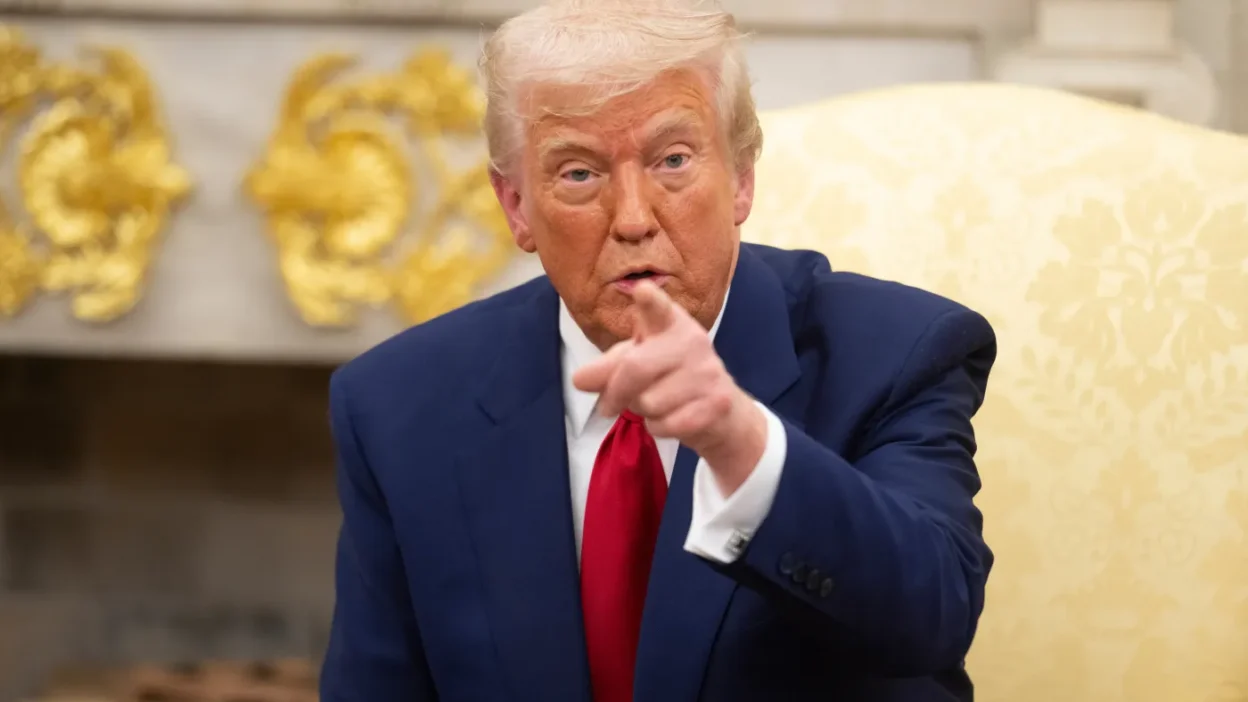
Donald Trump has consistently expressed skepticism about NATO’s focus on defending Europe, both during his first term and increasingly since. His rhetoric has escalated to the point of threatening to abandon the alliance, a sentiment echoed by his close associates.
U.S. Officials Question Alliance Value
Pete Hegseth, Secretary of Defense, stated that the decision regarding NATO rests with the President, noting that requests for assistance—access to bases or flight rights—are met with questions, obstacles, or hesitation. He emphasized Trump’s view that an alliance is meaningless if its members don’t support each other when needed.
Marco Rubio expressed a similar sentiment, with experts warning that the message from Washington is unlikely to change, potentially sealing the fate of NATO as it has been known for the past 30 years.
Conditional U.S. Support and the “One for All” Principle
Trump has repeatedly stated that the U.S. will only defend partners who actively pay and arm themselves, questioning the fundamental principle of collective defense—”one for all, all for one.” Jerzy Marek Nowakowski, a former Polish ambassador, questioned what an alliance means if selective defense is practiced.
General Stanisław Koziej, former head of the National Security Bureau, concurred, stating that Trump’s statements reflect clearly defined U.S. strategic documents, not mere whims or bad moods.
Shifting U.S. Doctrine: European Responsibility
General Koziej explained that the U.S. aims to minimize its involvement in Europe, explicitly stating that European countries must assume full responsibility for the continent’s conventional defense. He believes that a timetable for the Europeanization of NATO—transferring defense responsibility to European nations—should be developed in line with this strategy, in collaboration with the U.S.
Lessons from the Persian Gulf and the Risk of Isolation
The question arises whether European leaders have seriously considered Trump’s warnings, even those from years ago regarding defense spending reaching at least 2% of GDP. While a large European arms program worth 800 billion euros has been announced, Western societies remain reluctant to increase military spending.
Nowakowski warned against the temptation for countries like Poland, which prioritize military spending and recognize the Russian threat, to seek exclusive U.S. protection and abandon European arms programs, as this protection could be short-lived.
He cautioned that relying solely on the U.S. to defend them would place those countries in a completely satellite-like position. He cited the example of Gulf states, which could find themselves facing a hostile Iran if the U.S. withdraws from the region.
The Importance of a Strong, Unified Europe
Nowakowski believes a strategically strong Europe is more effective as a whole, and a stronger ally will only defend a weaker partner if it serves its own interests. Recent statements by President Trump cast doubt on whether Poland could always count on such support.
He noted Trump’s discussions with Putin regarding NATO, which, while not mirroring the behavior of the Hungarian Foreign Minister, is concerning.
Poland’s Potential Role in Rescuing NATO
Despite this unfavorable outlook, General Koziej believes Poland can play a vital role in building a new security architecture in the coming months.
He argues that Poland should initiate a debate within the Alliance, proposing consultations to save NATO’s core function, even as the U.S. distances itself. He suggests initiating this discussion at the upcoming NATO summit in Ankara.
Koziej believes Poland is well-positioned to propose such a plan, as it is a relatively close ally of the U.S. and cannot be accused of seeking to dismantle NATO, but rather to modernize transatlantic relations in line with American interests.