


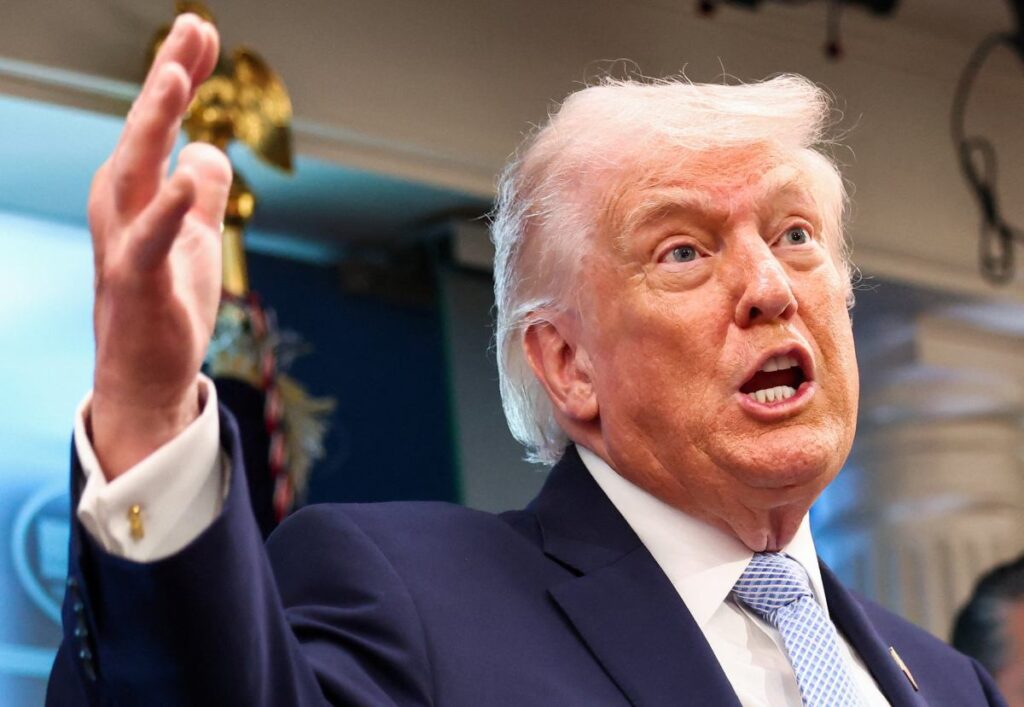
Former U.S. President Donald Trump threatened Iran with a significant military response if a nuclear agreement isn’t reached, as peace talks are set to begin.
Talks with Iran
The first round of peace talks between the U.S. and Iran is scheduled for Saturday in Pakistan, with U.S. Vice President J.D. Vance leading the American delegation.
Vance, special envoy for peace missions Steve Witkoff, and Donald Trump’s son-in-law, Jared Kushner, will travel to Pakistan on Friday.
Rejection of Initial Iranian Proposal
White House spokesperson Karoline Leavitt criticized media reports framing Iran’s initial 10-point “wish list” as a basis for negotiations, stating the original proposal was “ridiculous” and dismissed by the President.
Iran later submitted a revised, “more reasonable” 10-point proposal, which Trump accepted as a starting point for discussions.
U.S. Red Lines and Iranian Uranium Stockpile
Leavitt emphasized that U.S. “red lines” remain unchanged, including preventing Iran from acquiring nuclear weapons and halting uranium enrichment. Iran reportedly indicated it would transfer its enriched uranium stockpile.
Strait of Hormuz Access
Regarding the Strait of Hormuz, previously blocked by Iran, Leavitt stated Iran agreed to open it, despite public announcements suggesting Iranian military coordination of transit.
She asserted Iran communicates differently in public versus private negotiations, and Trump will ensure Iran adheres to the agreement.
Potential Transit Fees
Addressing Trump’s suggestion of potential transit fees for the Strait of Hormuz, Leavitt clarified it remains merely a “suggested idea” not yet finalized.