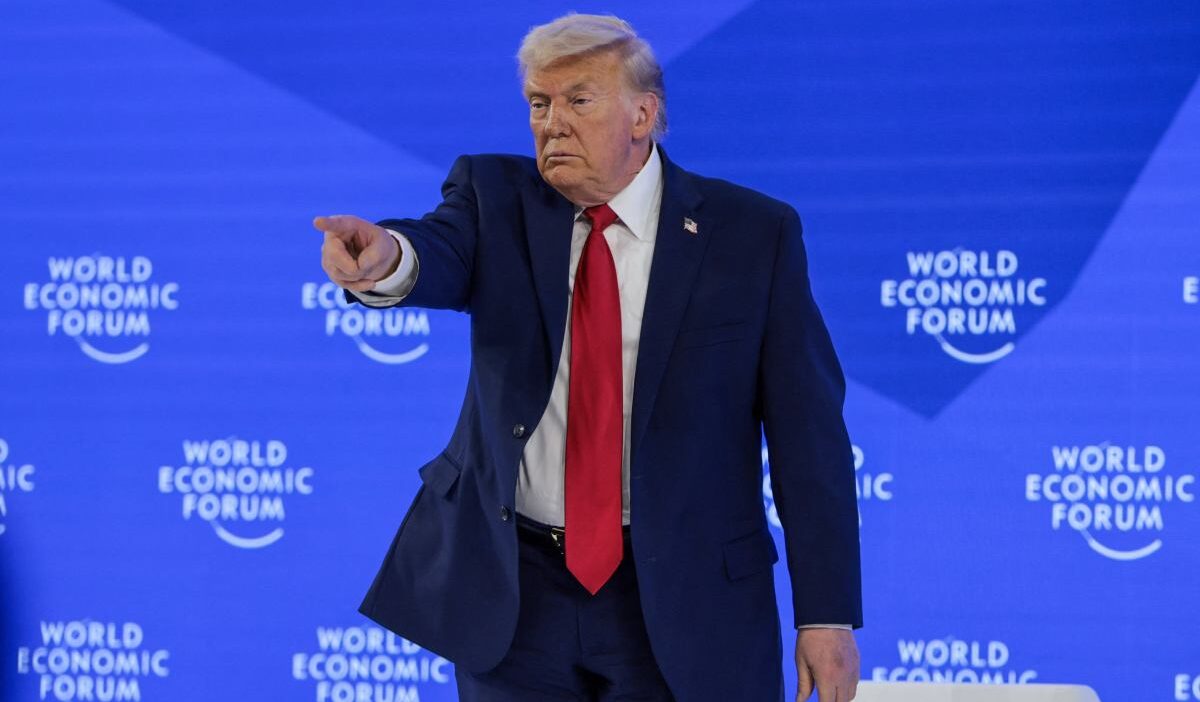
On January 22, President Trump abruptly withdrew Canada’s invitation to join his newly formed Peace Council without providing specific reasons.
Trump doesn’t want Canada in the Peace Council
On January 22, the President of the United States addressed Mark Carney on Truth Social and informed him of the withdrawal of Canada’s invitation to the Peace Council. However, he did not provide reasons for his decision. He only emphasized that this will be “the most prestigious Council of Leaders ever formed.” The Canadian Prime Minister has not yet commented on Trump’s decision. However, earlier he had not shown great satisfaction with the invitation he received – claiming that he would only accept the invitation to the Council “in principle.”
Canada’s Prime Minister on the Peace Council
Donald Trump’s decision came after a high-profile appearance by Canada’s Prime Minister at the World Economic Forum in Davos. Mark Carney then called on smaller states to unite in the face of actions by larger powers. “It seems that every day reminds us that we live in an era of rivalry between great powers, that the order based on rules is weakening, and that the strong can do what they have the strength to do, while the weak must endure what comes to them,” said the politician.
He also emphasized that smaller countries are not powerless. “When great powers abandon principles and values in favor of their own interests, medium powers like Canada face a choice: compete for favor or act together and exert influence,” he noted. Carney also responded to Trump’s words that “Canada lives thanks to the United States.” “Canada does not live thanks to the United States. Canada thrives because we are Canadians,” he replied to the US President.
Peace Council officially established
On January 22, at the World Economic Forum in Davos, the Peace Council was officially established and its founding act was signed. It was established by the President of the United States Donald Trump, who became its head. Initially, the Council was to focus on the administration and reconstruction of the Gaza Strip after the war, but its mandate will be extended to other issues traditionally within the competence of the UN. Member states are to be selected by Donald Trump for three-year terms, unless they pay a billion dollars for permanent membership.
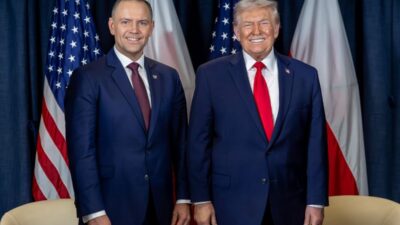
The founding act was signed in Davos, in addition to Donald Trump, by Hungarian Prime Minister Viktor Orban and Argentine President Javier Milei, as well as representatives of Bahrain, Morocco, Armenia, Azerbaijan, Bulgaria, Indonesia, Jordan, Kazakhstan, Kosovo, Pakistan, Paraguay, Qatar, Saudi Arabia, Turkey, United Arab Emirates, Uzbekistan, and Mongolia. President Karol Nawrocki participated in the Peace Council’s establishment ceremony but did not sign the founding document. For Poland to join this body, parliamentary approval is needed – explained the head of the Presidential Office of International Policy, Marcin Przydacz.